
What do an arena in St. Paul, an arena in Des Moines, and one carved along the St. Johns River in Jacksonville, Fla., have in common? Starting next October, they will all be part of the Minnesota Wild’s developmental pipeline.
The State of Hockey is heading to the Sunshine State.
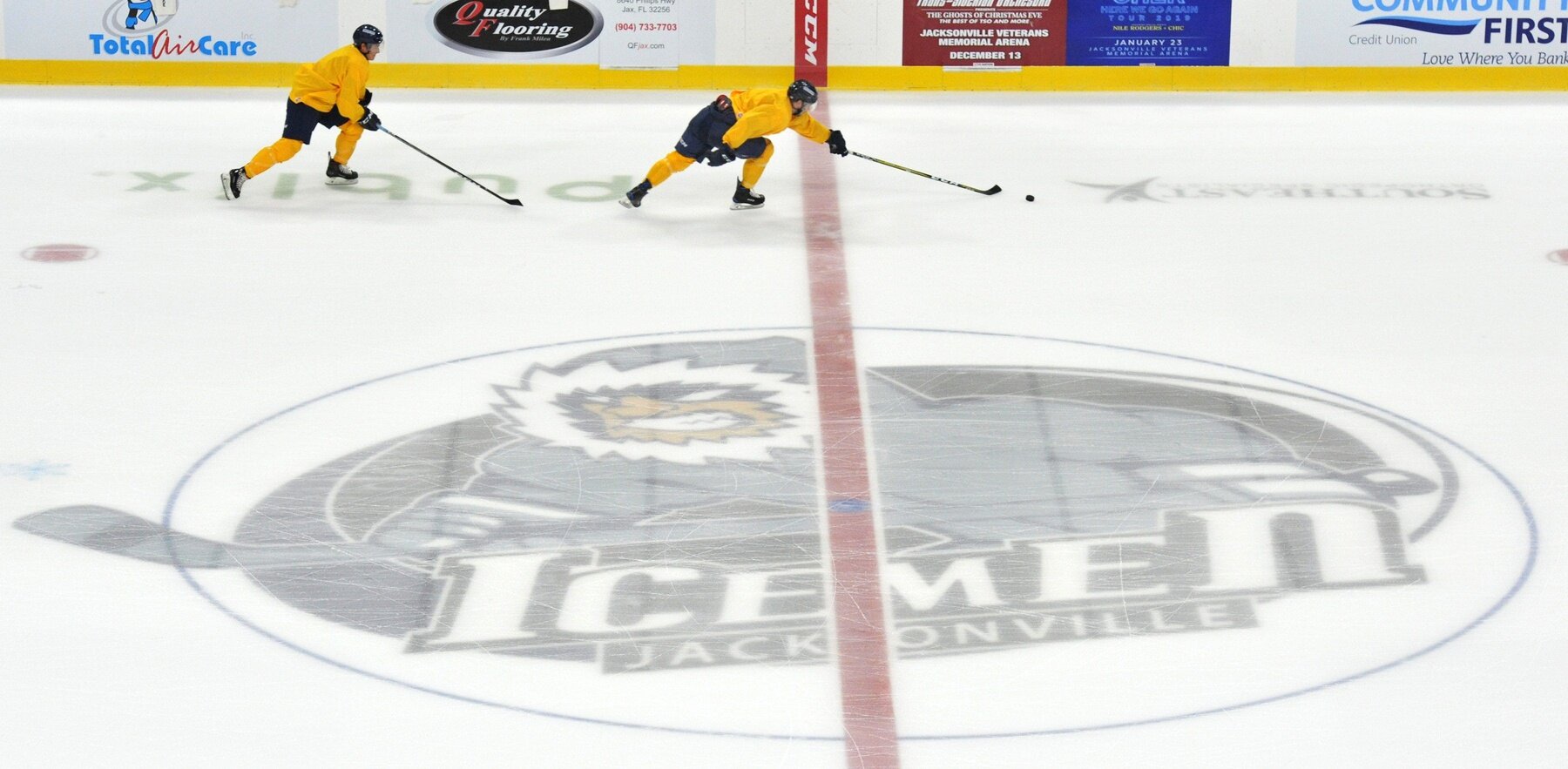
On May 18, the Wild and the Jacksonville Icemen announced a multi-year ECHL affiliation agreement, effective for the 2026-27 season. The deal closes a chapter on one of the most geographically convenient development setups in minor league hockey and opens one that looks like a strange fit until you look a little closer.
Goodbye to the Heartlanders
The Iowa Heartlanders were located in Coralville, Iowa, just 112 miles from the Iowa Wild in Des Moines. This made them one of the most logistically efficient ECHL-to-AHL pairings in the league, allowing for easy player movement and cultural overlap. When the Heartlanders launched as an expansion franchise in 2021, they did so as Minnesota’s affiliate from Day 1. They replaced the Allen Americans in Allen, Texas, who had been their ECHL affiliate since 2018. The Wild extended its relationship with the Heartlanders as recently as July 2024.
The Heartlanders averaged 1,626 fans per game in 2025-26, dead last in the ECHL by a significant margin. After five seasons, they could not create a large enough fanbase to sustain the operation.
Eventually, ownership requested a voluntary suspension, which allows a franchise to temporarily pause on-ice operations without forfeiting its league membership. In doing so, they left a path back to the league if ownership can stabilize the finances. Owner Michael Devlin called it “the most responsible course” while the organization evaluated strategic alternatives and sought new investment partners.
Despite that, the affiliation produced quality development. Nearly 40 players were recalled from Coralville to the Iowa Wild during the partnership, and goaltender Hunter Jones became the first Heartlander to reach the Minnesota Wild’s NHL roster. Coralville’s city administrator has said the city remains committed to keeping hockey in Xtream Arena long-term. Whether that materializes is a separate question.
Hello to the Icemen
You might be reasonably hesitant about affiliating with a team in such a nontraditional market when attendance numbers contributed so heavily to the Heartlanders’ financial struggles. However, the Icemen led the league in attendance, sitting comfortably in the No. 1 spot in 2025-26 with an average attendance of 9,198.
The Wild affiliation is the fourth in the history of the Jacksonville Icemen, who enter their 10th season this fall. They were previously affiliated with the Winnipeg Jets and the Manitoba Moose from 2017 to 2021, the New York Rangers and Hartford Wolf Pack from 2021 to 2023, and the Buffalo Sabres and Rochester Americans from 2023 to 2026.
The Icemen franchise is older than that, with roots going back to Muskegon, Mich., where it began play in 1992 as the Fury. Later, they became the Lumberjacks in 2008, relocated to Evansville, Ind., as the IceMen in 2010, and finally landed in Jacksonville in 2017.
The Icemen’s inaugural season opened on October 14, 2017, to a sellout crowd at VyStar Veterans Memorial Arena, just 7 months after the ECHL approved the team. The arena seats up to 15,000 for major events, but the Icemen close the upper level for hockey games, limiting capacity to approximately 8,500 to keep the atmosphere tight and exciting. One seat inside the arena remains permanently empty, reserved in honor of prisoners of war and missing-in-action service members.
On the ice, the Icemen have been a consistently competitive franchise across most of their existence in Jacksonville, qualifying for the Kelly Cup Playoffs five times in eight seasons. The 2025-26 season was a down year by their standards. Jacksonville finished 29-32-8-3 with 69 points, fifth in the South Division, and didn’t qualify for the playoffs. They’ve never won the Kelly Cup as an organization.
Off the ice, the Icemen have built a strong game-night identity that reflects their connection with the Jacksonville community. Their mascot, Fang, is a husky whose name was chosen by fan vote after receiving over 1,000 ballots. He’s named in honor of JSO K-9 Fang, a police dog killed in the line of duty just two weeks prior. On Pucks & Paws nights, fans can bring their dogs and sit in a dedicated section the team calls the Slobber Box.
The team’s 2025-26 promotional schedule also features a wide range of themed events, including the annual Teddy Bear Toss, where fans throw new or gently used teddy bears onto the ice for donation to local charities; Cowabunga Night, celebrating Jacksonville’s history as “Cowford”; and Guns and Hoses, which pairs an Icemen game with a showcase featuring local police officers and firefighters.
The team practices at the Community First Igloo on Philips Highway, a $12.5 million renovation project the Icemen’s ownership completed in 2022 that features two sheets of ice, a sports bar and restaurant, and a pro shop. ESPN analyst Jason Kelce made an unplanned stop at the arena in October 2025, in town to broadcast Monday Night Football.
He ended up playing beer league hockey and later recounted the night on the “New Heights” podcast. These events, the quality of the product on the ice, and the buy-in from the residents of Jacksonville have helped make Icemen games as much a community gathering as a hockey game.
That’s ultimately what makes Jacksonville the right partner for Minnesota. Under the previous affiliation with Buffalo, the Icemen frequently fielded among the fewest NHL or AHL-contracted players in the league. The Wild are in a contention window and need a functioning development pipeline.
The geographic distance from St. Paul is inconvenient. Still, a franchise that fills an arena, has consistently appeared in the playoffs, and has become part of the community makes that worth it. Since entering the ECHL, Jacksonville has built exactly what Minnesota needs: a place to send prospects, and a hockey market capable of turning development into something meaningful, visible, and sustainable.