
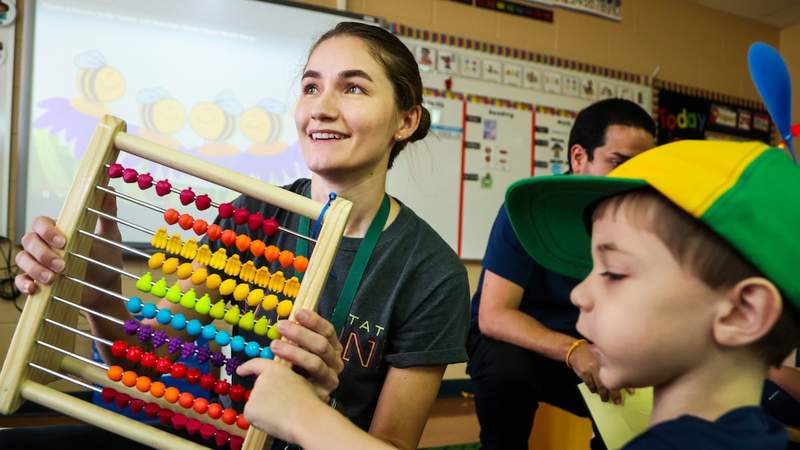
Young people today face a crisis of purpose. A 2023 report from the Harvard Graduate School of Education found more than “half of young adults … don’t know what to do with their lives.” A 2025 Gallup/Stand Together survey paints an even bleaker picture: Just 31% of college graduates reported a strong sense of life purpose.
This year, more than 100,000 students will graduate with bachelor’s degrees from Florida universities. As they step into the workforce, many will search for work that fills their lives with meaning. My advice is simple: If you want purpose, teach.
After family, work is the strongest contributor to a sense of life purpose, according to the Gallup/Stand Together poll. While your work shouldn’t define who you are, few jobs offer a stronger sense of calling than teaching. A recent Morning Consult and EdChoice poll of teachers found 70% felt a strong sense of purpose about the future, compared with just 8% who felt none. Two-thirds said they were hopeful about what lies ahead.
Why teaching, specifically? Because few jobs put you so directly in another person’s path. Teachers help equip the next generation of effective citizens and responsible leaders — students with the knowledge to understand their freedoms and the intellectual tools to engage thoughtfully with the world.
Of course, meaningful work also has to be sustainable. Florida is making sure teaching can be.
For recent college graduates, Florida is an excellent place to launch a teaching career. This year, the Florida Legislature committed more than $1.3 billion toward teacher salaries, much of it going to boost starting pay. The average starting salary is now close to $50,000, and in top-paying districts like Sarasota and Monroe counties, first-year teachers earn $60,000 or more. Keep in mind, these are generally 10-month contracts with strong health and retirement benefits, opportunities for extra pay through summer teaching, and considerable job security.
Didn’t go to school for education? Not to worry. Florida offers many pathways to the classroom, including 27 Educator Preparation Institute Programs. Teaching positions aren’t limited to certified roles in public schools, either. If you want to teach in a classical charter school, you may already be eligible for the restricted classical education teaching certificate without any additional coursework. Florida has created programs that expand educational opportunities not just for students, but for teachers, too. Private school options abound — some are faith-based, some focus on serving marginalized communities, others on specific pedagogical practices. Teachers can choose the setting that best suits them.
The choice-rich system has also created an environment ripe for educational innovators. Two former public school teachers turned entrepreneurs founded Coastal Glades Microschool, a Montessori-based program “immersed in the outdoors and deeply tied to the local community,” according to Step Up for Students. Florida’s policy of allowing parents to “unbundle” their child’s education is drawing innovators well beyond traditional classrooms. Take Toni and Uli Frallicciardi: Toni studied ocean engineering, and Uli is a skateboard and surfing instructor. Together they founded Surf Skate Science in south Florida, providing enriching, science-based lessons for homeschooling and hybrid-homeschooling communities.
Teaching in the Sunshine State is more than a job. It is a chance to shape the people who will shape Florida — citizens, neighbors, colleagues and leaders. For graduates wondering what to do with their lives, few callings offer a clearer answer, or a more lasting one. In a time when so many are searching for meaning, teaching is work worth doing.
James V. Shuls, Ph.D., is the Head of Education Liberty at the Institute for Governance and Civics at Florida State University.