
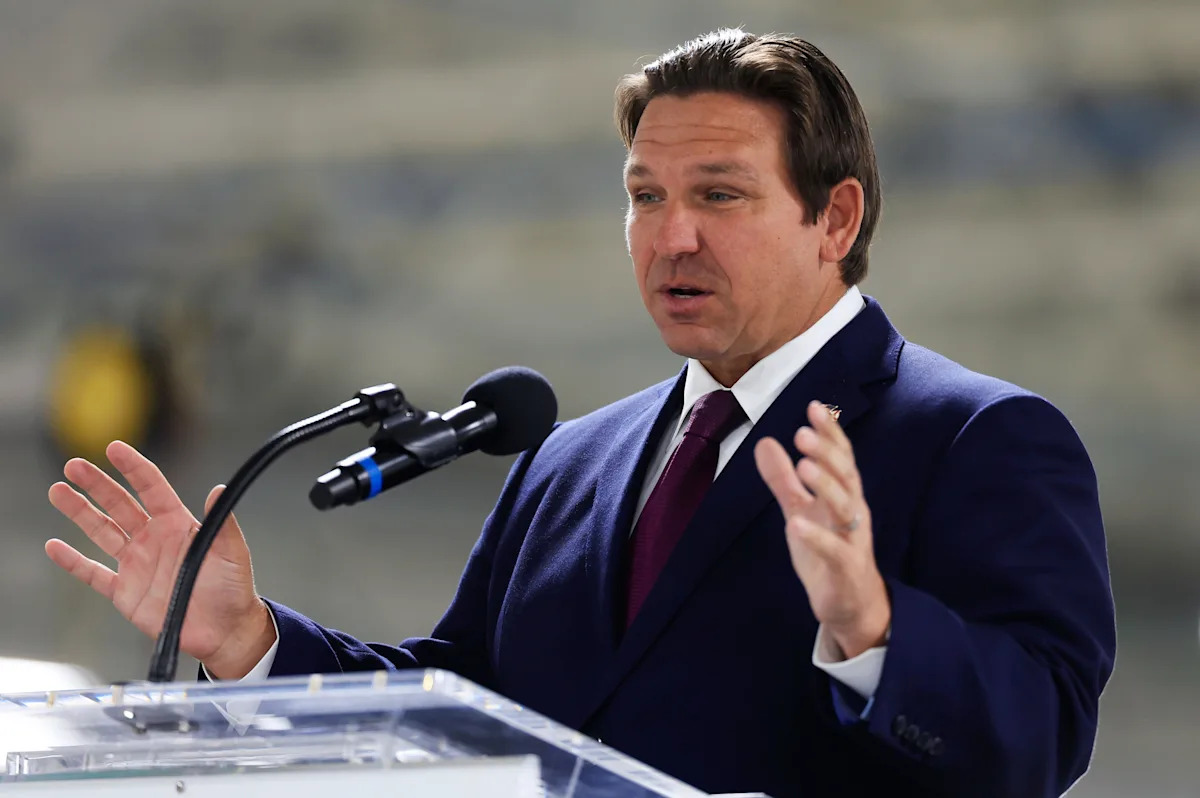
Florida voters will now have their chance to decide whether the state should implement a cut on homestead property taxes in the November election.
Voting 30-9, the Florida Senate joined the House on Tuesday in passing a resolution expanding the homestead exemption that Gov. Ron DeSantis unveiled last week.
The measure, named “Save our Homes from Excessive Property Taxes,” ran out of the gate with a heavy-handed approach to significantly reducing property taxes levied across the board, even those for schools.
On Monday night, the resolution was amended to exclude school levies from the proposal, which as originally proposed would have cost Escambia County Public Schools nearly $100 million in funding in two years.
The bill is now somewhat closer to the Florida House’s HJR 203 proposal, though there are some key differences. Here’s what to know about the measure.
See church cut ribbon on Trinity Village’s tiny houses in Pensacola
1 of 3
Bishop William Wack cuts the ribbon cutting during a ceremony at the Catholic Diocese of Pensacola-Tallahassee’s Trinity Village in Pensacola on May 1, 2026.
(Gregg Pachkowski/Pensacola News Journal)What is Florida’s property tax cut proposal?
DeSantis’ property tax cut proposal looks similar to previous ones, but it doesn’t pull any punches. When it was first unveiled, it sought to fully exempt the first $250,000 of a homestead’s value from all tax levies.
The version of the proposal that passed on Tuesday will exempt up to $150,000 of an existing homestead’s assessed value from non-school levies starting on Jan 1, 2027. The exemption will increase to $250,000 on Jan. 1, 2028.
New homesteaders who purchase a home after Dec. 31, 2026, won’t see those benefits kick in for five years, however. Up to $50,000 of a homestead property’s assessed value will be exempt starting on Jan. 1, 2027. The homesteader won’t receive the full exemption until they have occupied the home for five years.
Starting in 2030, local governments that determine a “critical local need” will be able to shorten or waive this five-year waiting period with a two-thirds vote.
One of the newer changes is that local governments and municipalities would be required to spend remaining taxes solely on specific expenditures:
Public safety, which includes law enforcement, fire service and emergency medical service
Education and public schools
Natural resources, which include flood control measures
Retirement benefits of local government employees
Operations and administration costs for local governments
Non-homesteaded residential and non-residential properties will benefit from the proposal, too. Annual property value assessments will be cut in half, decreasing from 10% to 5%.
The current measure only exempts homestead property taxes up to $250,000, but DeSantis has proposed that lawmakers increase that exemption to $500,000 and eventually eliminate property taxes on all homesteads.
What was changed in the final proposal?
The final version of the proposal removed the language that allowed for the creation of a state trust fund that would have provided financial grants to local governments.
The fund was intended to help some local counties and municipalities cover the cost of core services like education, law enforcement and infrastructure.
The original version also expanded homestead exemptions to include taxes levied by schools. That was also stricken from the bill.
This article originally appeared on Pensacola News Journal: Cutting property taxes in Florida will now be decided by voters