
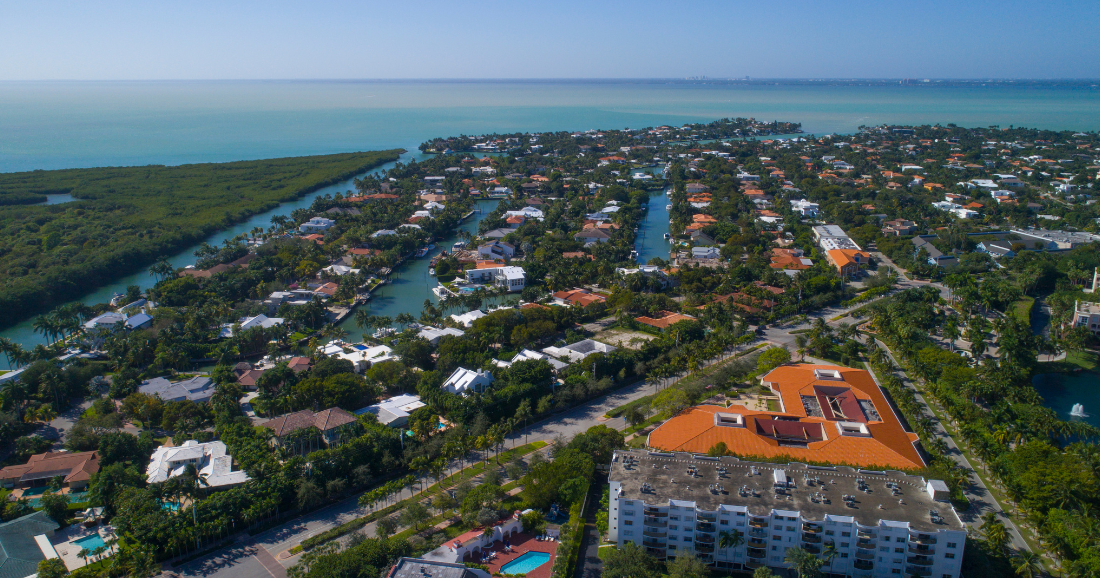
A proposed constitutional amendment that would significantly expand Florida’s homestead exemption could reduce Key Biscayne’s annual property tax revenue by as much as $1.6 million by 2028, according to preliminary estimates from Village Chief Financial Officer Benjamin Nussbaum.
Discussions on proposed property tax cuts lasted all of 36 hours during a special session in Tallahassee.
By 1 p.m. Tuesday, the Florida Legislature approved Gov. Ron DeSantis’ “Save Our Homes from Excessive Property Taxes” resolution during a special session in Tallahassee, passing 30-9 in the Senate and 75-26 in the House.
The property tax proposal will appear on the November ballot for voters to consider, and it will require another 60% support, this time from the electorate to take effect.
The plan would raise the current the current $50,000 homestead exemption limit to $150,000 in January 2027 and $250,000 in January 2028, meaning those with primary homes worth $250,000 or less would pay zero property tax come fiscal year 2028.
But it would not apply to school district levies.
“A $250,000 limit … that eliminates property tax for 60% of Florida homeowners,” DeSantis said.
The proposal would allow the legislature to eventually create a schedule to abolish all homestead property taxes.
The current bill also lowers the current 10% cap to 5% on annual assessment increases for non-homestead properties like vacation homes, investment and commercial properties, and apartments.
A special tax calculator can determine home property tax savings in Florida.
The proposal is to eliminate ad valorem taxes that are based on property market value, but would not eliminate non-ad valorem taxes to support schools and vital public services.
Among the possible effects:
* Less funding for cities and counties, which could affect road maintenance, parks, libraries and other local services;
* Budgets for police, fire rescue and emergency services would need a closer look, unless the state provides replacement funding;
* Potential higher sales taxes or new fees would compensate for the lost revenue.
* Large revenue losses throughout South Florida, including Miami-Dade, which could bring in alternative taxes.
Of the 7,395 parcels in Key Biscayne on Miami-Dade County’s tax roll, 2,777 (37.5%) are homesteaded, meaning that the property is the principal residence (as opposed to investment property or secondary home) of a natural person.
Ad valorem taxes make up about 72% of Key Biscayne’s annual revenue.

By the numbers: Key Biscayne and the proposed tax changes. Village officials estimate Florida’s proposed homestead exemption expansion could reduce Key Biscayne’s annual property tax revenue by as much as $1.6 million by 2028. The Village currently derives 72% of its revenue from ad valorem taxes.
Dairon Rodriguez from Getty Images / Canva
In a reply to Islander News, Nussbaum, explained the potential impact in the first two years to Key Biscayne, with some services or projects might needing to be squeezed or further evaluated.
“Based on the draft language … (and) using the Village’s 2025 tax roll of 2,777 homesteaded properties, the estimated annual ad-valorem impact would be:
• 2027: $150,000 homestead exemption (increase of $100,000 over today’s baseline): approximately an $800,000 annual reduction;
• 2028: $250,000 homestead exemption (increase of $200,000 over today’s baseline): approximately a $1.6 million annual reduction.
“These estimates reflect only the direct homestead exemption changes and do not include other parts of the proposal, such as lowering the non-homestead assessment cap from 10% to 5%, which could further reduce future taxable value growth.
Nussbaum cautioned that these figures were early estimates.
While the 60% majority sided with DeSantis on Tuesday, others feared the worst.
Senate Democratic Leader Lori Berman of Boca Raton called it “a political stunt that threatens to bankrupt our local communities, close small businesses and jack up rental prices even further.”
In a statement released to Islander News by the Florida Education Association, which includes more than 120,000 members, it took a stance against “rushed plans that harm local services.”
The statement read, in part: “The governor’s tax proposal will likely not provide the relief Florida’s families need and may, in fact, hurt the quality of life in their communities and the programs they count on. This proposal is simply a tax shift, as costs for public goods for our local communities will still have to be paid for by taxpayers.
“The decision to exclude already critically underfunded schools from this proposal is a major one. But it’s just as important to remember that public schools depend on the strength of the communities around them. Without safe roads, parks, beaches, or reliable first emergency services, our children and families cannot thrive. Even if public schools may not be directly impacted, the potential loss of funding for other essential services — like after-school care, libraries, and community resources — will still harm families and students. …
“Since voters will ultimately decide, it’s crucial they get a comprehensive and transparent picture of the potential impacts, both intended and unintended, that these changes could have on their communities and quality of life.”
Florida gubernatorial candidate Frank J. Russo (NPA-New Smyrna Beach), in a statement to Islander News on Tuesday afternoon, said he welcomes the growing conversation around meaningful property tax reform, but wanted more than just election-year promises.
“Any proposal must deliver real, measurable savings for homeowners — not temporary fixes or accounting gimmicks that simply shift costs from one pocket to another,” he said.
“Florida’s affordability crisis is real. Property taxes, insurance costs and housing expenses are driving families out of communities they’ve called home for decades. … The people of Florida don’t have a revenue problem. Government has a spending problem. It’s time Tallahassee started acting like it.”