
Written by Genevieve Bowen on June 3, 2026

Advertisement
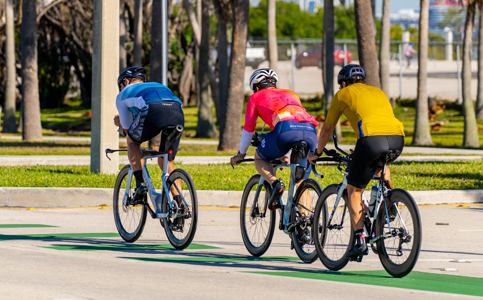
Miami is stitching together a new connected bicycle network across the city, launching a pipeline of projects to link neighborhoods, close gaps in infrastructure and bring delayed safety upgrades into motion for cyclists.
On May 28, Miami commissioners approved the updated Bicycle Master Plan, replacing the city’s 17-year-old framework. The modern biking blueprint prioritizes 10 projects over the next five years, backed by capital planning, grant funding and phased construction designed to translate plans on paper into safer, more rideable streets across the city.
The approval comes after months of stops and starts, after the plan was first placed on the commission agenda in October 2025 and repeatedly deferred to allow for deeper community input from cyclists, neighborhood associations and transit advocates.
The city’s process included more than 700 resident responses through surveys and interactive mapping tools, along with hundreds of additional public comments that helped shape project priorities and the structure of the five-year rollout.
“We received over 300 additional public comments,” said Juvenal Santana, director of the Department of Resilience and Public Works. “We had additional direction to seek public input and make sure that our priorities were aligning with the desires of the community. As part of that, we’re looking to prioritize 10 projects and see what our ability is to complete them within the next five years.”
Miami’s original Bicycle Master Plan was adopted in 2009, laying the groundwork for early bike routes and safety goals, but it predates major shifts in how cities design for multimodal travel. The 2025 update, prepared by Kimley-Horn Inc. for the Department of Resilience and Public Works, retools that framework for today’s traffic realities, introducing protected bicycle lanes, buffered lanes, shared-use paths and bicycle boulevards built to support safer, more continuous riding conditions.
The updated plan also builds on a broader vision of Miami as a “15-minute city,” where daily needs can be reached within a short bike ride, and aligns with regional transportation and planning strategies, including Vision Zero, the countywide goal of eliminating traffic fatalities and serious injuries by 2040.
Mr. Santana said the city is now folding the 10 priority projects into its capital improvement plan, pairing local dollars with grant funding to help bring them to life, with a focus on building out missing links in the network and using existing infrastructure where possible to stitch together safer routes across the city.
Commissioners highlighted both the community-driven process and the safety stakes behind the update. Commissioner Christine King pointed to her own experience as a cyclist who was injured in a crash on a busy street, saying the changes mark a personal and symbolic turning point.
“During the pandemic, I’m riding my bicycle … a car is about to run me over. I flip over the handlebars; I break my right hand, and ever since, I’ve been terrified to ride my bike,” Ms. King said. “But now, with this new Bicycle Master Plan and making space for bicyclists, I am going to get back on my bicycle.”
Commissioner Ralph Rosado praised the level of public engagement, saying residents brought forward “a lot of passion” and detailed feedback that helped shape the final plan. Commissioner Damian Pardo emphasized that the update incorporated safety data on pedestrian, micromobility and vehicle-related fatalities and serious injuries through coordination with the Safe Streets framework, strengthening the plan’s focus on real-world risk.
With the plan now approved, the city is set to sequence projects, secure funding and begin delivering early phases of the 10-project pipeline over the next five years, turning a stalled vision of safer cycling into a rolling program of on-the-ground construction.