
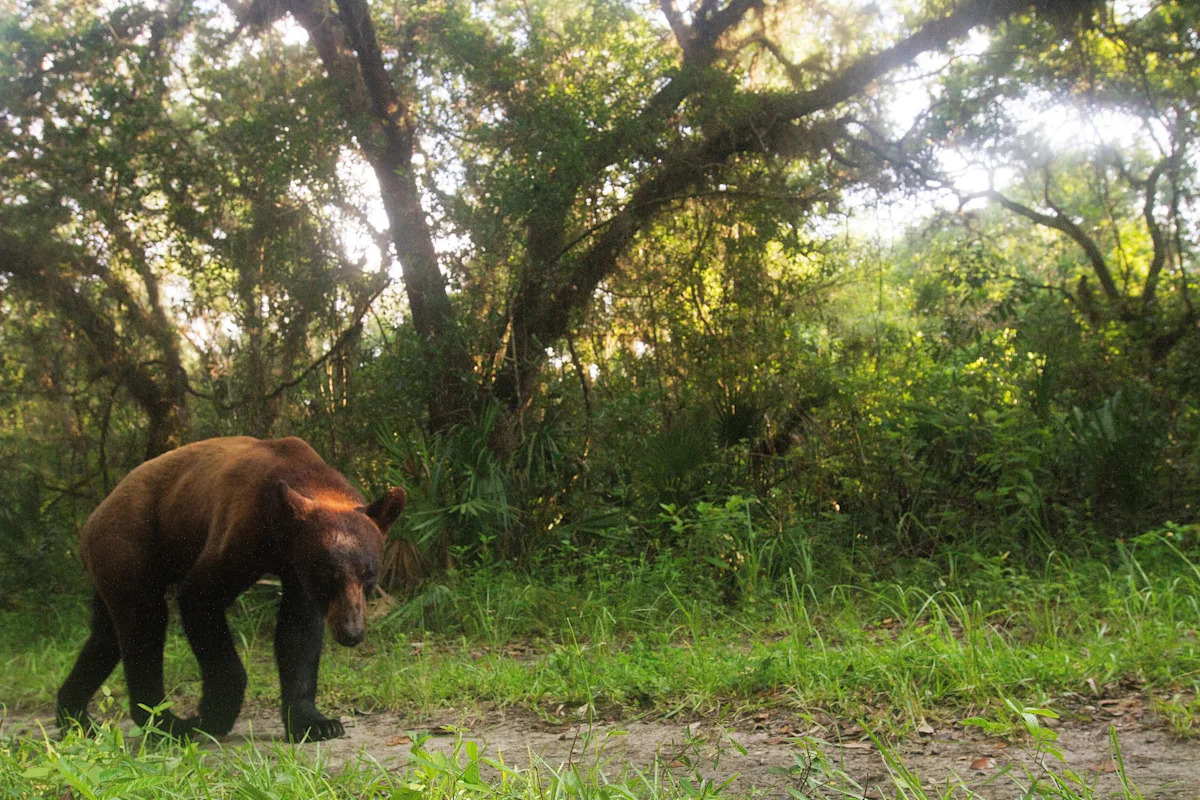
A black bear paid a Port St. Lucie neighborhood a surprise visit June 2, swimming in a lake and gallivanting about the Town Park community Tuesday.
Florida black bears, the only bear species in the Sunshine State, become more active this time of year in search of food. Occasional sightings in residential neighborhoods can occur and aren’t necessarily cause for alarm, according to police.
Florida’s black bear was classified as a “recovered” species in 2012, and there is an estimated population of 4,000 in the state, after decades of conservation efforts.
The species is protected under state law, according to the Florida Wildlife Federation, however, the Florida Fish and Wildlife Conservation Commission (FWC) has allowed regulated hunts to manage the population.
How common are black bears in Florida?
Florida black bears are the only bear species in the state, according to the Florida Wildlife Federation. They’re found throughout many habitats, including swamps and flatwoods, and their growing population is increasingly encountering human habitats because of urban development.
Their population is estimated to be about 4,000 bears, according to the organization, and their conservation status was officially classified as “recovered” in 2012.
Are Florida black bears dangerous?
Florida black bears typically avoid people and usually move on if they can’t find an easy food source, according to officials. Residents are encouraged to help prevent bears from lingering in neighborhoods by removing attractants around their homes.
While rare, bear attacks can happen. A man and his dog were fatally mauled in 2025 by a black bear in Collier County. Authorities said it is the first time in recorded Florida history a black bear has killed a human.
Florida black bear size, weight and habitat
Black bears trip a camera trap set up in the Florida Panther National Wildlife Refuge in June of 2016.
Facts about Florida black bears provided by the Florida Fish and Wildlife Commission:
Scientific name: Ursus americanus floridanus
Weight: Average adult weight ranges from 250 to 450 pounds for males and 125 to 250 pounds for females.
Diet: Bears are called omnivores because they eat both plant and animals. A Florida black bear’s diet varies, but usually consists of 73% plants, 22% insects, and 5% animal matter. Their diet varies due to fluctuations in plant productivity, and is also based on geographic variation from one region of Florida to the next.
Habitat: Black bears prefer habitats with a dense understory such as forested wetlands and uplands, natural pinelands, hammocks, scrub, and shrub lands, but will use just about every habitat type in Florida, including swamps.
What to do if you see a black bear in Florida
If you see a bear, police and wildlife officials advise the following:
Never attempt to feed it.
Keep children and pets away from the animal.
Secure garbage, pet food, bird seed, and other potential food sources.
If you unexpectedly encounter a bear:
Slowly back away while keeping the bear in sight.
Speak in a calm, firm voice.
Allow the bear a clear escape route.
How to contact FWC Wildlife Alert Hotline
If you feel threatened by a bear, observe an injured or orphaned bear, or witness someone intentionally feeding or harming a bear, call the Florida Fish and Wildlife Conservation Commission’s Wildlife Alert Hotline at 888-404-3922.
This article originally appeared on Treasure Coast Newspapers: Florida black bear population, size and habitat in case you see one