
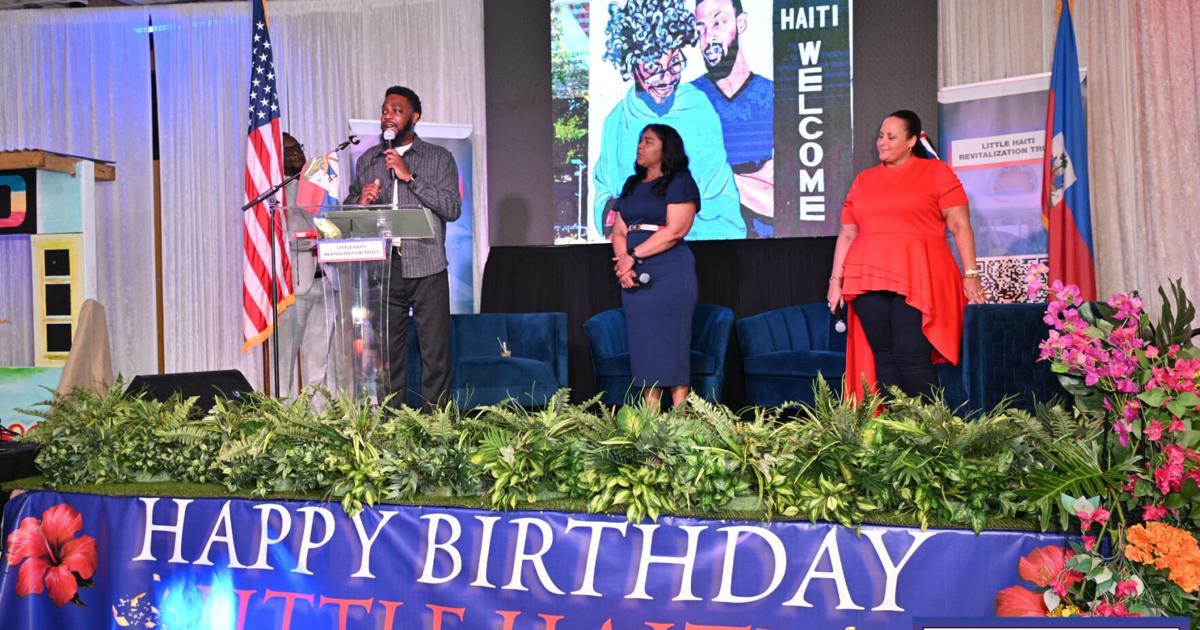
Last week, the Little Haiti Revitalization Trust presented the 10th anniversary celebration of Little Haiti’s official boundaries at the Caribbean Marketplace in Little Haiti.
In 2016, after years of advocacy and organization at the grassroots level, the City of Miami officially recognized Little Haiti as a neighborhood with established boundaries — a landmark victory for the preservation of Haitian history in Florida. In honor of the people, stories, sacrifices and culture that built the neighborhood, the 10th anniversary celebration invited all Miamians to celebrate the global symbol of creativity, resilience and unity exemplified in the Haitian diaspora.
Little Haiti was officially recognized not only as a means of historical preservation but also to combat gentrification. Despite efforts to slow it down, gentrification in the area is ongoing, with many Haitian-owned businesses closing and being replaced by non-Haitian entities. New developments, including affordable housing, are increasing, but market-rate projects dominate. The Little Haiti Revitalization Trust — established through a development deal — is responsible for promoting economic growth, business and commerce in the area, including incorporating affordable housing projects and homebuyer assistance programs.


Stakeholders from Little Haiti and across Miami attended the event.
(Courtesy of the Little Haiti Revitalization Trust)
“We are currently fighting a race against time, to be honest,” said Joann Milord, president and CEO of the trust. “The work of the trust is to continue to ensure that Little Haiti is still here. We’re providing benefits to residents, stakeholders and business owners; we’re trying to preserve the area; and we’re trying to make sure that the Little Haiti that you see here is visibly still Haitian.”

Many attendees wore bright reds and blues, reflective of the Haitian flag.
(Courtesy of the Little Haiti Revitalization Trust)
That is not a simple task. Outside factors such as climate change, population influx, inflation and more create the perfect petri dish for gentrification to grow.
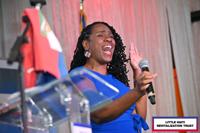
The event began with the singing of the national anthem.
(Courtesy of the Little Haiti Revitalization Trust )
“I wouldn’t even say we’re at risk for gentrification; I think we’re in the midst of it,” said Milord. “If you go down the block, where you would have seen a lot more lively Haitian businesses, we’ve seen closure over the last decade or more. Even though pricing has increased throughout the city, Little Haiti housing stock has increased four times the rate of the rest of Miami-Dade County. We know that prices rose after COVID, and Little Haiti also suffers from climate gentrification because it’s above sea level. It’s just very vulnerable.”
Miami-Dade County District 3 Commissioner Keon Hardemon thinks the problem is more historically tied, delving into issues of race relations, ethnic differences and lack of cultural literacy.
“People don’t have the best opinion about Black people in America,” Hardemon said in a video documenting the 10th anniversary celebration. “There were many people who didn’t see the value in establishing this place after an island that was going through so much turmoil. No one wanted to go through the fight.”
Now, 10 years later, as inflation increases and market rates climb, residents are priced out of the area, leaving property vulnerable to purchase by developers — many of whom are not a part of the established Haitian community. Hardemon argues that, for a better and more unified Miami, residents of Little Haiti should approach the development of the area with an open mind.
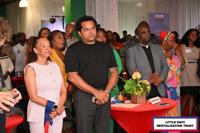
Commissioners Hardemon and King sat on a panel as a part of the event.
(Courtesy of the Little Haiti Revitalization Trust )
“Instead of always fighting the person who wants to develop, we have to find ways to work with them to develop the things that matter to you,” said Hardemon, whose district encompasses the neighborhood. “The reason why we established LHRT was to give our community a voice so that we can develop responsibly in our neighborhood. There is no Miami without Little Haiti.”
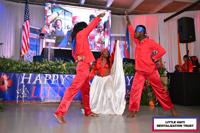
The event featured a performance by NSL Dance Group.
(Courtesy of the Little Haiti Revitalization Trust)
That sentiment was echoed throughout the anniversary celebration. For City of Miami District 5 Commissioner Christine King, the key to Little Haiti’s success is about finding the balance between community preservation and new development that could bring people of all backgrounds to the neighborhood.
“For every development that occurs in District 5 City of Miami, we get community benefits,” said King in the anniversary video. “This is how we get things that we need that there are no resources for in the City of Miami. The budget is but so big… We are holding ourselves accountable and holding you accountable as well.”

The event featured music by DJ Bullet.
(Courtesy of the Little Haiti Revitalization Trust )
King’s hopes for Little Haiti extend beyond those for a thriving yet insular neighborhood into a neighborhood of citywide economic significance.
“My goal for Little Haiti is to have the red bus come here every day,” said King. “When you have tourists coming to your community, then you know the community is thriving.”

The celebration was open to the public.
(Courtesy of the Little Haiti Revitalization Trust)
The Little Haiti Revitalization Trust seeks to uplift the community with a stronger economy, providing residents and small business owners with seats at the table.
“We really are making an effort and putting our money where our mouth is: putting resources out there to benefit people and stakeholders,” said Milord. “That really is the beginning. LHRT is a new entity. There is a vast need, and we create programs as we can to address the need. We want to do it comprehensively, looking at all the areas in which we can improve the community.”