
Two years ago, after the Florida State baseball team followed up a failure to make the NCAA Tournament in Link Jarrett’s first season with a run to the College World Series semifinals in Year 2, I wrote a column with this title:
If Link Jarrett keeps building teams like these at FSU, that elusive title will come at some point
Two years later, that still hasn’t happened. In fact, the Seminoles haven’t even been to Omaha again since.
It’s not just an FSU problem. Plenty of other programs are struggling to maintain consistency right now. The No. 1 and No. 2 overall seeds both failed to make it out of their regional each of the last two years. That Monstars-esque Georgia Tech squad made it no farther than this FSU team did.
No team that made last year’s College World Series made it back to a super regional this season, with four of the eight not even making the NCAA Tournament.
FSU is one of just three teams to have hosted a regional each of the last three seasons, along with North Carolina and Georgia. So the Seminoles have actually been near the top of the sport of late in terms of consistency. But the last few years, where FSU finished up just outside of a top-eight overall seed, have shown exactly how small the margin for error is to earn one as an ACC team in a sport dominated by the other Southern conference. And the Seminoles’ struggles to reach the postseason stage that they previously did in back-to-back years show just how small the margin is in the sport.
Jarrett is not faultless for FSU failing short of lofty expectations in the follow-up to FSU’s College World Series appearance. He himself would probably admit the areas where he’s erred over the last few seasons. Looking at this season, it seems clear that he misjudged a few portal additions who were expected to be key lineup contributors. Eli Putnam and Gabe Fraser each missed 17-plus starts for non-injury reasons.
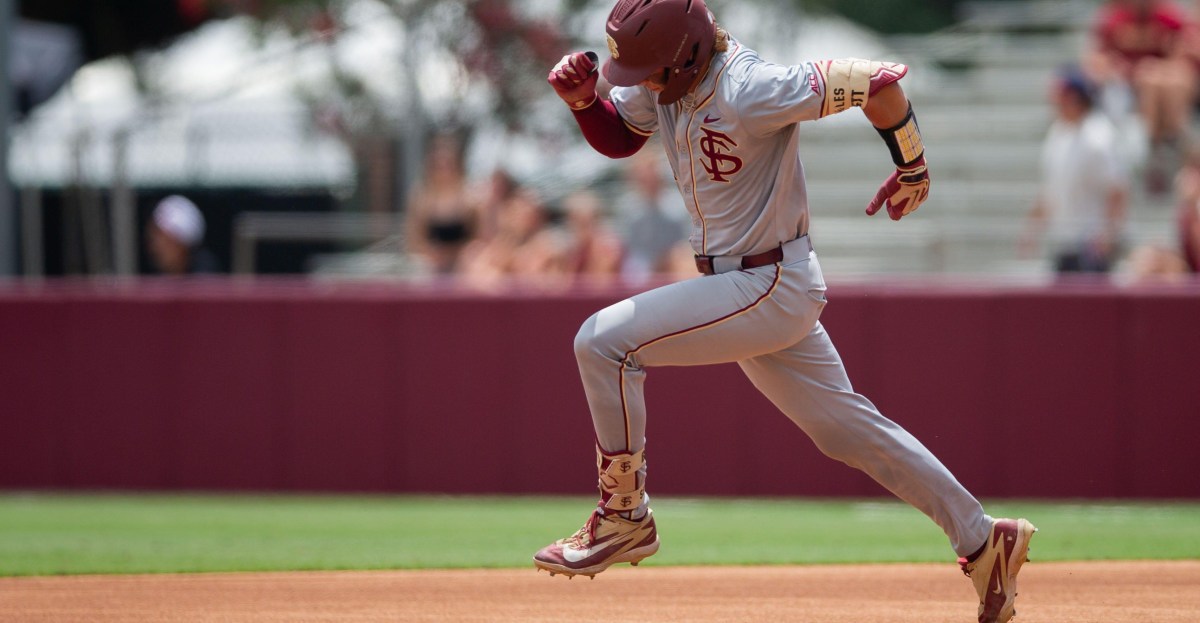
Jarrett built this team around Myles Bailey — as every coach in college baseball would have. But when you lose your star slugger at the halfway point of the regular season, that becomes a huge hurdle that could have never been predicted.
While the lineup showed up well enough in moments to still be able to earn the No. 10 overall seed, it was inconsistent. The players who needed to step up weren’t able to do so frequently enough. That’s the biggest reason why FSU was unable to make it out of its own regional last weekend, scoring nine runs in two games against bottom-seeded St. John’s.
The bullpen — which had largely been a strength of the team this season — picked a bad weekend to struggle. FSU entered the Tallahassee Regional a perfect 35-0 in games it was leading through seven innings before Friday’s loss to St. John’s, but wild pitches (an issues agin in Sunday’s loss to the Johnnies) snapped that streak while also claiming the Seminoles’ winning streak in regional play.
Once that die was cast, this offense was unlikely to be able to mash its way out of the loser’s bracket. FSU also was done no favors by the weather luck, which led it to use its final two weekend starters in the first elimination game.
Assembling the right team to finally be the one to end the FSU baseball drought is still entirely possible for Jarrett. He got different data points each of the last two seasons which led to FSU failing to make it back to Omaha.
For a coach who analyzes everything as thoroughly as him, those should be incredibly valuable, because in a sport which becomes quite unpredictable each postseason, it’s really just about continuing to build teams which give you a shot if the breaks go your way.
Jarrett has done that three years in a row. If he keeps doing it, one has to imagine it’ll go right for him eventually.