
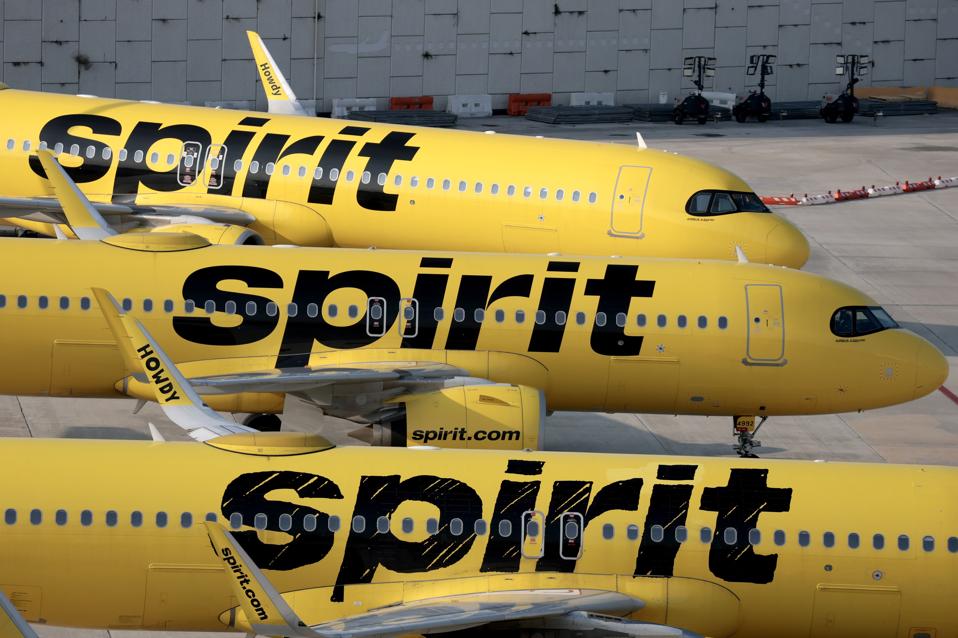
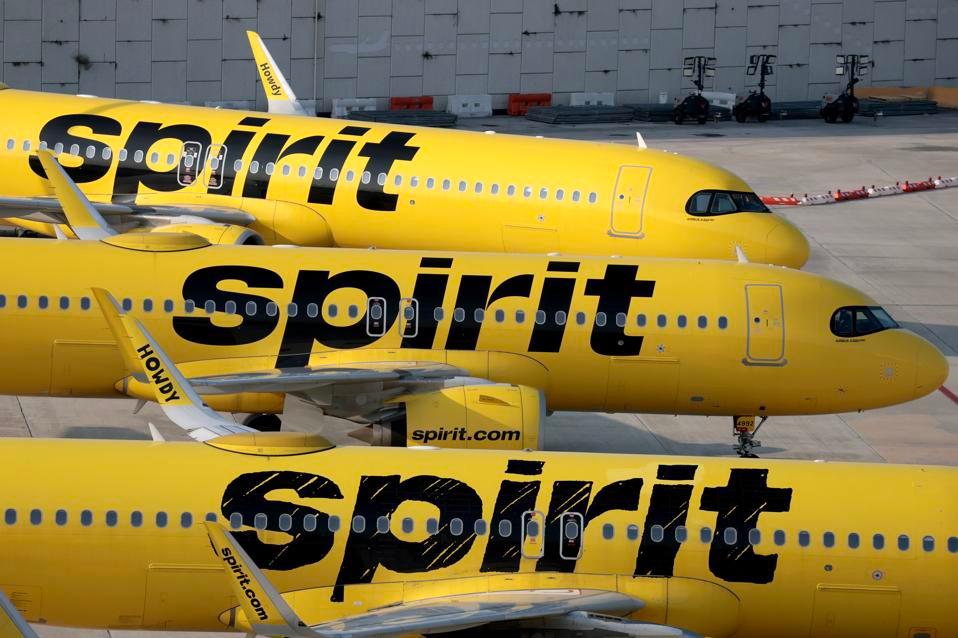
FORT LAUDERDALE, FLORIDA – MAY 02: Spirit Airlines planes are parked on the tarmac at the Fort Lauderdale-Hollywood International Airport on May 02, 2026 in Fort Lauderdale, Florida. Spirit Aviation Holdings Inc. announced today that it has canceled all upcoming flights and begun a wind-down of Spirit Airlines operations after failing to secure funding from the Trump administration. (Photo by Joe Raedle/Getty Images)
Getty Images
Fuel costs have surged in the months since the war in Iran began. Consumers are feeling the pinch at the pump, and highly exposed industries—like cruises and airlines—are under pressure. Spirit Airlines is arguably the biggest business loser so far. It was an already troubled company, and when the price of jet fuel rose, it increased Spirit’s costs by $100 million over two months, and the company failed in May. A government bailout attempt couldn’t get off the ground.
Why Spirit Airlines Failed
While there’s been a lot of focus on the attempted 2022 merger between Spirit and JetBlue, airlines are a tough business in general. The problems that brought Spirit back to earth were baked-in to the business model.
Spirit made its name by offering ultra low fares to casual travelers, and then charging for everything from carryons to soda. This worked for a while. They captured a slice of consumers who otherwise might not have flown at all. People liked the low prices, but hated being nickel-and-dimed. In 2024, J.D. Power found that the only North American airline with worse consumer satisfaction was Frontier.
Spirit’s dependence on ultra-budget travelers meant they didn’t have a lot of room to maneuver if things got tight. They couldn’t compensate for increased fuel costs by raising prices, because that would mean alienating the budget-conscious customers they had built their business around. There was simply no way through the crisis for Spirit, which had $8.1 billion in debt on the books in 2025 against $8.6 billion in assets (Spirit filed for bankruptcy protection in November 2024 and August 2025).
Because Spirit had focused exclusively on being the cheapest option, it wasn’t able to offer the amenities and service that more expensive carriers did.
Leadership Lesson 
ROMULUS, MICHIGAN – MAY 2: The Spirit Airlines ticket counter at Detroit Metro Airport is closed down after the airline shut down overnight on May 2, 2026 in Romulus, Michigan. Spirit Aviation Holdings Inc. announced today that it has canceled all upcoming flights and begun a wind-down of Spirit Airlines operations after failing to secure funding from the Trump administration. (Photo by Sarah Rice/Getty Images)
Getty Images
Leaders of companies are accountable to three major groups: clients, shareholders, and employees. In Spirit’s case, serving its customers made it impossible to serve shareholders and employees. It was a business model that simply wasn’t sustainable. They didn’t provide a really good service to the marketplace, just the cheapest possible way for someone to get from point A to point B. That’s fine when conditions are perfect, but as soon as you raise prices, your customers will either not fly or go with a different airline.
Leaders must keep their clients, shareholders, and employees in focus at all times. In Spirit’s case, a race to the bottom on pricing meant that they had a product that was very limited in terms of its appeal to customers, and they paid the price for it in the long run, harming their shareholders and employees along the way.