
ORLANDO, Fla. — Once written off as a polluted “dead lake,” Lake Apopka is now drawing visitors from across Central Florida to experience one of the region’s biggest environmental comeback stories.
The Lake Apopka Wildlife Drive gives guests a front-row seat to alligators, bald eagles and hundreds of bird species along an 11-mile scenic route through restored wetlands many call the “real Florida.”
Get more Florida on a Tankful
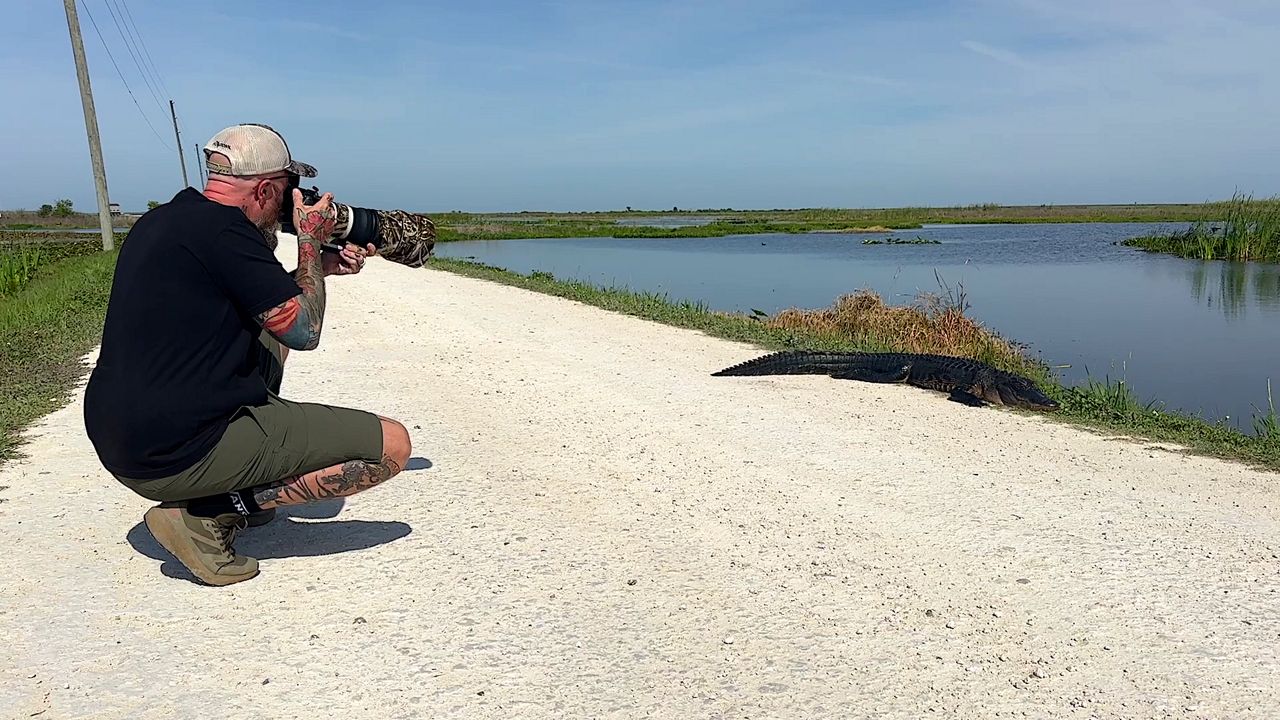
Take a ride with professional photographer Ryan Garrison, and it quickly becomes clear he’s always searching for the next wildlife encounter.
Whether spotting birds overhead or alligators basking in the sun, Garrison said the wildlife is impossible to miss.
“If you come early, early, and they won’t see them like this, they’ll be swimming around. But, yeah, they are literally everywhere,” Garrison said while photographing one of the many alligators lining the roadway.
The wildlife drive allows visitors to travel through 20,000 acres of wetlands that now serve as a thriving wildlife sanctuary.
Garrison said every trip offers something different.
“Probably see 20, 40, 50 different species of birds, especially if I go hang out with the birder nerds, who I love,” he said.
Those “birder nerds” include Carrie Straight and her mother Ann, who travel from Georgia and Illinois every year to visit Lake Apopka.
“But we come because it’s a great habitat for migratory birds,” Straight said.
Visitors can also bike or walk portions of the drive and trails, with no cost to enter the restoration area.
But volunteers said guests should plan extra time because there is so much wildlife to see and car travel can be busy, especially on weekends.
About 12,000 people visit each month.
“Although it’s only 11 miles, it’s going to take potentially two hours,” volunteer Deborah Green said.
She and other Orange Audubon Society volunteers have spent years helping preserve and protect the area.
Not long ago, however, Lake Apopka told a much different story.
From the 1950s through the 1990s, agricultural runoff, algae blooms and chemical contamination severely damaged the ecosystem and earned the lake a reputation as a polluted, dying body of water.
The St. Johns River Water Management District and other conservation groups played a major role in restoring the lake and surrounding wetlands.
“The water management district has really done remarkably well in cleaning up Lake Apopka,” Green said.
For Garrison, the area has become a peaceful escape where he regularly spends hours photographing wildlife, especially during quieter weekdays.
“And I like how quiet it is. And how long I can be out here with the animals and the nature,” he said.
Today, the restored wetlands surrounding Lake Apopka Wildlife Drive stand as proof that decades of environmental restoration can bring a damaged ecosystem back to life.
The Lake Apopka Wildlife Drive is open to vehicle traffic Fridays through Sundays and also on federal holidays.
Gates open at 7 a.m. and close to vehicle entry at 3 p.m., with all vehicles required to exit by 5 p.m.
The area is also open to bicycles and foot traffic seven days a week, and admission is always free.