
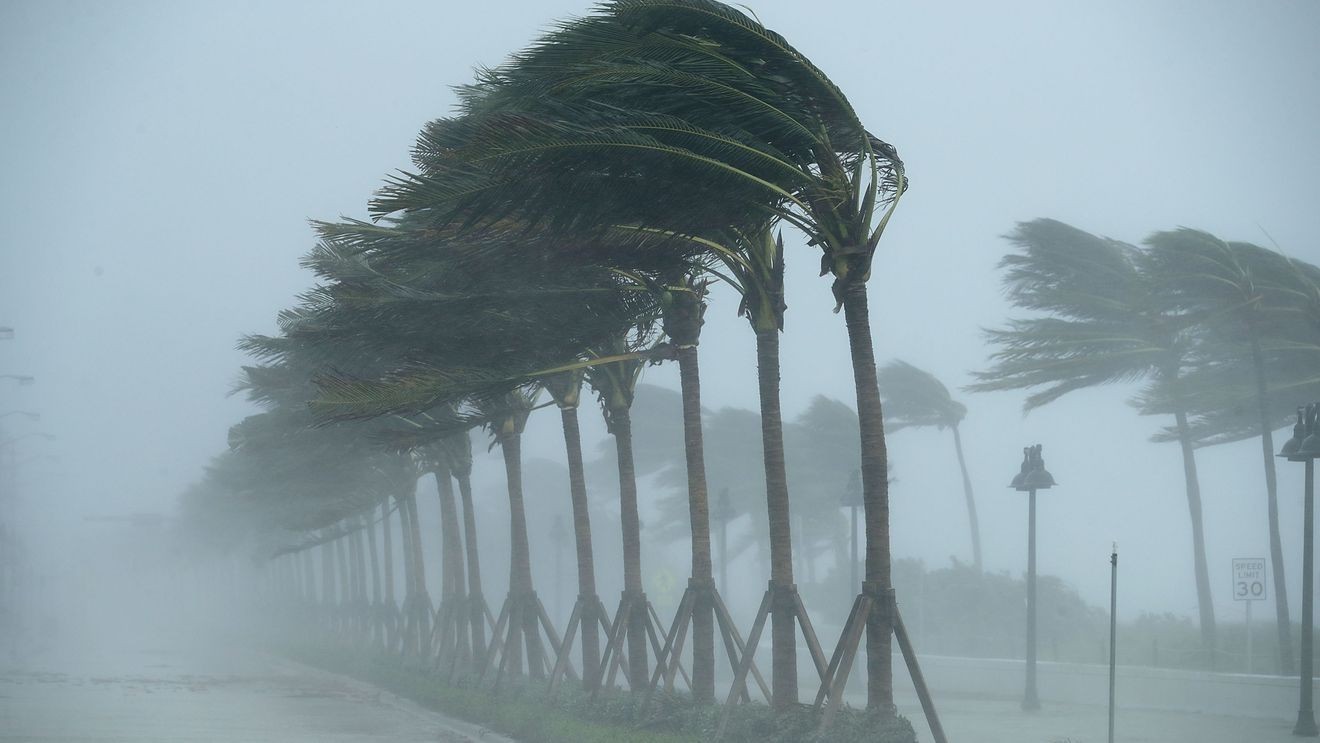
MIAMI, Fla. (CBS12) — As hurricane season begins, new research from Florida International University suggests one of South Florida’s most familiar landscape features could play a bigger role in protecting homes than previously understood: trees.
FIU researchers found that trees placed around low-rise buildings can reduce wind pressure on some parts of a home by as much as 50%, particularly when they stand directly in the path of incoming wind. The findings could help homeowners, insurers, emergency managers and local governments better understand when trees serve as protection, and when they become a hazard.
The study, recently published in the Journal of Wind Engineering and Industrial Aerodynamics, examined how common Florida trees interact with extreme winds and nearby homes. Researchers gathered data on more than 40,000 trees across the state, then tested selected species at FIU’s Wall of Wind, a large-scale facility capable of simulating Category 5 hurricane conditions.
The results point to a more nuanced picture of the urban tree canopy. Trees can slow wind and reduce pressure on critical parts of a structure, including sections of the roof. But under some conditions, researchers found that trees may also increase wind pressure on parts of a building, depending on where they are planted and the direction from which the wind arrives.
That dual effect matters in Miami-Dade County, where the urbanized area contains an estimated 36 million trees and roughly one-fifth of the county is covered by tree canopy. Trees provide shade, reduce heat, filter air, absorb carbon and help manage flooding. During hurricanes, however, they can also snap, uproot or become windborne debris.
RELATED: Hurricane supplies checklist: What to have before a storm
Using tree species and crown diameter, the researchers said they can estimate other characteristics, such as trunk diameter and crown height, that help predict whether a tree may fail during a storm. The team also ranked certain species by vulnerability, identifying mahogany as the least vulnerable deciduous tree, slash pine as the least vulnerable coniferous tree and water oak as the most vulnerable overall among the trees studied.
The findings could eventually influence how homeowners choose and place trees around houses in hurricane-prone regions. They may also help insurers assess risk, utilities anticipate power disruptions and emergency managers plan for debris removal and blocked roads after storms.
Researchers said more testing is needed, especially to understand how fallen or broken trees damage homes once they fail. But the study offers an early framework for treating trees not just as landscaping or hazards, but as part of a broader resilience strategy.
RELATED: Hurricane season hits and CFO Ingoglia sounds alarm: Stock up, map zones, test generators
For homeowners, the takeaway is not to remove trees wholesale. Instead, the research suggests that species, size, health and placement all matter. The right tree in the right location may help reduce wind stress on a home. The wrong tree, or the wrong placement, may do the opposite.
As communities plant more trees to reduce heat and improve quality of life, FIU researchers say understanding their behavior in extreme wind will be increasingly important. In hurricane country, the tree canopy may be both a line of defense and a risk to manage.