
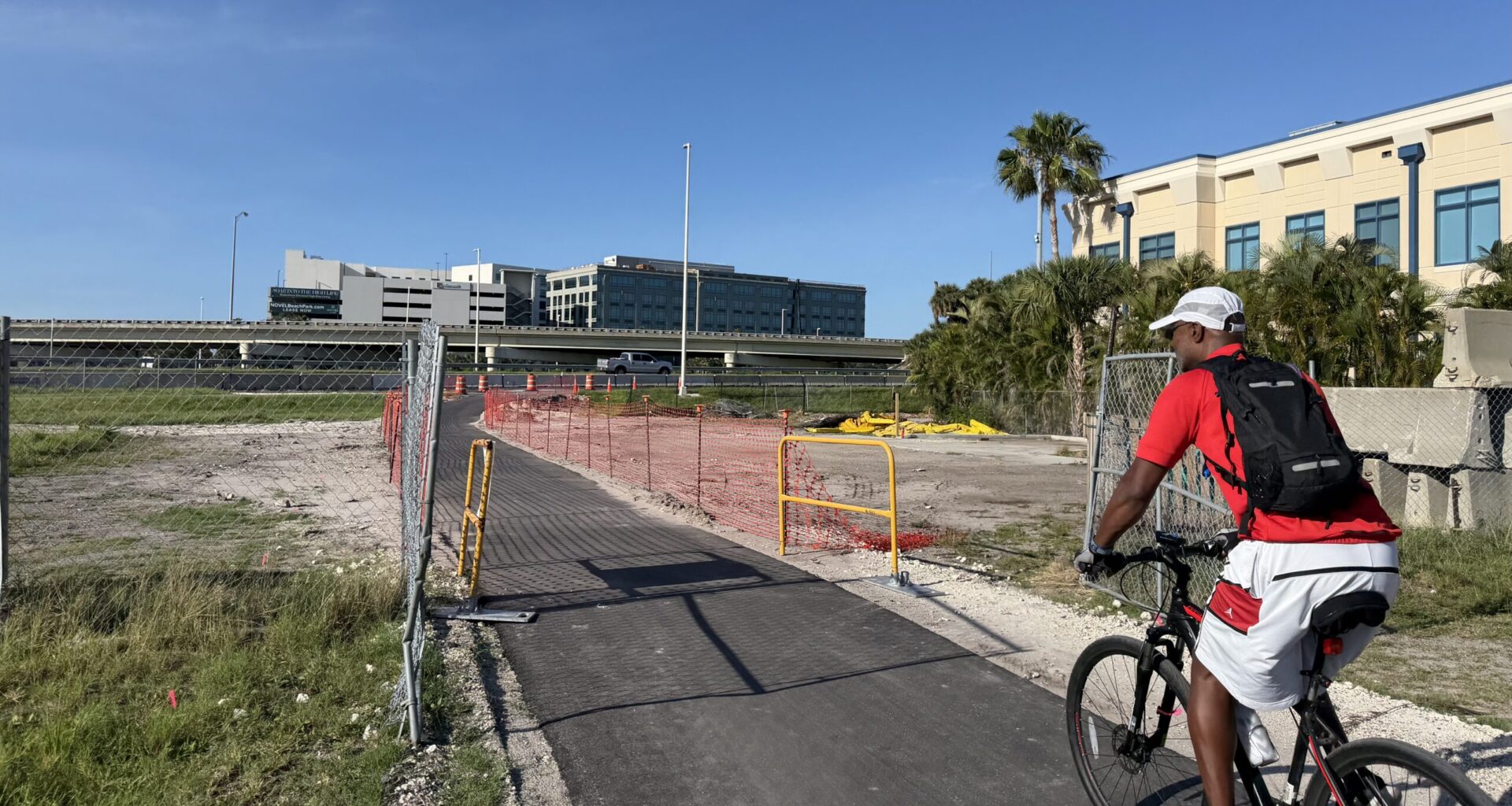
After years of anticipation, a new shared-use path near the Howard Frankland Bridge has officially opened. Westshore Alliance representatives and community members came together Saturday in Tampa to celebrate the occasion.
The approximately seven-mile trail, designed for pedestrians and cyclists, connects St. Petersburg and Tampa. It is adjacent to the north side of the new bridge. Residents and guests began to use the path May 27.
Westshore Alliance executive director Michael Maurino said that the project is part of a larger initiative. According to the Tampa Economic Development Council, the organization is a business-based, membership organization that promotes the growth and economic prosperity of the Westshore Business District.
“By rebuilding the Westshore Interchange (I-275/State Road 60) and the bridge, you can create a street grid through Westshore and that’s what has been missing over the years,” he explained. “That street grid is what allows you to have pedestrian connections like this.”
The Westshore Alliance team was “part of the group that determined the trail’s aesthetics,” Maurino added. Four shaded overlooks were intentional.
He said that the Courtney Campbell Trail and the former Friendship Trail Bridge near the Gandy Bridge served as inspirations for the effort.
Eventually, Westshore Alliance leaders hope to connect the Howard Frankland Bridge trail to downtown Tampa. The project is also a part of a larger Trust for Public Land initiative called the Florida Gulf Coast Trail.
According to the organization’s website, the long-term goal is to create a 420-mile trail through various pathways in seven southwest Florida counties. The project, which would span from Tampa Bay to Naples, would offer “safe pathways for outdoor recreation,” “promote alternative modes of transportation,” “foster health and well-being” and encourage individuals to explore nature.
“You have enough of these trails and low pedestrian pathways now built or planned,” Maurino explained. “So, it’s about filling those gaps now. We have sun like 300 days a year. There’s no reason why we can’t have more of these regional trails.”
The goal is to make outdoor activities “accessible to everybody,” he said. This can create a “sense of place and sense of community.”
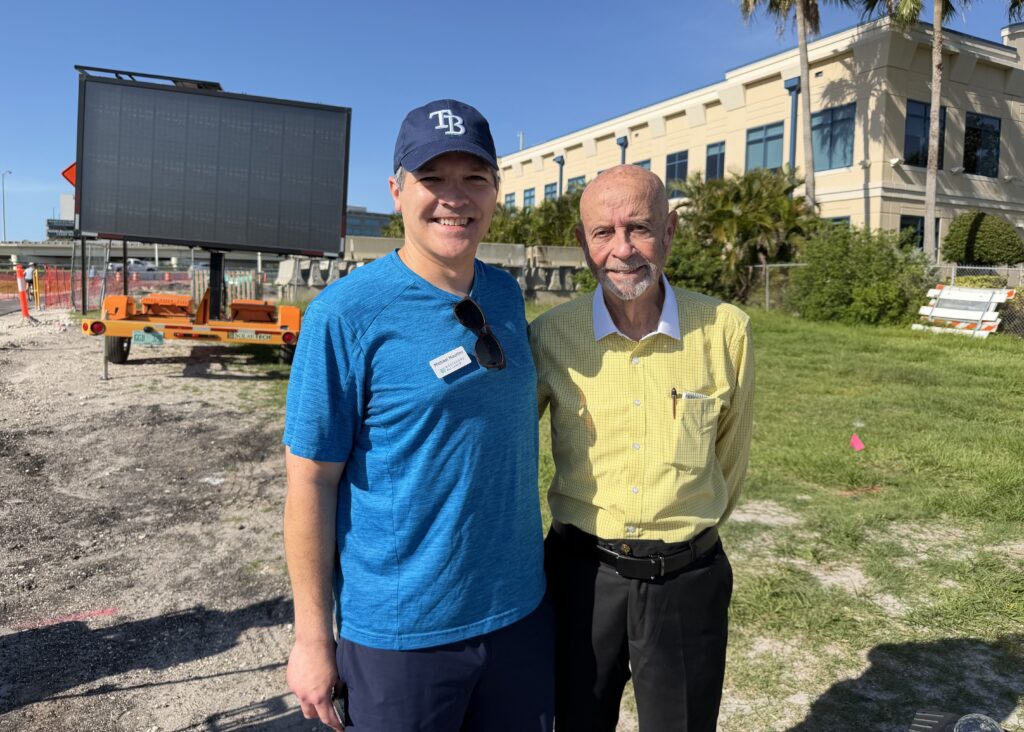
From left, Westshore Alliance executive director Michael Maurino and Tampa City Council member Charlie Miranda at the Saturday celebration.
In 1960, the original Howard Frankland Bridge opened. For 30 years, it had a single span that carried traffic in both directions. By 1990, the Florida Department of Transportation (FDOT) created a parallel span for southbound vehicles (Tampa to St. Petersburg).
Construction on a new southbound Howard Frankland Bridge, with express lanes and a pedestrian trail, began in 2020. FDOT oversaw the initiative, which cost over $900 million. It officially opened in March 2025. However, the shared-use path was still under construction.
Demolition efforts on the 1960 span began in July of the same year. The 1990 section now exclusively serves northbound traffic (St. Petersburg to Tampa).
Tampa City Council member Charlie Miranda has served on the Council on and off since 1974. A Ybor City native, Miranda has witnessed many changes in Tampa over the years.
“You have something that wasn’t there before,” he said. “I think it gives everybody an opportunity to calm down when they’re walking or biking up the lane.”
Miranda said that pedestrians can see “things that are different,” including birds and waterfront scenery. This, he believes, can help individuals understand “what nature is” and “what life is.”
“We live in a world now that’s very competitive and a world now that’s very strenuous,” Miranda added. “It’s a world that has a lot of opportunity but with that comes a lot of stress for people.”
Francisco Caballero and Emmanuel Fleming experienced the Howard Frankland Bridge trail for the first time Saturday. They ran all the way to Pinellas County.
“It’s good to see the growth and trajectory that the City of Tampa is going in,” Caballero said, “and more amenities, especially for people who are active in the community.”
Fleming, a Pinellas County resident, argued that the trail is a “great opportunity to experience a different perspective” in comparison to driving a car on the bridge.
According to FDOT, individuals can access the trail from the “north end of 4th Street in St. Petersburg and the south end of Reo Street in Tampa.”