
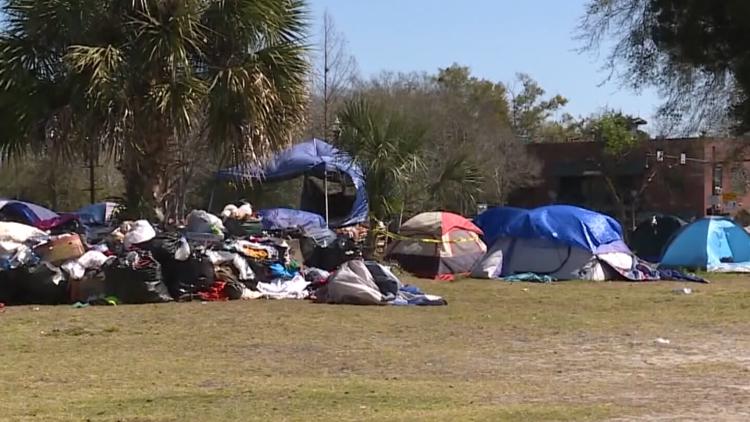
The number of people experiencing homelessness across Northeast Florida increased in 2026, according to the latest Point-in-Time count released by Changing Homelessness.
The report found 1,146 people were experiencing homelessness across Duval, Clay, Baker and Nassau counties during the annual one-night count conducted in late January. That represents a 14% increase from 2025, but a 42% decrease compared to 2016, showing that numbers are down in the last 10 years, but slightly up from last year.
Leaders with Changing Homelessness say the change in numbers is largely tied to economic pressures facing residents across the region. Dawn Gilman, CEO of Changing Homelessness, says the cost of living is a huge factor when it comes to homelessness rates.
“Food costs and housing costs have continued to go up at a pace that’s much faster than incomes,” said Gilman. “So, even though many of our folks are working, often working full-time, they don’t command the salary that allows them to afford transportation, food, medical care, and housing.”
Gilman added that conditions during the count also played a role in shaping the results. The survey took place during an unusually cold week in late January, prompting churches and service providers to open temporary cold-night shelters that may have affected where people were counted.
“If you remember back to the end of January, that week was extremely cold. We had multiple, different providers and agencies and churches that were running cold night shelters that evening,” said Gilman. “A lot of the folks that we counted that are often very difficult to locate were inside those temporary shelters on that night. So that’s one of the reasons the unsheltered count went up.”
The Point-in-Time count is conducted each year by volunteers and service providers and is considered a snapshot of the number of unhoused people on a single night, with conditions such as weather and outreach efforts often influencing the results.
Of those counted in 2026, 767 people were staying in shelters while 379 were unsheltered, meaning they were living in places not meant for human habitation such as streets, cars or abandoned buildings. The unsheltered population saw the sharpest rise, increasing 31% from the previous year, while the sheltered population also grew more modestly. Duval County accounted for the overwhelming majority of cases, with 1,071 people experiencing homelessness, highlighting the concentration of the issue in Jacksonville.
The report also includes a more comprehensive measure known as the By-Name List, which tracks individuals experiencing homelessness who are known to service providers. That data showed a decrease of 468 people between 2025 and 2026, pointing to some progress in connecting individuals with housing and services.
Despite that improvement, service providers on the front lines say they are seeing increased demand. At the Sulzbacher Center in downtown Jacksonville, Director of Housing Brian Snow says he’s noticed a change in who is seeking help, with more people entering homelessness for the first time.
“There’s a big shift now in folks that are entering homelessness due to what we consider to be crisis poverty or your working class folks who just can’t afford rental rates,” Snow said.
He says more women, seniors and families are now seeking services as well.
“There’s a much bigger, different demographic now that are becoming homeless because they can’t afford the rental rates,” said Snow.
Snow says the trend reflects a growing number of working people who simply cannot keep up with rising housing costs, a shift advocates say is reshaping homelessness across the region.
“The cost of living is driving that up and we have a massive waiting list at our Women and Families Campus for families trying to get into uh into shelter, and so lots and lots of families are falling into homelessness that in years past would not have fallen into due to just the living wage not offsetting rental rates and maybe just not having that support system,” said Snow.
Advocates say the latest data highlights the importance of continued investment in affordable housing and support services, while also stressing that the Point-in-Time count represents just one night and does not capture the full scope of homelessness in the community.