
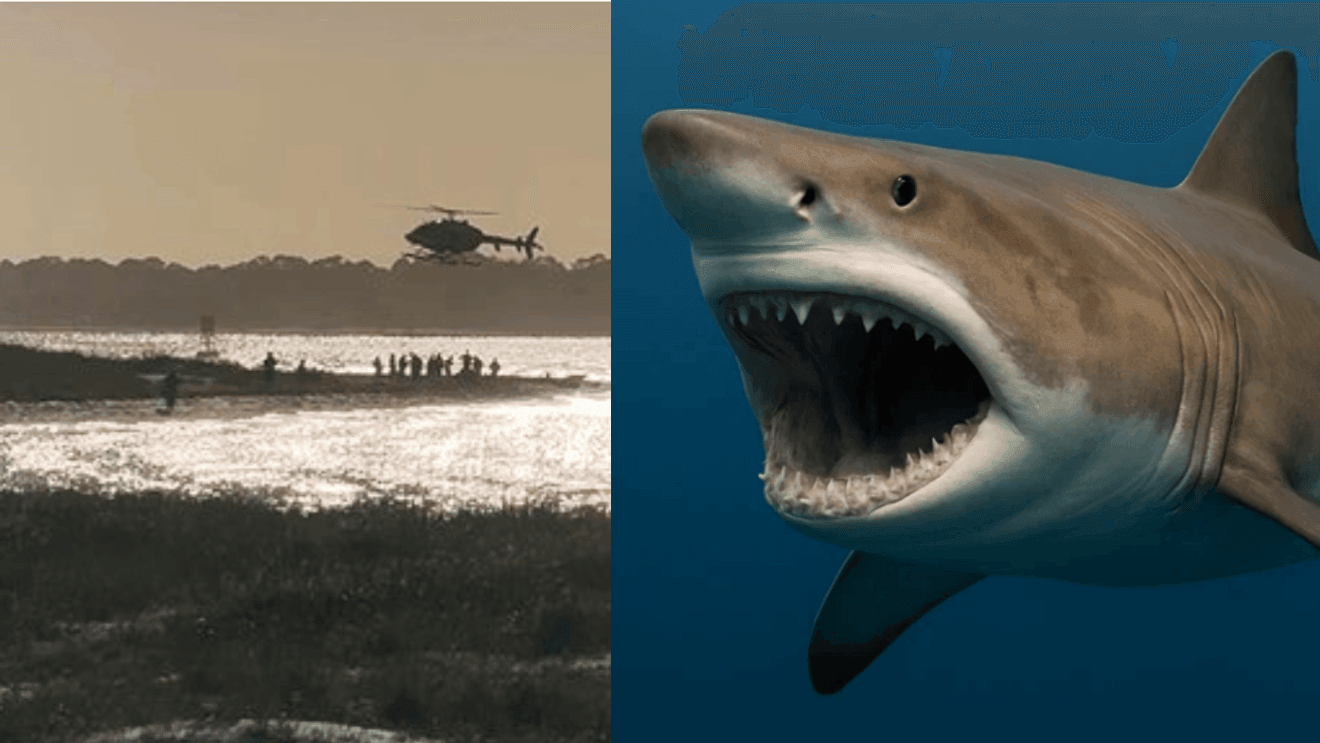
PENSACOLA, Fla. — As summer crowds return to water, two recent shark bites in the Florida Panhandle serve as a reminder to stay smart in the water.
Two shark bites in less than a week.
One on Pensacola Beach involving a fisherman trying to remove a shark from his line. The other left a swimmer critically injured near Panama City.
“Obviously the two are unrelated because, unfortunately, the attack on the navy staff member was what we call an unprovoked attack, but the first was handling a shark trying to take it off the line; it’s a different set of circumstances, so the shark, of course, is going to try to defend itself when it’s being taken off the hook,” NOAA Research Fish Biologist John Carlson said.
While the cases happened less than a week apart, NOAA fish biologist John Carlson says attacks are still very uncommon.
“I’m thinking in terms of statistics and comparing being attacked by a shark or being bit by a shark as opposed to other things that are dangerous; you’re more likely to be injured by your lawn mower or be struck by lightning,” Carlson said.
According to the Florida Museum of Natural History’s International Shark Attack File, in 2025 there were a total of 65 unprovoked bites worldwide — 11 of those in Florida.
Still, Carlson says there are steps swimmers can take to lower their risk– like to avoid swimming during dawn or dusk when water visibility is low or near a fishing pier.
“If you’re swimming in an area where somebody’s fishing, it’s generally not a good idea because you know the person that’s fishing on the beach or from a pier may not necessarily be fishing for sharks, but if they’re catching a fish, that struggling fish in the water may bring a shark into the area,” Carlson said.
Carlson also says to take off any shiny jewelry, as the reflections may mimic an injured fish.
For anglers– it is important to take extra caution when dealing with hooked sharks– carefully removing the hook or cutting the line as close as possible.
Carlson adds sharks are a natural part of Florida’s water, and most encounters end with zero injuries.
“They’re not at the beach to look for humans; if that was the case, the number of incidents we’d have would be exponentially higher,” Carlson said.
If you see a shark, the best thing to do is calmly exit the water and alert others in the area.
If you witness a shark bite, the best thing to do is call 911 immediately.