
WESLEY CHAPEL, Fla. — Beginning July 1, the U.S. Department of Education will implement changes to how the federal government classifies certain nursing degrees, a move that could significantly impact how much graduate nursing students can borrow through federal loan programs.
Under the new rules, most graduate nursing programs will no longer qualify for the federal government’s “professional degree” designation. As a result, many nursing students will face lower federal borrowing limits.
The Department of Education says the changes are intended to help lower the cost of graduate programs and reduce the amount of debt students take on. Critics, however, argue the policy could discourage students from entering a profession already facing workforce shortages.
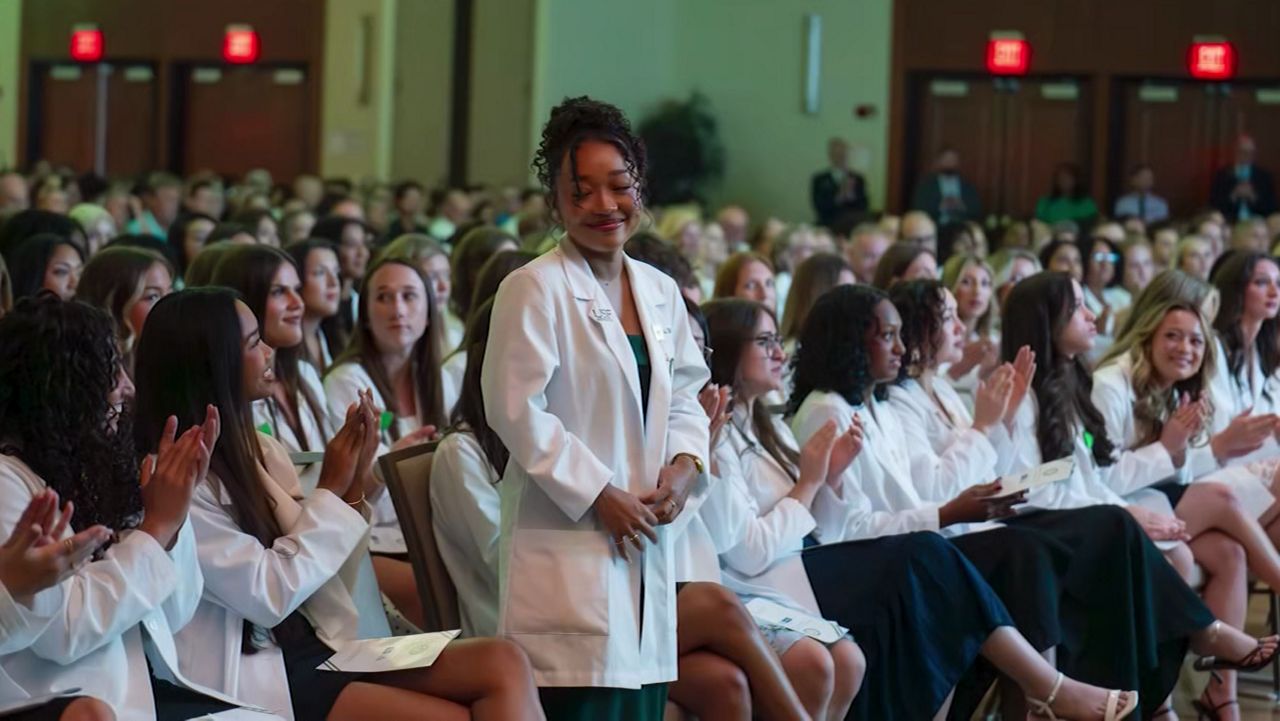
For Aisia Walden, nursing has always been more than a career choice.
“I’ve had a passion for helping people — it’s just always been in me,” Walden said.
Now a cardiac nurse at Tampa General Hospital and a recent graduate of USF, Walden says caring for patients is what motivates her every day.
“I get to help people and that’s what makes me happy. And I know I’m making an impact on someone else’s life,” she said.
Walden recently traveled to Washington, D.C., to advocate for solutions to the nation’s nursing shortage. She believes the Department of Education’s new loan limits could create another obstacle for aspiring nurses.
“I know a lot of students like me have these big goals and with the fear — I cannot afford this or I have to take this big loan — they are just going to be set back from pursuing that further education,” Walden said.
Beginning July 1, most graduate nursing programs will no longer qualify under the federal government’s professional degree category, which determines how much students can borrow through federal loans.
Under the new rules, students enrolled in designated professional programs, such as doctors or dentists, can borrow up to $50,000 per year and $200,000 total through federal loan programs.
Graduate students in other programs, including nursing, will be capped at $20,500 per year and $100,000 total.
“The Department of Education is making a big bet that this is going to reduce tuition rates for nursing degrees,” said Abby Hall, a professor of economics at the University of Tampa.
Hall said opponents of the change worry it could push students toward other forms of borrowing.
“Individuals might seek out more private loans, which tend to have a higher interest rate,” Hall said. “Or the other alternative is that people don’t enroll in these degrees at all. So they are making some pretty big assumptions about what’s going to happen as a result of the policy.”
Walden said she is concerned the policy could disproportionately affect students from lower-income backgrounds and discourage some from pursuing advanced nursing degrees altogether.
“If society trusts nurses with human lives, then we should be treating our education and profession with the same level of respect and investment,” Walden said. “You can’t ask for higher quality professionals.”
Walden is now encouraging more nurses to speak out and urge federal officials to reconsider the change.
The American Nurses Association is urging the Department of Education to include nursing in the professional degree category.
It is also possible that legal challenges could impact the implementation of the changes.