
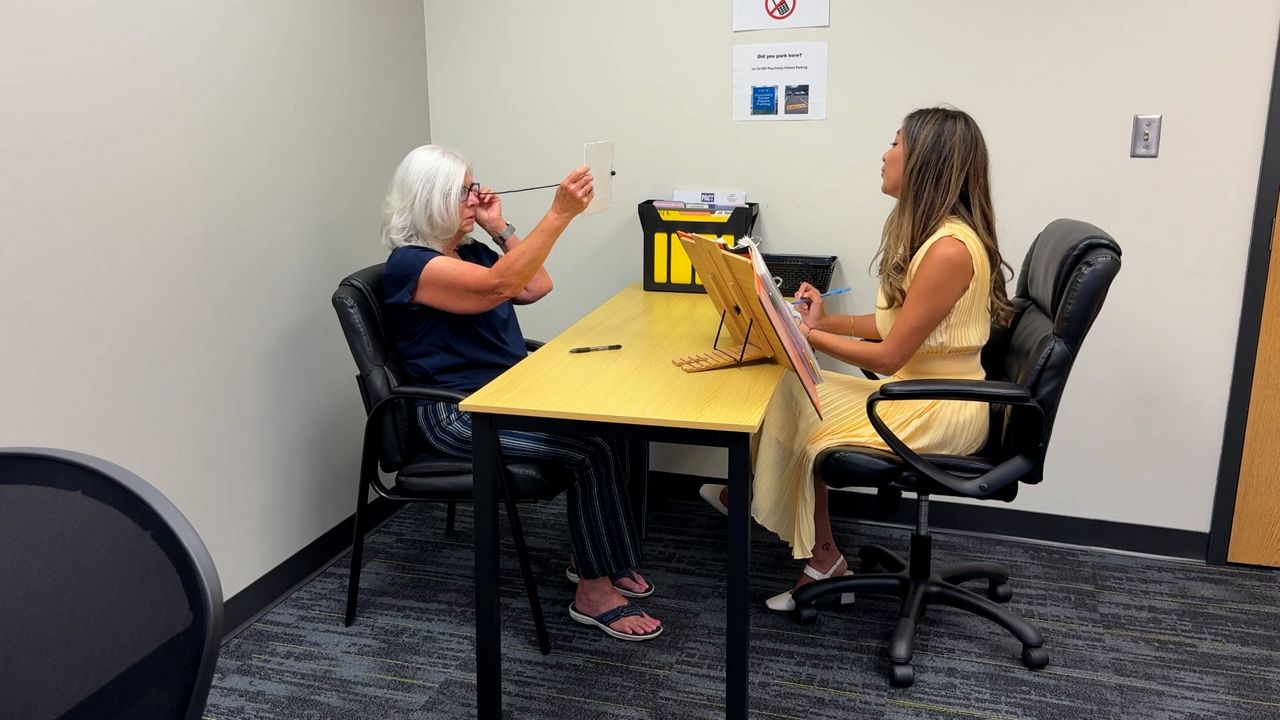
TAMPA, Fla. — A University of South Florida-led dementia study has received $2.8 million in additional federal funding as researchers work to determine whether cognitive training can delay the onset of dementia.
The Preventing Alzheimer’s with Cognitive Training study, known as PACT, has expanded to include 10 sites across the southeast.
Julie Lovett has been part of the study for about three years. As part of the trial, she completes required brain games and then plays other games in her free time.
“I do feel like they’re helpful, but I don’t do other brain games,” Lovett said. “But I do like to play Sudoku and Wordle.”
Lovett said she decided to participate because her mother had dementia for about six years before she died at the age of 93.
“Watching her decline really made me want to be able to do anything that I could to avoid it, and then also do anything that I could to help others in that situation,” Lovett said.
According to information from USF, the study includes 7,600 participants and is the largest clinical trial using brain training to reduce the risk of dementia.
“It’s amazing how much we’ve had interest in the study,” said Jennifer O’Brien, the principal investigator for the PACT study. “And people are so motivated to protect their own cognition as well as advance the science, give back to new generations.”
The recent $2.8 million grant from the National Institutes of Health brings total federal grant funding for the study to more than $50 million, according to USF.
O’Brien said the additional money will help researchers continue collecting data from participants.
“We’ve had some things like hurricanes and other impacts on our population that’s slowed things down,” O’Brien said. “So, we did apply and receive additional funding to make sure that we’re able to get this first round of data for all of our participants.”
The study is expected to conclude in January 2028, with initial results published by the end of that year.
“Research is important because there’s so many people suffering from dementia and Alzheimer’s,” Lovett said. “And whatever we can do to try to slow the progress of that.”
Researchers are already applying for additional funding to follow some current participants after the initial study is complete.