
WESH 2 Chronicle: Life after Pulse 10 Years
In the hospital, I can just remember the smells, the lights, the desperation. I think everything about that day is pretty much etched in my memory. 10 years later, that pain is still. It’s still right here, isn’t it? Uh, it would always be, it would always be. It’s been *** decade since the Pulse nightclub tragedy. *** journey of grief and pain. I don’t think I will ever heal, and *** journey of growth. The healing is *** constant, you know, there are still bad days and there are still good days. Amid that healing, there have been setbacks, the promised memorial, *** failure. The feeling of acceptance being erased. I don’t think people can really understand the gravity of what happened at Pulse nightclub if you don’t know why places like Pulse nightclub exist to begin with. Tonight, we remember the lives lost and changed, plus the work happening now not just. Remember the 49, but to build back community. Pulse deserves to be remembered as *** safe haven, as *** place that people could go to be themselves, not just as the nightmare that it became on June 12th, 2016. This is West 2 Chronicle, Life after Pulse, 10 years later, with Nancy Alvarez and Michelle Imperado. It’s been 10 years since June 12th of 2016. That was the night of the Pulse nightclub shooting, and it was *** night that changed our community here forever. If you were here, there is no doubt you remember the terror, the shock, the phone calls we all made to people we know to see if they were even in that building that night. It was so scary and so shocking on so many levels. I don’t think. Anyone could have seen what unfolded not just inside that building that night, but over the last 10 years. All of the disappointment surrounding the process of bringing *** permanent memorial to Orlando and the lack of services for survivors. It’s been very tense and very emotional. And here we are doing this in front of *** fence. The building is. Gone the sign, that iconic sign that stood over Orange Avenue for so many years, is gone, and there is still no memorial, and there is still *** lot of anger and frustration among families and survivors about that. And so over the next hour we really want to take you through what has unfolded here in our community over the last 10 years and in order to do that we need to take you back to the beginning. Some days it doesn’t feel like 10 years since the chaos, the confusion, the crushing grief. When we first went on TV, we knew it was bad. You’re taking *** look at live pictures right now, so many injured in this shooting. We do not have *** specific number. We had no idea how terribly it would end, and it is with great sadness that I share we have not 20 but 50 casualties. In addition to the shooter, there are another 53 that are hospitalized. Replaying the details of the night is hard for the families, the survivors, and so many in Central Florida who felt touched by what happened at Pulse. But this is what happened just after 2 a.m. as Pulse nightclub began to wind down its Latin night. *** man with an automatic weapon opened fire on the packed dance floor. There were as many as 300 people inside and around the club. Those that could ran out the main door, outdoors to an enclosed patio, to the back of the club, into bathrooms. Bar security was *** lone off-duty police officer. He called for backup as the shooting began, but dozens of patrons were all. Shot and the shooter was deep into the nightclub at this point. He shot people hiding in bathrooms. He even called 911 and he stayed in the club threatening to set off bombs until the Orange County SWAT team breached the back wall of Pulse just after 5 a.m. People are also inside of that restroom with him. And just on live TV, I’m not sure if you guys were able to hear that back at the station, and Pete, we can point that direction, but we just heard *** loud explosion. Orlando woke up that Sunday morning to heartbreak. 49 people dead and more than 50 in the hospital, some with gruesome, life-altering injuries. The outpouring of support was instant. Blood donation centers were overrun by everyone wanting to donate. Many people’s lives have been affected forever. And our community has been affected forever. Compensation funds were set up and people donated generously to ensure victims had some financial help in the aftermath. No amount of money is ever enough to replace *** life, but as the mourning began, questions started bubbling up. In the first days and weeks, there were questions about the club itself, multiple media. Outlets including West 2 reported on accusations about the fence that enclosed Pulse and issues with the exits. Now, according to *** text message exchange between city leaders, there are questions about exit doors being blocked, but the weight of what happened, the vigils, the funerals, the desire to lift up the LGBTQ community took over. As the days and months passed, we became Orlando Strong. Pulse was now the site of the nation’s largest mass shooting, and once it was no longer *** crime scene, questions about what it should become filled the community, the land, the building, all privately owned by Barbara and Rosario Poma, Pulse’s owners, as talk of *** memorial began, the city of Orlando made an overture. Buy out the owners for more than $2 million to get *** memorial built, but when two city commissioners balked at the purchase price, have you had *** specific someone saying it’s too much money? Yes, the Pomas walked away from the deal. It was about price for me. You couldn’t put *** price on it for me. And so began the One Pulse Foundation in late. In 2016, the foundation introduced itself. The purpose initially to help survivors and victims’ families, and build *** memorial to the 49 killed at Pulse. Barbara Poma, Pulse’s owner, was the founder. In the early days they hosted fundraising events and tried to find their footing. Board members were recruited. Financial support sought from across the US. They developed the Rainbow Run, *** 4.9 k race meant as *** remembrance of the Pulse victims, as well as *** fundraiser. Proceeds would support *** scholarship fund with one given for each of the 49 killed at Pulse. We have not forgotten what you’ve endured and what you are still enduring. But as annual ceremonies were held commemorating June 12th, fractures were developing within the community. Support for survivors was running out. The initial medical bills were paid, but wounds like the ones inflicted at Pulse take time to heal. Doctors, therapy, medication costing more than many survivors had, and some families were not satisfied with the police response, with answers from the city about the state of Pulse, and with Barbara Poma now running *** foundation that would dictate how their loved ones would. Be remembered that my role is to ensure that Pulse become *** place of healing. Things came to *** head when plans for the one Pulse-backed memorial were announced. Millions of dollars spent on *** design that many felt was out of scope for the lot along Orange Avenue. And then there was the museum. Rendering showed *** towering building less than 1 mile from Pulse. Some loved the idea of *** place to reflect on the history of the LGBTQ community. Just leave them. Make *** memorial. No museum, no. Others saw it as out of touch. Detractors called it death tourism. The grand plans came with *** rising price tag after the design reveal. One pulse began *** campaign to raise $49 million. But then 2020 and the pandemic changed everything as materials. Costs increased and fundraising slowed to *** halt internally. One Pulse was projecting *** $100 million project. That that was it for me. That was it. And that was too much for some within the organization. High level staff departures began as we neared the five year remembrance mark and as Wes too began working on stories of survivors, the friction within the Pulse community became public. Everything that’s going on nonprofit wise with Pulse that everyone sees kind of has nothing to do with. Actually I can take the kind of. It has nothing to do with the survivors. *** small but vocal group of survivors and family members were beginning to organize, pushing back on the memorial and museum plans, as well as revisiting the questions about Pulse’s safety from the early days of the attack, as all of this happened publicly, internally, one Pulse. The biggest fracture yet was developing in the summer of 2022. Founder Barbara Palma was removed as the executive director of the foundation, and within nine months she’d be out of the organization entirely. At the heart of it, whether the Palmas would donate the Pulse property for the memorial or if they expected to be paid for it. Meanwhile, calls for investigations grew louder. Some survivors and grieving families again wanting answers about the allegations of unpermitted renovations and code violations and how One Pulse was spending its donated funds. Even after Barbara Poma was out of the foundation. The accusations persisted, all of it impacting One Pulse’s ability to raise money. There’s *** lot that’s happened. The organization has not been able to raise the money in the. *** period of six years to build the projects in the fall of 2023, OnePulse’s board of directors took dire action. They sold *** lot purchased for the memorial in order to pay back state grants and turned over another property to Orange County to repay *** tourism tax grant. Then just before Thanksgiving tonight, the One Pulse Foundation says it will not go on. The board voted to dissolve the nonprofit after fundraising and grants of roughly. $20 million. One Pulse closed in debt and with nothing to show for the promised memorial to the victims of the Pulse attack. We are singularly focused on making sure that the memorial is completed and it is completed on the Pulse nightclub site. Concerned about what might happen to the property, the city of Orlando stepped in at the end of 2023 and brokered *** deal to buy Pulse from the Palmas. In the end, it was practically the same deal that. Fell apart between the city and the Palmas back in 2016. Under the city’s control, *** task force was formed to figure out what would happen to Pulse. Victims’ family members, survivors, and community leaders applied to join. Like so many other things connected to Pulse, the process was rocky. The same detractors claimed the memorial process was fixed, saying those directly impacted by Pulse didn’t have enough input or seats at the table. The committee worked to. Develop concepts of *** memorial. Should the building stay or go or in between and give advice on whether the nightclub building should remain. I don’t think the building should be torn down until there’s *** proper third party investigation or be demolished. We can’t dwell in the past. If we want to move forward, we have to look to the future. Ultimately that was the decision knock down the building where 49 people lost their lives to make way for *** memorial. In the days leading up to the nine year remembrance, families and survivors were given the chance to walk inside Pulse. Dozens made the journey. Many did not. Then in March of this year, nearly *** decade after the massacre that changed the city, the Pulse nightclub, *** rundown shell of the vibrant safe haven it once was for so many, was torn down to make way for *** permanent memorial. For some, the past 10 years have been ones of action, working to remember and honor the 49 lost at Pulse. It became so much bigger than that because so many people bought into what we were trying to do. Next on Chronicle, how these legacies are being preserved. Every time I have come here I have felt peaceful. It’s absolutely beautiful. I feel like everything just kind of slows down when you come here you sit under these trees on this bench. We’re in Colonial Town South, uh, this little neighborhood tucked away near downtown Orlando where they. Put this labyrinth together with the names of the victims. It’s so simple. It’s beautiful, and it has brought people *** lot of peace over the years. We might not have our big memorial yet, but people do come here to remember the loved ones who they lost. And Nancy, *** lot of work in the days after Pulse went into making sure that these victims were remembered for how they lived, not how they died, and they want to make sure that the good things they did in life are remembered and that their legacies live on in the next generation. As students scurry in and out of the student union at UCF, they pass them. It’s, it’s gorgeous. This vibrant mural, *** deeply meaningful tribute to Sarah Grossman’s dear friend Drew and his boyfriend Juan at their alma mater. Drew was such *** beacon of joy, happiness, and love. Andrew Leinen, known to his friends as Drew, and Juan Ramon. were killed at Pulse. Brandon Wolf was also there. One of the last things he said to me was, I guess what I’m saying is I wish we said I love you more often. In the days that followed, Brandon and Sarah wanted to take action because that is what Drew would have done. From *** young age, he was really passionate about creating spaces for people to be themselves and to be proud of that and to be around people who would care for them and love them. And then, you know, he went on and got *** master’s degree in clinical psychology to carry on Drew’s passion of unity and inclusion. Brandon and Sarah founded the Drew Project. The plan was simple scholarships to help LGBTQ students. It became so much bigger than that because so many people bought into what we were trying to do. 10 years later, the nonprofit has given away more than $300,000 in scholarships, supporting young people across the. Country and that’s not all. Drew started *** gay Straight Alliance at his high school. His friends used notes from his computer to build *** guide others can follow to do the same, and now it’s being used around the world, and that is how Drew’s legacy became *** generation of advocates. I work as the organizing director for an organization called Florida Youth Action Fund. Christopher Zoller started volunteering with March for Our Lives as *** young teenager. Now he Works to get other young people involved in advocacy. We provide the resources and funding and also coaching to allow them to like explore their idea and explore their campaign and kind of bring that about in like *** bigger way in their community. He was able to pursue his passion thanks to his degree in political science from UCF. I just wanted to say thank you to everyone at the Drew Project for believing in me and the $5000 scholarship he got from the Drew Project. It just gave me the. Feeling of acceptance that I think I wasn’t fully getting in any other spaces before. Christopher is proud to be one of many scholarship recipients continuing Drew’s work, ensuring his life continues to have an enduring impact. We need to keep his legacy going, and I think that this is the perfect way to do it through the advocacy that we can do in our work every day. Juan also has *** scholarship in his name. He worked for Wells Fargo at the time of his death. In 2022. They gave 100. $1000 to the one Pulse Foundation scholarship program in his honor. The one Ramon Guerrero scholarship is specifically for students pursuing *** finance-related degree. The Central Florida Foundation started managing one scholarship as well as the one Pulse scholarship after the foundation closed in 2023. So when these dollars were in jeopardy and we were approached to see if we would carry on *** philanthropic legacy, that’s what we do, um, so. It made perfect sense for us to be the home for it. Originally, one Pulse gave away 49 scholarships every year, but to keep it going, the Central Florida Foundation condensed the program to 1 per year, and the first was granted to Nayani Krall. I think it meant everything again to be able to be accepted in totality for who I am and the many facets that make Nayani Nayane was *** relief, but it also gave me strength and an empowerment. Me to feel comfortable in my own skin and take up space in rooms and not, like I said, prior shrink. Today Nayani knows exactly who she is and because her multi-year scholarship helps pay for her degree in kinesiology and sports business administration, she can spend her free time making sure kids feel like they belong through *** program she created called Play It Forward. At least 50% of those below the poverty line are 3 times less likely to be able to. Have access to sports and that means kids aren’t being able to enjoy the benefits of play and camaraderie with others, teamwork benefits, and I wanted to close that gap. The Central Florida Foundation says the Juan Ramon Guerrero scholarship and the One Pulse scholarship will be awarded annually until the money runs out, which won’t be for years. And after 10 years, Sarah and Brandon are sunsetting the Drew project. But the good that’s been done in the names of Drew, Juan, and all of the victims. will continue because scholarships are more than just tuition. *** lot of times these scholarships are the difference between staying in *** place that isn’t necessarily LGBT friendly and getting to go to *** school in *** state or city that is. And so we see the bigger picture when it comes to these scholarships and this money, and the ROI is lives saved *** lot of the time and legacies don’t just live in murals or. Memorials. They live in people, in every student given *** chance, every young person who finds acceptance, and every life changed by an opportunity created in the wake of tragedy. I was so worried in the wake of Pulse that people would only ever remember him as he died and not as how he lived, and it warms my heart that they get to know the Drew I knew, the connector, the convenor, the, you know, warrior for better spaces for everyone. Um, and I hope that legacy continues to live on. It’s one of the most sacred tributes to the victims of the Pulse nightclub attack. So this entire thing was taken care of by the community. Hear the story behind it from the man who helped make it happen. It’s good to come out every now and then and just show some respect. When West 2 Chronicle, Life After Pulse continues. This labyrinth here isn’t the only memorial that we see around town. We see it in all the beautiful artwork, Nancy, and we do, and the crosswalks that we had, we used to cross one to go to our favorite pizza place, and I often think about my kids when we talk about this because they’re really part of *** generation of, of kids here in Orlando who were really little when this happened and they’ve grown up surrounded by these murals, the artwork, the symbols of pride, love, and I really value that and it wasn’t. Just the city putting up murals. It was people, regular people who didn’t know the victims. They wanted to do something in the days after the attack to make sure that these people were remembered. I got to visit Greenwood Cemetery where 4 of the victims are buried. There’s also *** memorial there, and the man who was in charge of taking care of the grounds told me just the beautiful stories of generosity, selfless generosity in the days after Pulse. You know what they say about old habits. It’s good to come out every now and then and just show some respect. He’s retired now, but there was *** time when Don Price would care for the graves at Greenwood Cemetery every day. I still stay in touch with with everybody here, you know. I still ask about the kids, you know, how’s the kids doing? His kids are the victims of the Pulse nightclub shooting. Price was Greenwood Cemetery sexton for 15 years, including Orlando’s darkest day. Oh, you took it home with you every day. In the hours after the attack, the city reserved 49 plots for the victims, all expenses covered. Most families chose to bury their loved ones other places, but under the sprawling branches of one of the city’s historic live oak trees, 4 young men are buried Alejandro Barrios Martinez. Connell, Anthony Diesla, and Valentin Fernandez, two benches bearing their names overlook *** memorial with nameplates honoring all of the innocent lives lost June 12, 2016. We were just trying to make sure there was *** comfortable place and there was, there was somewhere that they could come and have *** quiet moment and just think about their family without it feeling. Like, you know, without them reliving what happened, complete strangers. Price remembers, pitched in as well. So this entire thing was taken care of by the community, donating services for the families, setting up this free little library, and of course the trees. They cheer things up quite *** bit. They were small saplings when Bob Carr Jr. donated his beloved Tababua trees to the cemetery. As *** teacher and as *** parent, you grow things, right? So it wasn’t too far out of my experience. Now they tower over his head, an undeniable sign time has passed. Carr started growing his trees in small pots as therapy after his son died suddenly in 2014. When he heard about the Pulse plot, he had *** thought they could serve as memorials for not only the 49 angels lost at Pulse, but to the son Bob lost too. I knew that it was something I could do with my trees that meant something. And as fate would have it, he had exactly 49. What did you hope that your trees would provide for the families? Maybe some evidence that somebody cared. Oh. Having been *** parent who lost *** child. I kind of knew how it was. Their lime green leaves, Price says, have become bright spots around the cemetery for *** man who spent decades surrounded by graves and grief, he certainly has *** unique take on cemeteries. When you think about it, *** cemetery is nothing but love. And so when you can look at cemeteries that way. That’s when they don’t become scary and grim. Pulse will forever be ingrained in Orlando’s story, as will the victims forever remembered alongside the city’s most notable dignitaries at Greenwood Cemetery. The little things that you take for granted as *** normal person. Are the hardest challenging that I go through every day. The healing is *** constant, you know, there are still bad days and there are still good days. Two Pulse survivors, 10 years later, their journey and their hope. Next on Chronicle, Life after Pulse. I came here for the first time 5 years ago when I was working on *** story about the survivors, and you know their journey has been so complicated in all of this. They have *** lot of questions still. They were fighting for services that they thought they were going to have 5 years after Pulse, and they were all gone at that point, but their stories have stuck with me and how resilient they all are. Yes, these are people who have loved again, lived again. They’re thriving, they’re growing. This one always gets me. They’ve danced again. I mean, imagine they were dancing that night. They’re courageous and to, to find, you know, that courage and that resiliency all while living with *** trauma that most of us can’t even imagine. So 5 years ago I met *** few survivors and I caught up with the. Again recently and they’re working at their own pace, but they are, they’re moving forward in their healing journeys and looking towards the future and it was just heartwarming to see that they’re finding *** life after what happened to them. I do hope to be completely healed. In certain ways, people say time heals all wounds, but when you’ve survived one of the worst mass shootings in US history, I don’t think I will ever heal. How long does it take to repair the physical and emotional scars left behind? Just basically trying to survive each day with the best possible. Positive attitude. All the positivity that possibly I could like put out and and take in is what I’m about now. Pulse survivors Leo Melendez and Norman Casciano have both been learning to live again after the trauma of that night. I first sat down with them 5 years ago to learn about their lives after Pulse. I could have *** better position. I could have, you know, making more money if you wanna say, but due to the lack of the handicapped place that I am now. Even though I don’t, I don’t wanna, I don’t want to put myself as *** handicapped person, but I am. Even then Leo knew life would never look the same again. The little things that you take for granted as *** normal person. Are the hardest challenging that I go through every day. 10 years have now passed since Leo walked into the Pulse nightclub with Javier Jorge Reyes, the last time he saw his good friend alive. I do remember I got shot first in the leg because when he I remember saying, my leg, my leg, and then he repeated again, just be quiet and throw yourself on the floor. After that, Leo remembers waking up in the hospital three weeks later. His recovery has been called *** miracle. Without God. I will not be standing where I am right now. *** swirling scar is still visible on the back of his head, where one of three bullets hit him that night. He lost his short-term memory, his lower field of vision, and 99% of his hearing in his left ear, 50% in his right. He wears *** hearing aid but still struggles to communicate. Due to my financial situation, I haven’t been able to replace it because hearing aids are very expensive. And the last hearing that ENA that I looked into cost me nearly $4000. *** bullet also tore through Leo’s left leg. Surgeons had to rebuild it. He can now walk again, but not like before, which led to *** hip replacement late last year, his ninth surgery since Pulse. Still, Leo made the decision early on not to dwell on what happened. I can either be negative and throw myself in *** bed and be depressed. Or I can smile and say I can do this even though it’s hard, even though it’s challenging, even though it’s painful, and when the city offered Leo *** chance to tour the nightclub one last time before it was torn down in March, he declined. To me that’s just was going to bring sadness to go see something and. To remember that I was there, that I saw one of my good friends die right next to me. Instead, he walks in the annual community Rainbow Run, cherishes time with family and friends, and the little moments in life. Just to see my daughter smile, that brings me *** big joy. What brings me joy now, believe it or not, is the littlest thing, *** beautiful day outside just feeling the nice crispy air in your face. That beautiful sunrise that brings me joy. Leo dreams about his future. He wants to write *** book about his story of survival and resilience. I want to give people that courage that if there’s something dramatic happened to them to try to look at the positive things of life. And don’t give up. Giving up was never an option for Norman either. Still haunted by the memories, those 1st 5 years after Pulse were tough. I feel like my biggest moment in the 5 years has been like getting this apartment and living on my own because prior to that I, I felt like I wasn’t in control. But just weeks ago we met again in the same apartment, the same room, yet *** different Norman was sitting in front of me. Do you feel more like Norman pre-Pulse now? Uh, you could say that. You could say that, yes, it’s like *** 2.0 version of the person that existed prior to Pulse. Yes, I definitely am more full of life, ready to like. Just keep experiencing the PTSD, anxiety, depression, and nerve damage from being shot in the back haven’t gone away. The healing is *** constant, you know. There are still bad days and there are still good days. Weekly therapy has helped and so has rediscovering old passions. My cousin and I started *** catering business together, so I got back into cooking. I got back into what I love to do. Los Cugini Cuisine, *** lunch catering business much like the one his dad used to have, *** love letter to his father and his heritage. It’s, it, it sparked that creativity back in me. That’s kind of something that also helped bring me to where I am now. It, it allowed me to like use all these things that have been trapped in here while I’m. Thinking, you know that it wasn’t what I wanted anymore, it was actually what I needed. He also needed community, which he’s found in *** place he didn’t expect EDM music festivals. They accepted me with open arms and it kind of just like changed the trajectory of everything. Once afraid of letting people get too close, afraid of losing people he loved like all those he lost at Pulse, Norman is finally letting his guard down. What is up looking for Love? My name is Norman. I feel like I am one of the best candidates for your show, and that’s why I’m making this video and that’s why I’m auditioning. That’s Norman’s audition video for *** reality TV show for people in the EDM community looking for love. He just wrapped up filming the show in Colorado. Even if like I didn’t meet anyone there when I, when I was interviewing that I know that meeting. Someone could come from it, so you know, once it comes out, you guys will have to see. So Norman is on the market. Yes, yes, yes, looking for love. As hard as it is to admit, Norman says *** big part of moving forward in his personal healing was taking *** step back from his years-long fight for survivors like him to be heard. You’re trapped in this, this bubble of, of grief and. The battle comes from you, you wanting to not be feeling this way, but you’re still trapped in that bubble. So I definitely do feel like *** lot of the families and, and, and the vic and the survivors are, are stuck in that. Bubble of grief. When we first spoke in 2021, Norman talked about the plight of survivors and the concerns they had about the One Pulse Foundation. It’s one of the reasons West 2 started investigating the foundation and survivors’ claims of building and unpermitted problems at the nightclub. There was no accountability for anything. Anything. Still, Norman joined the advisory committee created by the city of Orlando to come up with *** conceptual design for the planned Pulse memorial. He ultimately made the difficult decision to step down when the process became too triggering. It didn’t feel right. It didn’t feel right for me. In my healing, some wounds never fully disappear, but through the pain, survivors like Norman and Leo are still finding reasons to choose joy, hope, and life after Pulse. It’s for the people that were lost there. It’s to make sure that their names are forever remembered and that. Our names are forever remembered because like I said we live this every day. I keep battling it up and keep, keep going and try to make the best out of it and try to laugh even though sometimes I wanna cry. But I just remember that I’m alive and have life and I’m breathing. I’m good and I’m like thank you God, thank you, I’m here. I bless them in the morning. I said sleep tight at night, you know, when we go out I said you guys are coming with me, you know, so they’re always around Nancy always around. She is *** Pulse mom still trying to heal how she spent the last decade keeping her daughter’s story alive. Next on Chronicle. Survivors aren’t the only ones who are working their way through healing. The families are too. Yes, over the years we have given voice to family members who are angry and grieving in ways that they were just days after this happened, and many of them have stayed in that place, you know, they’re still mad. They still have questions. Some have become advocates and they’ve gone on to do big things in memory of their loved ones, and I recently caught up with two family members about, you know, where they are right now 10 years later. Take one step into Mya Alvear’s home. This was from Germany, and you feel an instant connection to the daughter she lost at Pulse. The queen and the king, they were friends. Amanda is everywhere here. Her baby clothes, photos. Cars, even the lanyard she wore every day. This is *** picture of her brother. Amanda was just 25 years old when she went to Pulse with friends, including Mercedes Flores. They had been inseparable since childhood, and they both died that night. Moments before Amanda had been posting on Snapchat, she captured the start of the gunfire. The trauma of it all still very much on the surface. I have saints. My Jesus, my Virgin Mary, and, and I dropped to the floor and I begged them, please. Let her be alive. Let her be injured. Let her be injured, but don’t take her from me. 10 years later, that pain is still. It’s still right here, isn’t it? It would always be. Mya keeps her daughter’s legacy alive in many ways, *** toy drive held every December around Amanda’s birthday. She’s now an advocate speaking out about gun violence, and she’s been an active member of efforts to build *** Pulse memorial. She was among those who went inside the building before it was torn down. People think that it’s *** huge place, but it’s not. That’s why he was able to kill so many people so quickly. Mya has leaned on her faith as the years turned into *** decade, leaving her to only imagine who Amanda would be today. What would you think her life would have been like? Oh my gosh, she would have had an amazing life. She would have an amazing life, uh. Finishing school, I think still going to school. She loves school so much. I mean, she wanted to get married, she wanted to have children. She wanted to take care of me when I was growing old. She said, Mommy, you don’t have to worry. I’m gonna work hard and I’m gonna be rich. She was gonna be rich. They’re gonna take care of you. Yeah, she’s, I think she still is taking care of you she does believe me, she does. In the middle with the heart, it really kind of brings it all together. For Lali Santiago, the last 10 years have revolved around *** promise. I had made my promise that I would always. Always ensured that Donnie’s story, Donnie’s life would not just be something left. In the air or just *** story that. There was more and there’s more to him. Danny was *** cousin she considered *** brother. She reminisced about him at the small, quiet memorial in Orlando’s colonial town where to this day she leaves notes by his name. I would tell him. What was happening? What would I missed him. What, um, you know, even you would laugh if you saw what I was wearing today because you’d think it’s crazy. You always thought I dressed kind of crazy. Their bond was so strong Lali was Donnie’s rock when he took the biggest leap of his life leaving Puerto Rico. There’s the machismo culture. There’s the religious culture and he just, as he was getting older. He was not happy. He couldn’t be himself at all. He couldn’t be himself. She remembers convincing him, Come, come to Florida. Come and we will. Everything we’ll take care of you. We will, we will help you find your way, your path. And watching him thrive in Orlando, he ended up managing *** store in 6 months he was speaking English very well, um, managed to forge *** community, and the freedom he found here led him to Gene, the love of his life. They met at Pulse and then they found out that they were, they worked in the same area and. It was just meant to be. And he loved, loved, fiercely loved Gene. Donnie and Gene died where they met. Every detail of that day seared in Lay’s mind. I can recall the phone call I received from *** family member. Uh, driving down 408, heading to the hospital, running towards Pulse in the hospital, I can just remember the smells, the lights, the desperation. Time has helped, but not much. Lally finds comfort in knowing that he died with the man he loved in the place they loved, forever young, forever free. He died happy and free. It’s *** comfort to you. It is. I always take that with me and I mean one of the things there’s *** phrase that he always that he would say and no metienesque aestal amame comosoy you don’t have to accept me just love me as I am. I have *** lot of lingering questions about how we got to this place, and I think *** lot of people do. 10 years passed, but there’s still so much that lies ahead. Plans for *** permanent Pulse memorial, and the pushback against it, plus what it might take to unite Orlando again, when Chronicle returns. Well, we’ve spent *** lot of time looking back on this tragedy from how it started to everything that has unraveled over the years, but now we want to look forward because incredibly, even 10 years later there’s *** lot of work to do. Yes, and not just with the memorial and plans to bring it to our community, hopefully with. In the next year or so, but also within the LGBTQ community at large, there are people who still feel like they have *** fight ahead of them. They feel like their community has been erased by politics here in Florida and across the country, and they’re coming back to do the work for the LGBTQ community. The passing years have done little to bring peace to those touched by Pulse. Broken promises and the lack of *** proper memorial, *** place to mourn and honor the victims and survivors, left many feeling forgotten. This design really has their fingerprints on it. The plans aren’t finalized yet, but the city-backed permanent memorial appears to be on track for *** groundbreaking this fall. It’s supposed to be about unity, about love for our children. After 7 months of emotion. Discussions. The Pulse Memorial Advisory Committee made up of family members, survivors, and community members came up with concepts of *** design. The committee wanted the final design to include *** memorial and reflection space, survivors’ comments, private gathering space, angel ellipse site, *** healing prism garden, *** reflection pool, and visitor pavilion. Now architects and builders are working to bring that design to life. Grief never ends. Nobody wants to hear that. But it does evolve and we’re trying to make space for that. At the most recent public meeting, the company has unveiled the latest design renderings, now 60% complete. We’re taking components from the original building, you know, for example, *** section of the dance floor itself will be placed. At the foundation of the reflecting pole itself to tie it in to make it personal, we’re looking to salvaging much of the concrete work and placing it everywhere throughout the site, but the plans continue to bring criticism. How does reusing crime scene materials respect the victims and survivors? Blood and died in the restrooms and on the dance floor. Will the reflecting pool include any floorboards permanently stained by blood, or will those be excluded? We asked the mayor about the pushback from survivors and victims’ loved ones. There’s certainly going to be, I wouldn’t say they’re major changes, but there will be modifications and things. One of the most important things we’ve done. And our staff has done yeoman’s work in terms of they’ve been able to contact all 49 families to get exactly how they would like the name of their loved one. Those same opponents of the memorial have also been calling for criminal investigations into the safety of the Pulse nightclub. Two years ago they filed police reports with Orlando police. The investigation was closed, citing no reckless disregard for human life or disregard for the safety of others. Then *** year ago they delivered *** deeply researched report to the state attorney’s office hoping for *** new investigation. Just last week, Monique Worrell met with the group, telling them there is no case. The evidence. Not rise to the threshold to bring charges and win. So now they are asking for the Florida legislature to convene an independent commission like it did in Parkland to probe any specific and systematic failures. I have *** lot of lingering questions about how we got to this place, and I think *** lot of people do. And it’s for me it’s not about, you know, shame or or anything like that it’s about accountability, it’s about, um, it’s about honesty, it’s about transparency and again I think healing requires real reconciliation. It requires the hard conversation. The tough questions for Pulse survivor Brandon Wolf. 10 years is long enough. He wants to see those conversations happen now with people of power and privilege. Law enforcement agencies did *** review of the processes in place when the Pulse tragedy happened. Their own analysis of what happened showed that they failed on *** number of fronts, that their refusal to enter the building for hours got over *** dozen people killed. That they’re not really sure where all of the bullets went that were fired from their own guns. There are open questions about whether or not their active shooter policy was sufficient. There are open questions about how *** man like that could get access to guns like that in the first place and why those laws never changed in the wake of what happened at Pulse nightclub. After years of working in Washington DC fighting for LGBTQ equality and gun control, Brandon is bringing that fight back to Orlando, working with Equality Florida. I think Florida has to be the starting point for what resilience. And resistance looks like in this country, he says accountability isn’t just about the past. This is *** community whose DNA has been under assault on every level of government for years now, and I think that means that the fight has matured. I think it means people have really suffered the consequences of the failed leadership of DeSantiss and Donald Trump and others. But I don’t think the DNA of Orlando has changed. I think it’s still the same beautiful community that it always has been. I think people still love each other very much. They’re willing to go to bat for each other, and I hope 10 years is *** moment to recommit to honoring the people we lost, not just with flags or with pretty colors, but with our actions. The love and compassion that filled Orlando in the days after Pulse stays with Brandon and gives him faith in the future. Orlando has that kind of courage in spades, and it is my hope that 5 years from now, 10 years from now, people are inspired by our courage to go fight in their own communities. Through it all, the heart of this story has never changed. 49 people went out to dance and never came home. 10 years later, their names still matter. Their lives still matter, and for many in Orlando, the responsibility to honor them never ends. We have been covering the tragedy at Pulse since the very beginning, and as we know that work is far from over. If you were impacted by what happened here in this community, we want you to know we’re going to continue to be here for you, for the families, the survivors, and forever for the 49. For all of us here at Westhu and the Chronicle team, thank you for watching.
It’s been a decade since the Pulse nightclub tragedy.A journey of grief and pain after 49 people were killed and dozens more injured. We’re looking back at what happened and what has changed as we remember those who lost their lives and those whose lives were changed forever. This is WESH 2 Chronicle: Life After Pulse 10 years later.SURVIVORS REFLECT | REMEMBRANCE EVENTS | FRIDAY BELL RINGING | RAINBOW RUN | REMEMBERING THE VICTIMS | THE DEMISE OF ONEPULSE | SURVIVORS WANT ANSWERS | WHAT HAPPENED AT PULSE
ORLANDO, Fla. —
It’s been a decade since the Pulse nightclub tragedy.
A journey of grief and pain after 49 people were killed and dozens more injured.
We’re looking back at what happened and what has changed as we remember those who lost their lives and those whose lives were changed forever.
This is WESH 2 Chronicle: Life After Pulse 10 years later.
SURVIVORS REFLECT | REMEMBRANCE EVENTS | FRIDAY BELL RINGING | RAINBOW RUN | REMEMBERING THE VICTIMS | THE DEMISE OF ONEPULSE | SURVIVORS WANT ANSWERS | WHAT HAPPENED AT PULSE
WESH 2 News
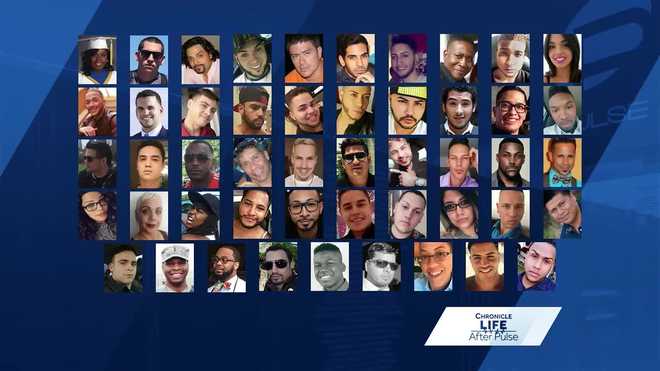
The victims of the Pulse nightclub shooting