
For a long while, it appeared Miami Republican Sen. Ileana Garcia was going to hold on to her Senate District 36 seat without opposition.
Not anymore.
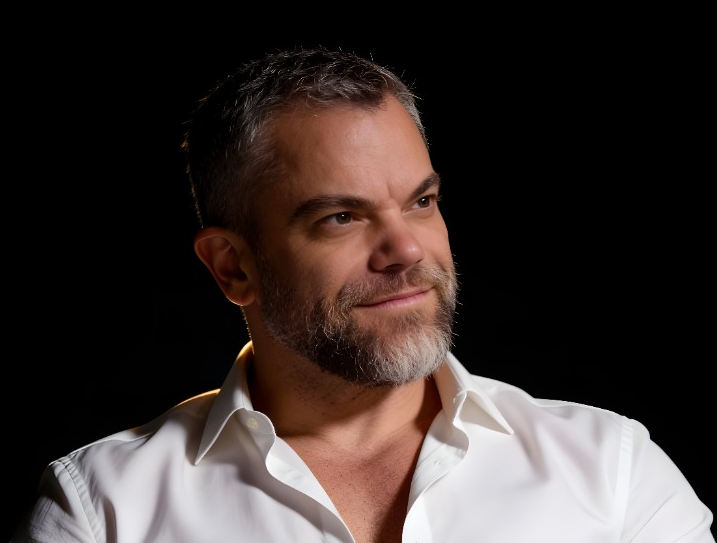
Democrat George Lávin filed to run for SD 36 on Thursday, one day before the qualifying deadline.
“I’m running for the Florida Senate because I believe the people of District 36 deserve a leader who is accessible, accountable, and focused on delivering results,” Lávin said in a statement.
“Too many families are feeling the strain of rising costs and growing frustration with a government that seems disconnected from their daily lives. I’m ready to be a strong voice and a relentless advocate for this community — fighting to expand opportunity, strengthen public safety, hold government accountable, and make sure every resident has a seat at the table.”

A son and grandson of immigrants who has lived in West Miami for more than a decade, Lávin, 54, is a legal consultant by trade who, in his own words, “collaborates with prosecutors, law firms, and corporate legal departments.”
Lávin ran unsuccessfully in April for the City Commission. His platform during that contest, where he enjoyed support from the Miami-Dade Democratic Party, prioritized government transparency, expanded public access to City hall and improved community services.
He proposed new online tools for citizen engagement and budget tracking, while supporting public safety, small businesses and continued investment in infrastructure, parks and programs for seniors and families.
“Married for nine years and devoted to family and friends, my spouse and I have built our life here in West Miami,” his campaign website said. “Now, I am ready to give back — bringing new ideas, fresh energy, and an unwavering commitment to making every citizen and resident feel seen, heard, and represented.”
Lávin raised about $4,700 through his city campaign account for the contest — a sum surpassed more than threefold by his opponent, Gustavo Ceballo, who replaced fellow Republican Natalie Milian Orbis, now a Miami-Dade County Commissioner, on the panel.

According to his LinkedIn page, Lávin holds a law degree from the Cardozo School of Law in New York City. His specialty appears to be eDiscovery, the legal process of identifying, collecting, reviewing, preserving and exchanging digital information in lawsuits, regulatory compliance matters or government investigations.
Today, he works as Director of eDiscovery for Lawgical Insight, a Miami-based consulting firm whose practice focuses on managing complex digital data for high-stakes litigation.
Lávin faces an uphill contest in SD 36, which covers a center-east portion of Miami-Dade spanning West Miami, parts of Sweetwater, the lower half of Miami Beach, a large portion of Miami — including the barrier island of Virginia Key — and the unincorporated Fontainebleau and Westchester neighborhoods.
Garcia, a co-founder of Latinas for Trump, won the seat in 2020 by fewer than 35 votes, but she won re-election by 18 percentage points in 2022, following decennial redistricting. She wasn’t on the ballot in 2024, when President Donald Trump and U.S. Sen. Rick Scott both took SD 36 by roughly 16 points.
But Lávin fills a vital gap on the Florida Democrats’ 2026 election map still left open after entrepreneur Richard Lamondin left the race for Florida’s 27th Congressional District in early April and filed for adjacent Senate District 38, despite residing in SD 36.
Notably, SD 38, which Miami Republican Sen. Alexis Calatayud represents, went to Trump and Scott by only 10 and 9 points, respectively.
But while Calatayud has built a moderate legislative profile, with signature policies including the landmark Live Local Act and protections for domestic violence victims, Garcia has strayed into conspiracy territory with some of her proposals.
Last year, the Legislature’s GOP supermajority pushed through a priority bill of hers banning chemtrails across the state that, by this past March, resulted in more than 20,000 complaints that yielded no evidence of malicious activity.
In 2024, Garcia filed a measure that would have set aside $5 million in taxpayer money to help pay Trump’s legal fees and those of other “qualified persons” who were subjected to “political discrimination.” She later withdrew the measure.
Garcia has also been an effective lawmaker for less divisive causes, passing legislation to improve boating safety combat human trafficking, enhance background screenings for apartment workers, crack down on retail theft, craft personalized “seizure action plans” for students with epilepsy and similar disorders and ease access to state services for unaccompanied homeless youths.
She was the driving force behind the “No Patient Left Alone Act,” which strengthened patient visitation rights in hospitals, nursing homes and other health care facilities.
However, she also drawn criticism for baffling comments. Among other things, she asserted that some women use abortion as a form of birth control, racism against Black people is no longer an issue in America because Barack Obama was elected President and, based on the experience of a family member, she believed “gay is not a permanent thing” — an assertion for which she later apologized.
During her 2022 campaign, she told attendees at a campaign stop that Florida’s ban on abortion after 15 weeks — since cut to 6 weeks through another bill she supported — actually helps victims of human trafficking. After a victim is impregnated by her rapist, she said, her captors won’t want to “use her” for sex anymore.
Garcia has not always marched in lockstep with Trump. Last June, she publicly rebuked aspects of the President’s immigration crackdown, calling some deportation tactics “inhumane” and arguing they strayed from the promises voters supported.
She urged policymakers to prioritize legal immigration pathways and work-authorizations alongside border enforcement, putting her at odds with some of the administration’s hardline approach.
SD 36 is among the most immigrant-heavy legislative districts in Florida, according to the latest American Community Survey data compiled by Census Reporter, which found 62% of SD 36 residents are foreign-born — more than double the rate statewide and across the country.
The Primary Election is on Aug. 18, followed by the General Election on Nov. 3.