
Ten years after the Pulse nightclub tragedy, Orlando Mayor Buddy Dyer says the events of that night and the community’s response continue to shape the city. “It hits me every time we come back around to June. You just reflect back on the very night that it happened, and then how the community responded, and how they continue to respond,” Dyer said. In the immediate aftermath of the attack, and in the years since, Dyer has been a central figure in the city’s response to the tragedy. “I think everything about that day is pretty much etched in my memory,” he said. Dyer recalled how he first learned of the attack on June 12, 2016. “I had gone to bed on a Saturday night and got a call from the Deputy Chief Bobby Anzueto a little before three o’clock. He let me know that there had been a shooting at the Pulse nightclub, that there was now a hostage situation, and there were casualties,” Dyer said. He arrived at the police command center and stayed out of the way until it was time to address the community. “I believed that the public needed to see somebody they knew, somebody they trusted. As great as the FBI was, they didn’t know any of those people. So we were able to conduct that first press conference,” Dyer said. At the time, the Pulse nightclub shooting was the deadliest mass shooting in U.S. history. “We kind of set the tone by saying that we wouldn’t be defined by the hateful act of this killer; we’d be defined by our response, and that was love and compassion and unity, and I think to this day that is still how our community is responding,” Dyer said. As the city moves forward with plans for a publicly funded memorial, Dyer emphasized the importance of input from families and survivors. “The main thing was to make sure that the victims’ families and survivors had input and helped shape what the memorial was going to be, because we want this to be a memorial that honors the 49 who were killed that night,” Dyer said. He added that a committee was formed to guide the memorial’s development. “We set up a committee, and it was made up of family members, survivors, some other community members, and I’ve had actually very little, if any, input into what it’s going to look like. It’s purely driven by what they want,” Dyer said. However, a small but vocal group has raised concerns during public updates, arguing that the memorial may not focus enough on the victims and that artifacts from inside Pulse could trigger trauma for survivors. “There’s certainly going to be, I wouldn’t say major changes, but there will be modifications. Our staff has done yeoman’s work. They’ve been able to contact all 49 families to get exactly how they would like the name of their loved one,” Dyer said. The memorial is tentatively scheduled to open in late 2027, coinciding with the end of Dyer’s term as Orlando’s longest-serving mayor, now at 23 years. Reflecting on his time in office, Dyer said the Pulse tragedy remains a defining moment. “I would say it’s obviously the most tragic thing that’s ever happened in the city of Orlando, but I’m really proud of the way the community responded again with love, compassion, and unity, and they continue to show that still today,” Dyer said.>> WESH 2’s Chronicle: Life after Pulse 10 years later airs on Thursday, June 11 at 7 p.m. REMEMBRANCE EVENTS | RAINBOW RUN | REMEMBERING THE VICTIMS | THE DEMISE OF ONEPULSE | SURVIVORS WANT ANSWERS
ORLANDO, Fla. —
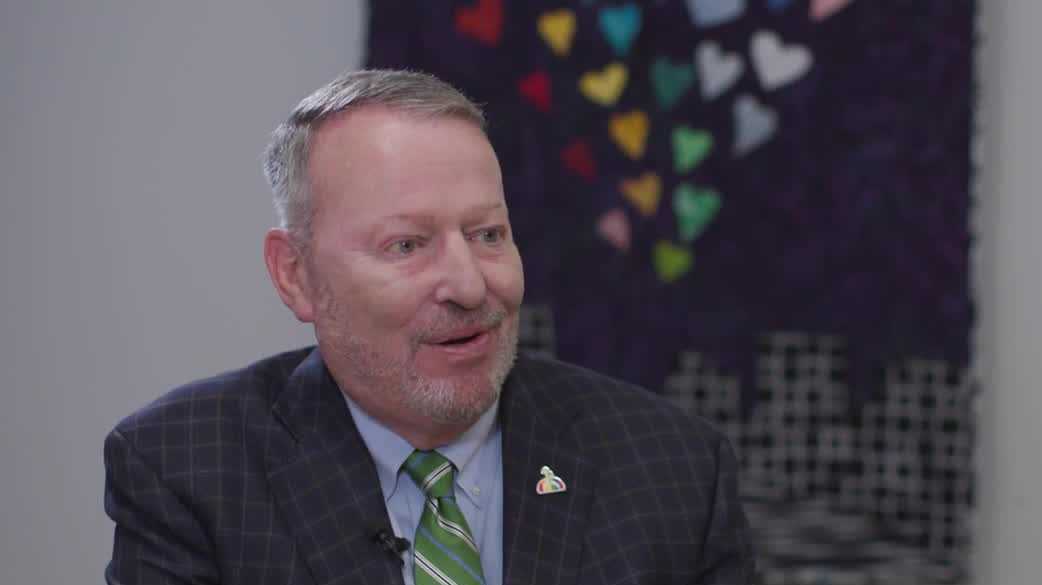
Ten years after the Pulse nightclub tragedy, Orlando Mayor Buddy Dyer says the events of that night and the community’s response continue to shape the city.
“It hits me every time we come back around to June. You just reflect back on the very night that it happened, and then how the community responded, and how they continue to respond,” Dyer said.
In the immediate aftermath of the attack, and in the years since, Dyer has been a central figure in the city’s response to the tragedy.
“I think everything about that day is pretty much etched in my memory,” he said.
Dyer recalled how he first learned of the attack on June 12, 2016.
“I had gone to bed on a Saturday night and got a call from the Deputy Chief Bobby Anzueto a little before three o’clock. He let me know that there had been a shooting at the Pulse nightclub, that there was now a hostage situation, and there were casualties,” Dyer said.
He arrived at the police command center and stayed out of the way until it was time to address the community.
“I believed that the public needed to see somebody they knew, somebody they trusted. As great as the FBI was, they didn’t know any of those people. So we were able to conduct that first press conference,” Dyer said.
At the time, the Pulse nightclub shooting was the deadliest mass shooting in U.S. history.
“We kind of set the tone by saying that we wouldn’t be defined by the hateful act of this killer; we’d be defined by our response, and that was love and compassion and unity, and I think to this day that is still how our community is responding,” Dyer said.
As the city moves forward with plans for a publicly funded memorial, Dyer emphasized the importance of input from families and survivors.
“The main thing was to make sure that the victims’ families and survivors had input and helped shape what the memorial was going to be, because we want this to be a memorial that honors the 49 who were killed that night,” Dyer said.
He added that a committee was formed to guide the memorial’s development.
“We set up a committee, and it was made up of family members, survivors, some other community members, and I’ve had actually very little, if any, input into what it’s going to look like. It’s purely driven by what they want,” Dyer said.
However, a small but vocal group has raised concerns during public updates, arguing that the memorial may not focus enough on the victims and that artifacts from inside Pulse could trigger trauma for survivors.
“There’s certainly going to be, I wouldn’t say major changes, but there will be modifications. Our staff has done yeoman’s work. They’ve been able to contact all 49 families to get exactly how they would like the name of their loved one,” Dyer said.
The memorial is tentatively scheduled to open in late 2027, coinciding with the end of Dyer’s term as Orlando’s longest-serving mayor, now at 23 years.
Reflecting on his time in office, Dyer said the Pulse tragedy remains a defining moment.
“I would say it’s obviously the most tragic thing that’s ever happened in the city of Orlando, but I’m really proud of the way the community responded again with love, compassion, and unity, and they continue to show that still today,” Dyer said.
>> WESH 2’s Chronicle: Life after Pulse 10 years later airs on Thursday, June 11 at 7 p.m.
REMEMBRANCE EVENTS | RAINBOW RUN | REMEMBERING THE VICTIMS | THE DEMISE OF ONEPULSE | SURVIVORS WANT ANSWERS