
A program that would’ve allowed neighborhoods outside of downtown St. Petersburg to opt into resident-only parking zones to curb overflow parking near busy commercial streets won’t be moving forward.
The decision comes after local business owners expressed concern that parking restrictions would push customers away and stifle their revenue.
In areas outside of downtown that lack large parking lots or garages, retailers often share small lots with nearby tenants. Sometimes there are not enough spaces for their employees and customers, particularly during peak hours. So, businesses often rely on surrounding residential streets for curbside parking.
“If we can’t fill our classes, we can’t do business,” said Katelyn Grady, a teacher at the Body Electric Yoga Company on Seventh Street North, told the City Council on Thursday. “We can’t materialize any other options for parking because we’re not a traditionally commercial corridor.”
St. Petersburg City Council members discussed the economic impact on small businesses while also noting that residents knowingly bought homes in neighborhoods where overflow parking has been a challenge for years.
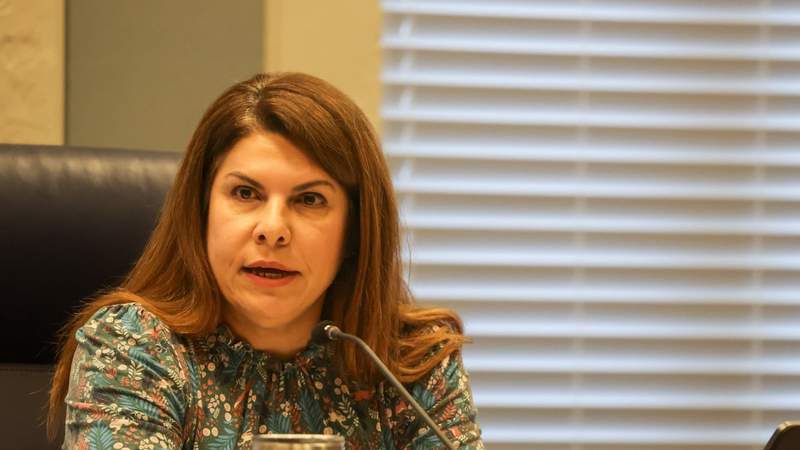
District 4 City Council member Lisset Hanewicz, who supported the change, said this was not about pitting local businesses or neighbors against each other. Rather it was about the city “being responsible in tackling these issues.”
She noted that other growing cities institute similar parking restrictions and that protections had been put in place to lessen the harm to businesses.
For a neighborhood to be eligible, for example, at least two-thirds of the households would’ve had to sign a petition in support. A city-conducted study also had to show that 75% of the available spots were occupied and at least a third of those were taken by people who don’t live in the surrounding area
Zones within one-block of a “future major street,” including Dr. Martin Luther King Jr. and Fourth streets North, would also be off-limits for resident-only parking spots. Those protections, Hanewicz said, were generous enough.
“This was a good faith effort in dealing with an issue that’s been brought to me in various forms to have a solution without people being here with pitchforks,” Hanewicz said.
Other council membersexpressed understanding for business owners’ concerns.
District 3 Council Member Mike Harting said the city would’ve been picking “winners and losers.” He said some business models were built on customers relying on street parking. Taking that away, he said, means businesses would “drown.”
Wildflower Ice Cream owner Steve McGarry was relieved the measure was not put in place. He said the timing is “just off,” pointing to the rising costs of living.
“It’s just a bad time basically for a lot of businesses … rising rents, insurance, health care, all that good stuff,” McGarry said.
Chris Steinocher, president and CEO of the St. Petersburg Area Chamber of Commerce, said he expects the issue will come back in the future.
“Vibrant cities like ours, you’re always going to have discussions about parking, not enough of it or too much of it,” he said.