
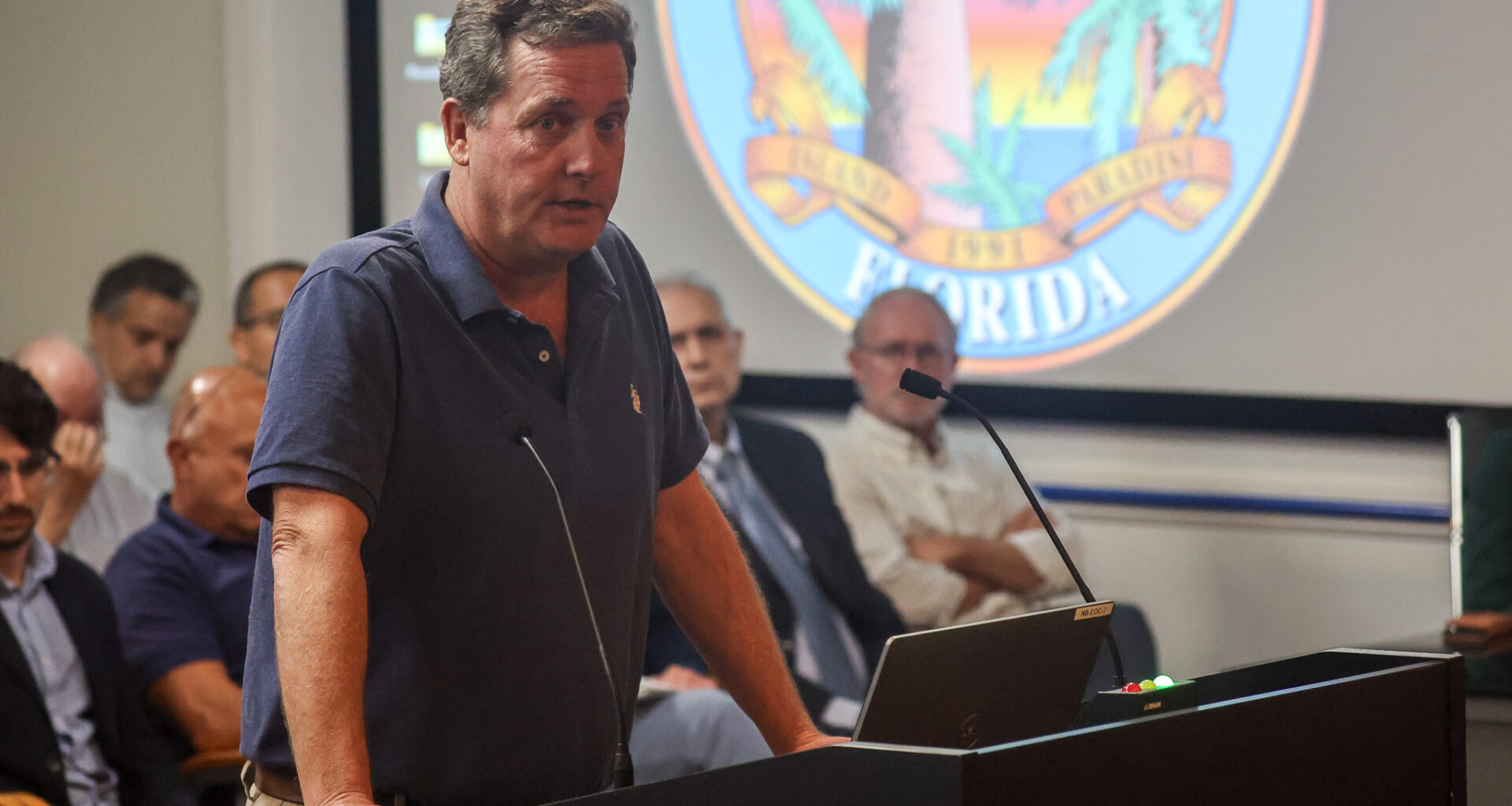
Saying that the DeSantis administration and state Legislature are misleading voters, former Key Biscayne Mayor Mike Davey is a lead plaintiff in a lawsuit challenging a statewide vote on property taxes.
“This is a power grab, pure and simple,” Davey said of the constitutional amendment placed by on the November ballot by the Republican-controlled Legislature. “What we’re requesting is that the language be fair. If they’re putting something on the ballot, it should be fair and neutral. It shouldn’t be trying to lead people toward a specific vote.”
The complaint, filed in Leon County Circuit Court, asks a judge to declare that the ballot question is “unconstitutionally biased, misleading, and inaccurate” and to order that Florida Attorney General James Uthmeier rewrite it.
Davey, along with another former Florida mayor, Thomas Campenni of Stuart, says the amendment is written like a campaign slogan with the words “Save our homes from excessive property taxes,” instead of describing the proposal in neutral terms. The official ballot summary says the amendment “benefits Florida taxpayers,” but in fact, it only lowers taxes for some residents and shifts the tax burden to renters and business property owners.
Many municipalities say that if voters adopt the measure, local budgets would face steep cuts, overriding the decisions made by local communities regarding their spending priorities.
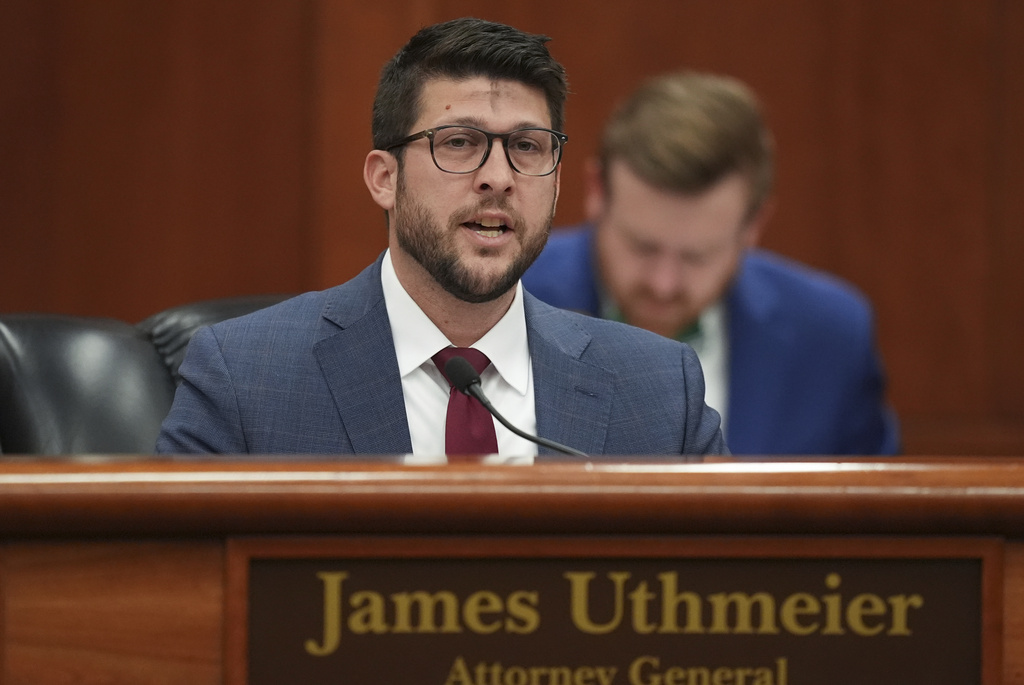 FILE – Florida Attorney General James Uthmeier speaks during a meeting between Gov. Ron DeSantis and the state cabinet at the Florida capitol in Tallahassee, Fla., March 5, 2025. (AP Photo/Rebecca Blackwell, File)
The amendment increases the homestead exemption from $50,000 to $250,000 and lowers the cap on non-homesteaded properties from a 10% annual increase to 5%. But it does not protect “small business” specifically, another way in which Davey and Campenni say the language is misleading.
DeSantis and his supporters contend that local governments are overtaxing and overspending. In a social media post this week, DeSantis said the amendment is “the best opportunity in years” to counter “bloated local budgets.” The comment came in response to an editorial by The Wall Street Journal that called the Florida proposal a “mistake” that is “poorly designed.”
Key Biscayne’s representative in the State Senate, Republican Alexis Calatayud, voted to put the question on the ballot. The state House seat for Key Biscayne remains vacant.
“This is going to destroy a lot of municipalities,” Davey said. But the effect in Key Biscayne might not be as severe.
An initial estimate from Village Chief Financial Officer Benjamin Nussbaum said the property tax proposal could reduce revenues by $1.6 million a year, with about 115 properties paying zero village taxes. It could be much larger in future years, however, depending on market trends.
Key Biscayne actually reduced its property tax rate last year while increasing overall property taxes — again, by shifting costs to non-homesteaded properties. Analysis is still ongoing, but Village budget planners will have multiple scenarios for consideration by the Council for the fall budget vote.
The lawsuit was assigned to Circuit Court Judge Angela Dempsey. No hearings have yet been set.
Never miss a story! Sign up for our FREE newsletter

Editor-in-Chief
Tony Winton is the editor-in-chief of the Key Biscayne Independent and president of Miami Fourth Estate, Inc. He worked previously at The Associated Press for three decades winning multiple Edward R. Murrow awards. He was president of the News Media Guild, a journalism union, for 10 years. Born in Chicago, he is a graduate of Columbia University. His interests are photography and technology, sailing, cooking, and science fiction.