

Every year, Americans repeat the same ritual: a watermelon lands in the shopping cart, one of the first signs that summer has arrived. For most of us, watermelon simply appears. Grocery store bins overflow every summer with giant green melons destined for picnics, beach trips and backyards aglow with fireworks. But behind one of America’s most recognizable traditions is a carefully timed agricultural relay race that begins right here in Florida.

From April through June, old school buses modified for hauling watermelon rumble down farm roads. Large openings cut into the sides reveal stacks of green-striped melons starting the journey from Florida fields to grocery stores across the country.
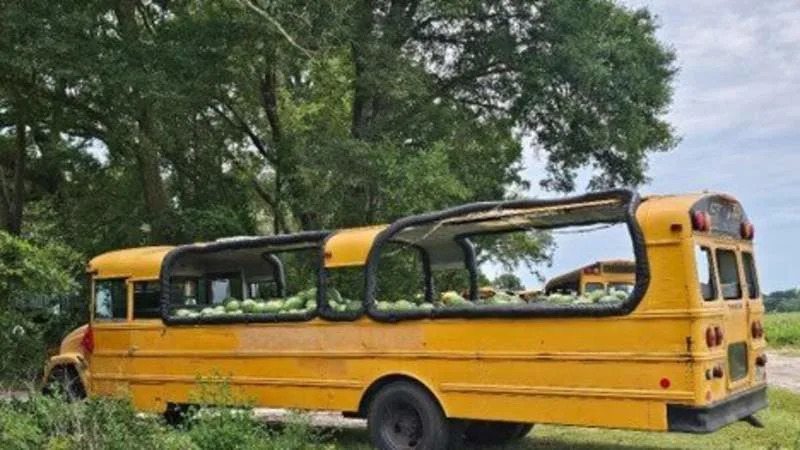
The United States watermelon season begins in Florida thanks to our mild winters, which allow growers to start planting in February while much of the country is still blanketed in snow. Roughly 90 days later, those fields are producing watermelons that help stock grocery stores in time for Memorial Day and the unofficial start of summer.
Timing is everything.
Growers are not simply producing fruit — they are racing calendars, transportation schedules and narrow holiday market windows that help shape America’s summer traditions. As spring gives way to summer, watermelon production steadily moves north through Florida and into Georgia before following warmer weather across the rest of the country.
While many think of Florida as the citrus state, it has also long ranked among the nation’s leading watermelon-producing states. In 2024, growers produced more than 900 million pounds of watermelon, the highest production of any state in the country.
These trends are not new. Generations of farmers in Florida have been supplying the country with watermelon. Long before refrigerated semi-trucks carried watermelons along interstate highways, trains known as “watermelon specials” once moved massive volumes of fruit out of Florida during peak harvest season. Farmers would pull horse-drawn wagons alongside railroad tracks while trains stopped briefly to load fruit bound for northern markets. The Tamiami Trail, U.S. Highway 41, was completed 99 years ago and further connected Florida farms to growing markets across the state and beyond.
The methods of transportation have evolved, but the journey from seed to summer table still depends on far more work than most consumers ever see. Behind every watermelon are years of research, plant breeding and on-farm innovation aimed at producing healthy crops and reliable harvests. Those efforts help ensure that watermelons continue making their way from Florida fields to grocery stores across the country.
Today, most watermelons make the journey by semi-truck, traveling hundreds — sometimes thousands — of miles from field to market. The cost of fertilizer, fuel, equipment and labor all shape the final price of a single melon. Even so, watermelon remains one of the simplest ways to feed a crowd in the summer. It is refreshing, shareable, and affordable in a way few other fruits are.
Often, the only sign of the larger system behind the iconic summer fruit is a small sticker marking where it was grown — a reminder that summer traditions are sustained by growers all across the country.
For most of us, watermelon is synonymous with summer, but behind every slice is a story that begins long before summer arrives. The journey to picnic tables across the United States begins in Florida fields, where generations of farmers help bring one of America’s favorite summer traditions to life. The next time you enjoy a slice, remember that what feels effortless at a summer cookout is the result of months of planning, labor, and expertise — much of it beginning right here in Florida.
Amanda McVay is a PhD student at the University of Florida and founder of Groundwork Laboratory, an agricultural diagnostics company serving Florida growers. She lives in LaBelle, with her husband and their two sons.