
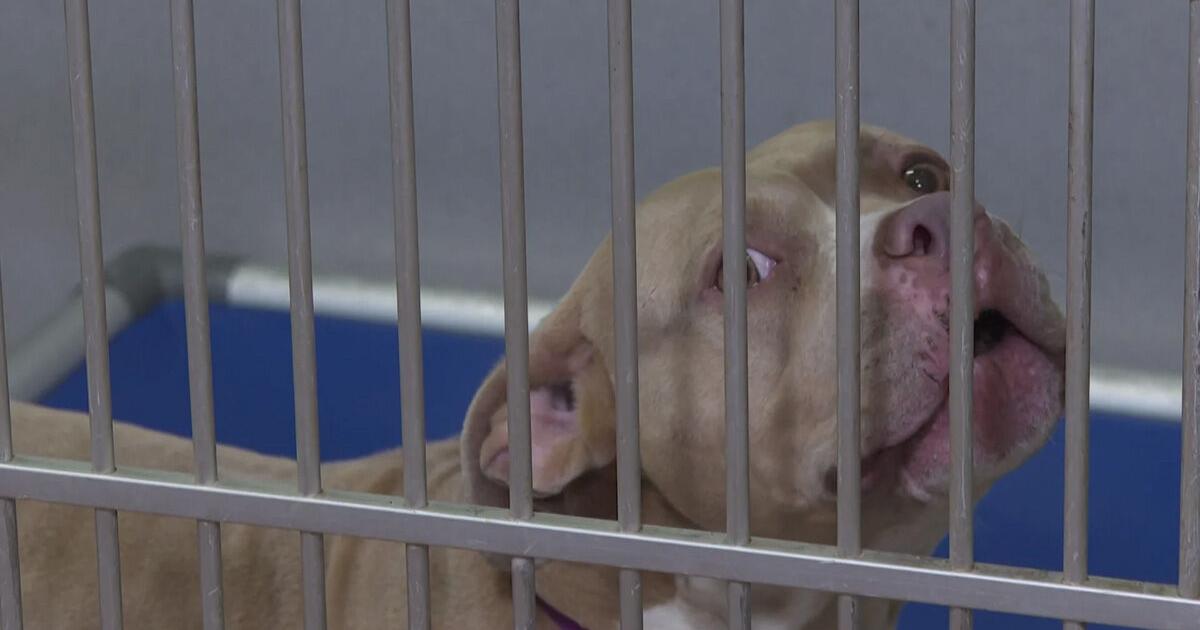

A dog waits inside the Animal Welfare League of Charlotte County shelter in Port Charlotte. The nonprofit no-kill shelter accepts about 2,500 animals annually and says rising operating costs threaten its future.
WINK News
Animal Welfare League of Charlotte County, a nonprofit no-kill shelter in Port Charlotte, is facing a financial crisis because of rising costs, and officials and volunteers fear it may have to close if the county does not increase funding.
The issue is expected to be addressed during a June 16 workshop of the Charlotte County Board of County Commissioners, where AWL representatives will make a presentation.
Executive Director Tara Zajas said the shelter has operated under a county contract since 2013, receiving $326,000 annually to accept animals from Charlotte County Animal Control, along with strays and animals surrendered by residents.
However, the shelter’s annual operating costs have grown to about $1.3 million.
“We need an increase in funds,” Zajas said.
About a half-dozen residents urged commissioners during a June 9 workshop to continue funding the shelter at a level that reflects rising expenses. Costs have increased far beyond the contract’s original 3% annual escalation provision.
Contract negotiations have been ongoing since October. The county has offered to increase annual funding to $500,000, but Zajas said that amount is still insufficient to keep the shelter operating.
Supporters hope the June 16 presentation will persuade commissioners to increase funding enough to keep the shelter open. If the facility closes, Animal Control would have to rely on a shelter outside Charlotte County that euthanizes animals.
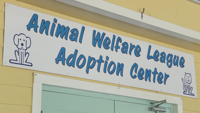
The Animal Welfare League of Charlotte County says it needs additional county funding to continue operating its open-admission, no-kill shelter in Port Charlotte. Shelter officials will present their case to county commissioners June 16.
WINK News
Without the AWL, Zajas said, Charlotte County would have no local alternative to handle the animals brought to the shelter.
She noted that the nearby Suncoast Humane Society in Englewood, a no-kill shelter serving portions of Charlotte and Sarasota counties, no longer has a county contract and is not an open-admission shelter.
Approximately 2,500 animals are brought to the AWL each year. About 85% come through Animal Control under the county contract, while the remaining 15% are surrendered by owners who can no longer care for them or are left at the shelter.
As word spread that the shelter’s future was uncertain, residents turned out at a recent commission meeting to voice support ahead of the June 16 workshop.
Several supporters and volunteers urged commissioners to increase funding for the facility.
Although Charlotte County is legally required to hold stray animals for only five days, the AWL keeps animals until they are adopted because it is an open-admission, no-kill shelter. Animals remain at the facility an average of 45 to 57 days or longer, leaving the shelter to absorb much of the associated cost.
AWL also operates a pet food pantry that helps community members keep and care for their animals, as well as a nonprofit pet cemetery.
More than a half-dozen residents spoke passionately about the shelter and its role in saving animals’ lives.
Port Charlotte resident John Bowering brought his service dog, Casanova, to the June 9 meeting. Bowering, an AWL volunteer, initially agreed to foster Casanova after several unsuccessful adoption placements.
“In 2023 I brought him home to foster and started training him in hopes his next adoption would be forever,” Bowering said.
Animal Welfare League volunteer John Bowering appears with Casanova, a former shelter dog he fostered, adopted and later trained as a therapy dog. Bowering urged Charlotte County commissioners to continue funding the shelter during a recent meeting.
Charlotte County government
Instead, the two bonded, and Bowering adopted the dog.
He later trained Casanova to become a therapy dog. The pair now visit schools, hospitals, assisted-living facilities and businesses throughout the community.
“Casanova’s story is possible because organizations like AWL invest in animals and help create successful outcomes. Every animal that is cared for, fostered, adopted has a potential to make a difference in someone’s life and our community,” Bowering said.
“You’re not just funding shelter space, you’re investing in second chances, public service, education and community well-being.”
Bowering urged commissioners to meet the shelter’s funding needs so that “more animals will have the opportunity, just as Casanova has had.”
The workshop begins at 9 a.m. June 16 at the Charlotte County Administration Center, 18500 Murdock Circle in Port Charlotte.