
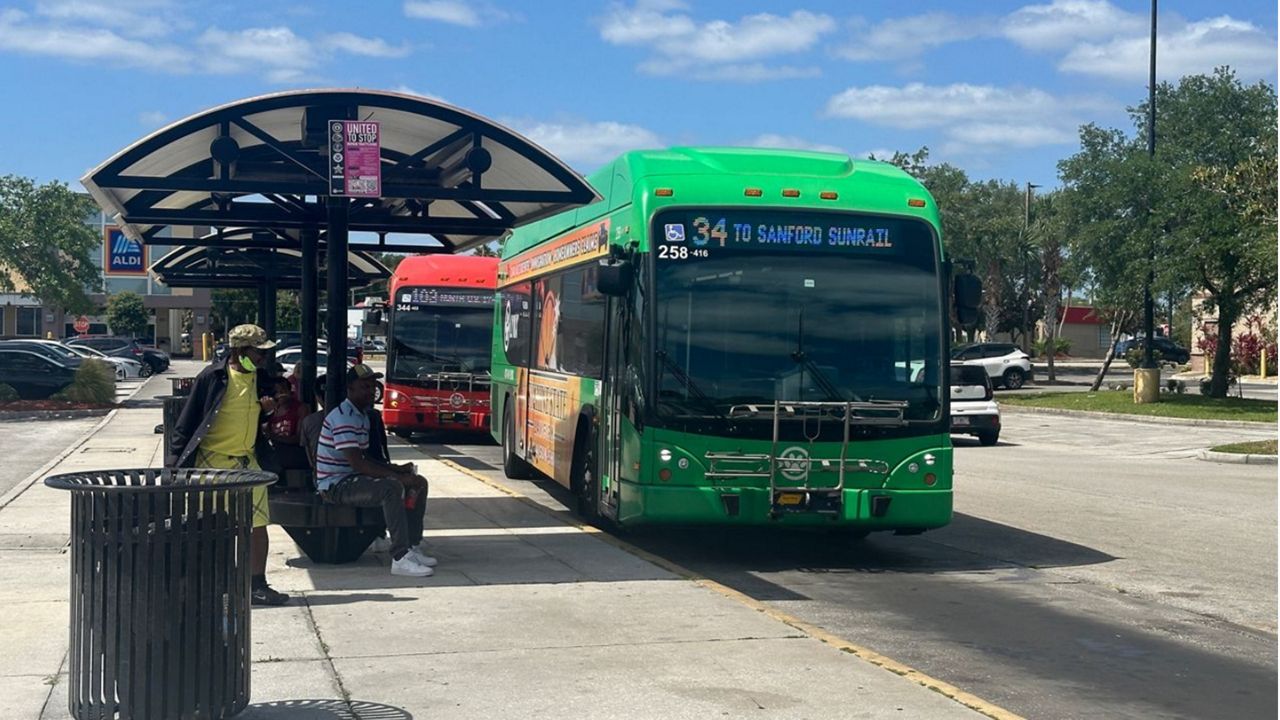
SEMINOLE COUNTY, Fla. — Seminole County leaders are questioning proposed LYNX costs after the county replaced most of its fixed bus routes earlier this year with a new micro-transit system known as Scout.
LYNX depends on local funding partners to continue running buses and operating in Seminole, Orange and Osceola counties. Seminole County expected significant savings after dropping most of its LYNX fixed-route service, but the proposed budget for next year shows more minimal savings.
According to the budget proposal presented to Seminole County, fixed-route costs are down about $7.5 million from the last time they paid a full fiscal year in 2025. While paratransit services have increased by about $2.5 million from this fiscal year, LYNX also changed how funding partners pay for overhead costs, a move the agency said is meant to make those costs more equitable.
The proposal led to heated moments during a recent Seminole County budget meeting.
“We weren’t born yesterday,” Commissioner Amy Lockhart said during the meeting.
“Quite frankly, this doesn’t feel like a partnership anymore,” Commissioner Andria Herr said.
Lockhart, who also sits on the LYNX board, said she voted for the funding model change only because a compromise was reached allowing federal dollars to be used to help with the transition next year.
“We don’t have much control over the costs that are given to us by LYNX to pay,” Lockhart said. “When they give us the bill, whatever it is, we are supposed to pay it and we don’t have control over that.”
LYNX said the change is about fairness among its funding partners.
“It is a cost that is going to all of our funding partners,” said Matt Friedman with LYNX. “Paratransit costs are going up about $13.5 million for the next year.”
Friedman also said LYNX’s overhead costs are “some of the lowest in the state for transit agencies.”
The rising paratransit costs and changes to overhead funding have Seminole County considering whether to pull out of LYNX entirely.
“If they chose not to partner with us, that is a decision they have to make, and it is something they will have to take to Tallahassee to change the Florida statutes,” Friedman said.
Current law requires Seminole County to help fund LYNX. County leaders said they want to put funds toward more of their own services, including Scout.
“Your board of county commissioners is working diligently to make sure costs are contained and that we can control the amount of taxpayer money from Seminole County that has to be spent on a transportation agency that does not provide as much service in this county anymore,” Lockhart said.
More changes could be ahead for LYNX depending on the results of November’s property tax amendment vote. According to LYNX, 92% of the agency’s local funding currently comes from property taxes.