
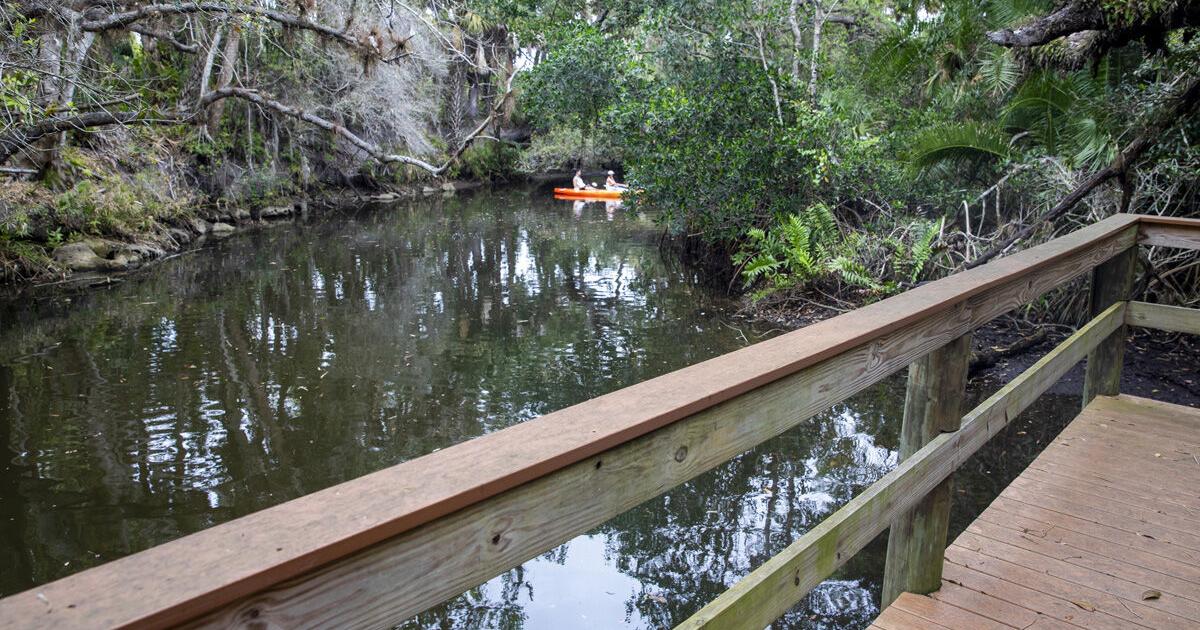

A boardwalk along the Estero River provides views of the preserve’s natural habitat as part of planned public access improvements.
Evan Williams
Environmental and historic preservation advocates urged village of Estero officials at June 16 and 17 meetings to better recognize The Happehatchee Community Center in Estero River Park and limit future development on nearby publicly owned land.
Happehatchee is a roughly 5-acre eco-spiritual center founded by the late environmentalist Ellen Peterson that sits within the preserve. Its supporters gifted the property to Estero in 2019 under an agreement that the village would preserve and recognize its history.
The larger River Park represents about half of a 62-acre area that Estero purchased for $24.5 million in 2019. It includes the park on the south side of the river and adjoining land on the north side, where village officials are considering a mixed-use development.
Since the 2019 agreement, the park has remained officially closed, although it is still accessible to the public with some effort. The area has been maintained by both Estero and volunteers, including Florida Gulf Coast University service-learning students.
A newly constructed pedestrian bridge spans the Estero River, connecting visitors from the north side to Estero River Park and the Happehatchee Center campus.
Evan Williams
Estero built a parking lot, restroom facility and bridge on the north side of the river intended to serve as the park’s main entrance. The facilities are complete, village staff said, but remain closed.
At the Estero Planning, Zoning & Design Board meeting June 16, Orlando-based firm LandDesign presented the results of a major planning study outlining a 1,000-acre area containing Estero’s key ecological and historic assets and a framework for their preservation and development over the next 20 years.
The 137-page Eco-Historic Planning Study, funded by a $450,000 federal disaster recovery grant through Lee County, cites Estero River Park and the adjoining Village Center area as among the town’s key assets. But it makes no reference to Happehatchee.
During the meeting’s public comment period, FGCU biology professor Nora Demers took planners to task for the omission. After her comments, the planning board voted unanimously to modify the study to recognize Happehatchee’s importance and note its history in the study’s maps and text before forwarding it to Village Council for approval the next day.
Demers is one of Happehatchee’s longtime advocates and has led FGCU student volunteers on trips to the park in recent years for lessons in land stewardship and conservation. She and other supporters have pushed Estero leaders for several years to officially reopen the park and do more to honor its legacy.
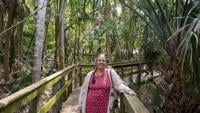
Florida Gulf Coast University biology professor Nora Demers stands on a boardwalk at The Happehatchee Community Center in Estero River Park. Demers urged Estero officials to formally recognize the site’s environmental, cultural and historic significance in the village’s eco-historic planning efforts.
“I’m utterly bewildered that such an important historical, cultural and environmental resource receives no meaningful recognition in a planning effort that cost $450,000 of my public funds,” Demers said. “A study intended to celebrate old Estero’s heritage must acknowledge the historic, environmental and cultural resources that still actively shape this community’s identity and sense of place.”
The Happehatchee campus includes bamboo and oak trees, a riverside boardwalk and a pavilion. Peterson, who founded the center in the mid-1990s, lived on the site until her death in 2011. In 2024, Estero transferred management of the park and center to Estero Forever Foundation Inc.
Demers said the village hasn’t fulfilled its 2019 agreement with Happehatchee supporters.
“The village has not lived up to the spirit or terms of the agreement,” she said, “agreements that mirror exactly what Estero residents say they want.”
Estero Planning, Zoning & Design Board Chair Anthony Gargano called Happehatchee’s omission “a clear oversight.”
“Happehatchee would be an anchor, one of the anchors, to a plan like this,” he said.
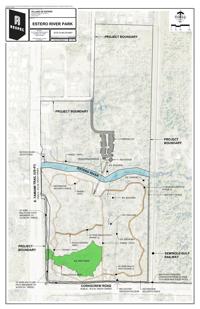
A conceptual site plan shows proposed trails, parking, pedestrian access and preservation areas within Estero River Park. Environmental advocates say future plans should place greater emphasis on protecting and recognizing The Happehatchee Community Center.
Estero government
Board member Jim Wallace said, “We have to be sure that [Happehatchee] is preserved and it is interpreted as the special place that it is.”
At the Village Council meeting June 17, council members voted unanimously to accept the LandDesign planning study, modified to recognize the importance of Happehatchee.
Patty Whitehead, with the nonprofit advocacy group Responsible Growth Management Coalition, also objected to the study’s suggested development of the mixed-use Village Center on the north side of the river opposite the park.
“The plan should not use eco-historic language, code speak, while advancing a conventional development pattern of more pavement, more parking, more traffic and more commercial and residential intensity,” she said.
Demers and Whitehead urged Council to reject the study until its authors had time to revise a scenario that would further restrict development in Estero River Park and on the north side of the river.
Village staff said adopting the study does not commit the village to any specific developments but instead provides a broad framework that can help the town pursue grant funding for future projects.
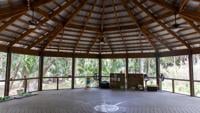
A wooden pavilion sits within the Happehatchee Community Center campus in Estero River Park, part of a 31-acre preserve along the Estero River.
Evan Williams
In addition to the Village Center and Estero River Park, the study identified other catalyst projects, including the potential Bonita-Estero Rail Trail and improvements to the U.S. 41 corridor.
The study surveyed residents and found they want experiences that connect them to nature, waterfront access, arts and culture. Respondents’ top concerns included overdevelopment and traffic congestion.