
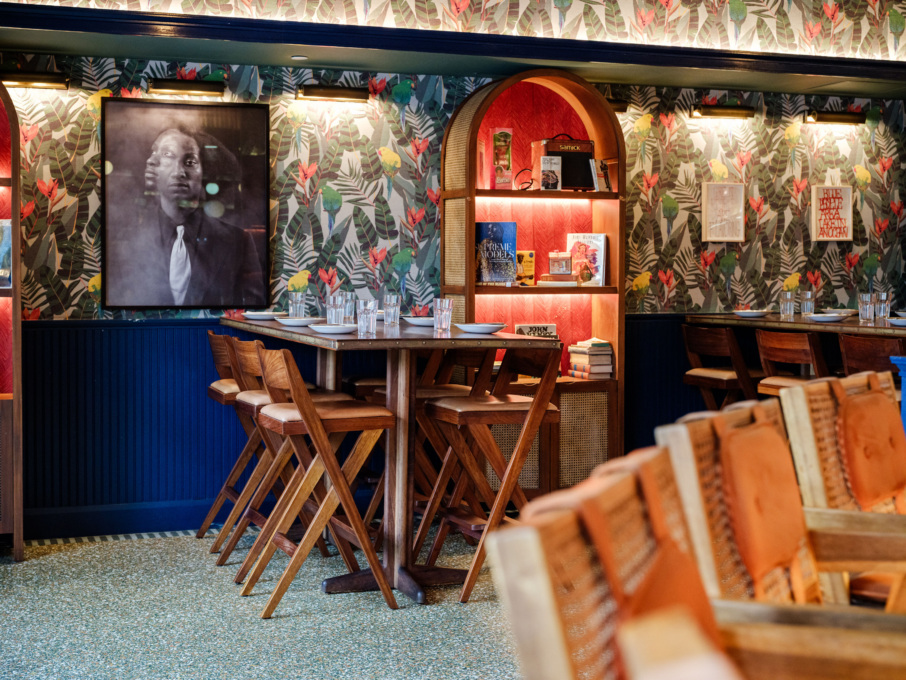
An Historic Gathering Point for Entertainers, Musicians, and Civil Rights Figures
Overtown originally went by the name of “Colored Town,” a section west of Downtown Miami where Black residents lived during segregation. It was home to rail workers and other people who helped build the city, turning it into one of the most vibrant Black communities in the country at the time. Clyde Killens Pool Hall sat smack in the heart of the action.
“Northwest 2nd Avenue, where [Red Rooster] sits, was the most dynamic street in all of Overtown,” says Paul George, resident historian at the Museum of Miami. “The Rockland Palace was across the street. Harlem Square. The Sir John Hotel was a little further south.”
These names might not mean much in 2026, but from the 1920s to the 1960s, these establishments hosted legendary names like Billie Holiday, Count Basie, Charlie Parker, and many more.
“Musicians and entertainers very often entertained down on [Miami] Beach, but they were not allowed to stay down there,” says Samuelsson. “So the pool hall and Overtown itself became this extremely important place.”
The pool hall was more than just a venue to listen to live music. The concealed confines of the Clyde Killens Pool Hall also became a meeting space for Miami’s civil rights movement. It was also located just a block away from the office of civil rights attorney Lawson Thomas, who led the 1945 Haulover Beach swim-in, ultimately resulting in the opening of Virginia Key, the city’s only “colored beach” at the time.
But in a story that’s all too common in America, urban renewal came to Miami in the 1960s, building Interstate 95 right through Overtown’s heart.
“Despite Jim Crow and segregation, Overtown was marvelous,” says George. “It probably reached its height in the 1950s, with about 34,000 people. By the late 1990s, it was around 9,500; so much had been torn down because of the expressway, it was a shell of itself.”
Clyde Killens Pool Hall was close to meeting that same fate, but was ultimately spared by the Community Redevelopment Association. For decades following, the question lingered of what to do with the space.