97 MILES OFFSHORE FLORIDA — The scientist outstretches his arm as he rushes toward the largest fish in the sea.
He keeps a white-knuckle grip on his camera, his dive fins thrashing, propelled by what he knows is a razor-thin window to pull off this scientific mission:
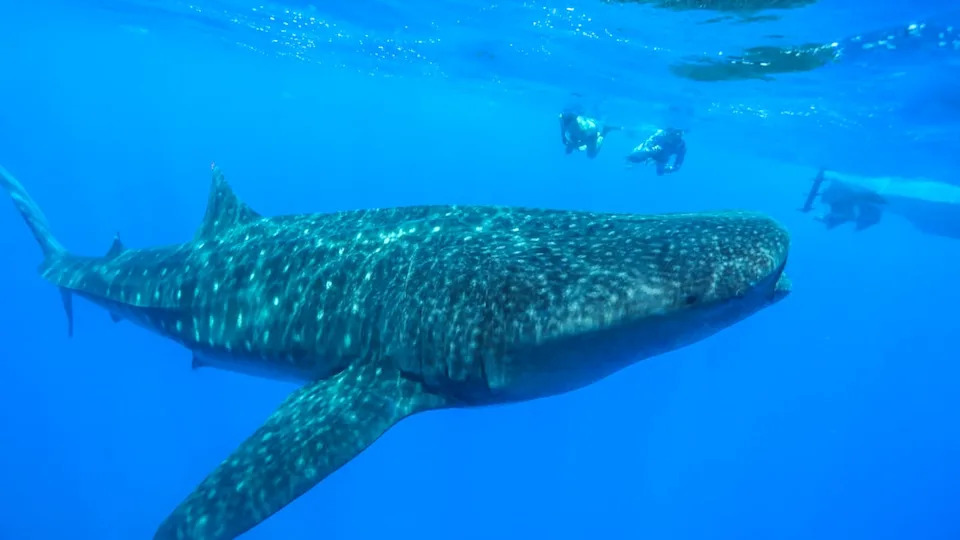
Swim to, then keep pace with, the feeding whale shark just long enough to document the unique patterns on its body. But the shark is moving quickly — up to 3 mph, fast for a human fighting waves and currents.
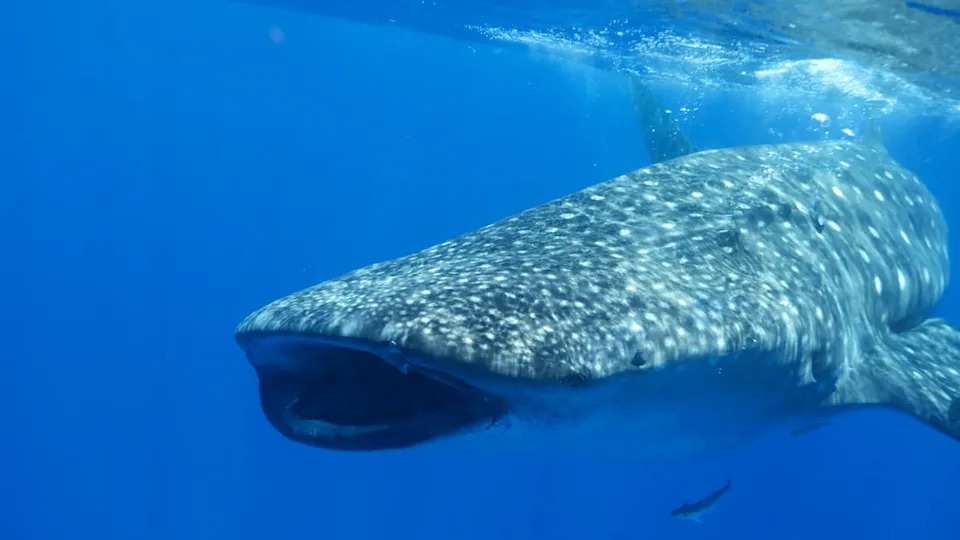
The shark is the size of a school bus. Up close, it’s splotched with dreamy white dots, a celestial Van Gogh canvas crafted by nature’s paintbrush.
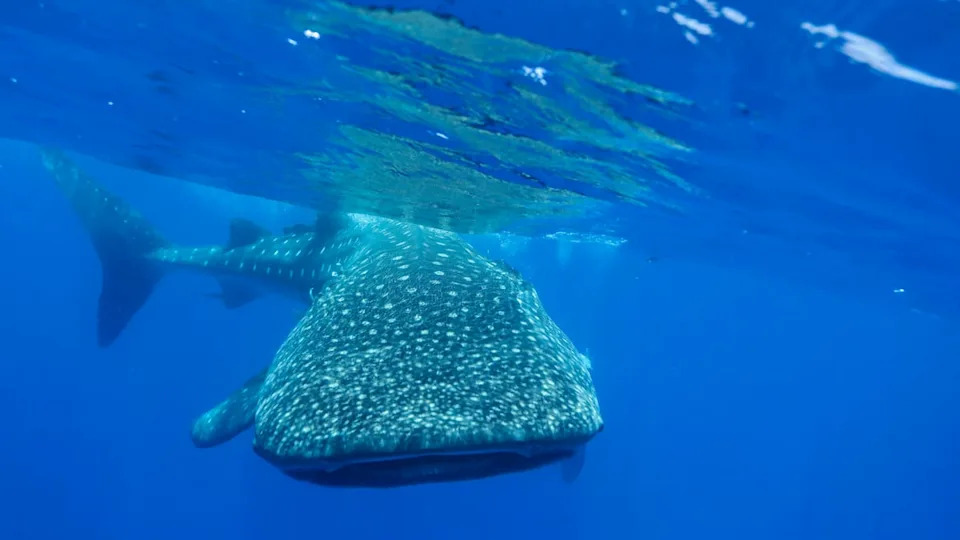
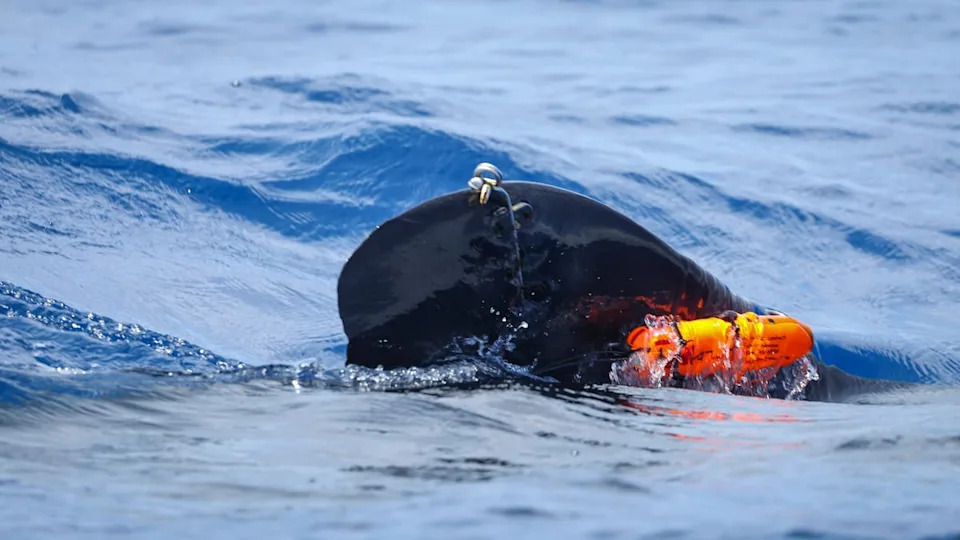
The scientist, 26-year-old Raymond Alexander, gets near enough to spot the satellite tag on the whale shark’s dorsal fin. It may be Larry, he thinks, an adult male tagged last year who has since provided experts with reams of data on his journey leaving and returning to Florida. “A data rock star,” the research team calls him, one providing clues about larger migration trends in a changing Gulf. With Larry’s help, they’re trying to understand which sharks frequent the waters offshore Florida’s Gulf Coast, and why.
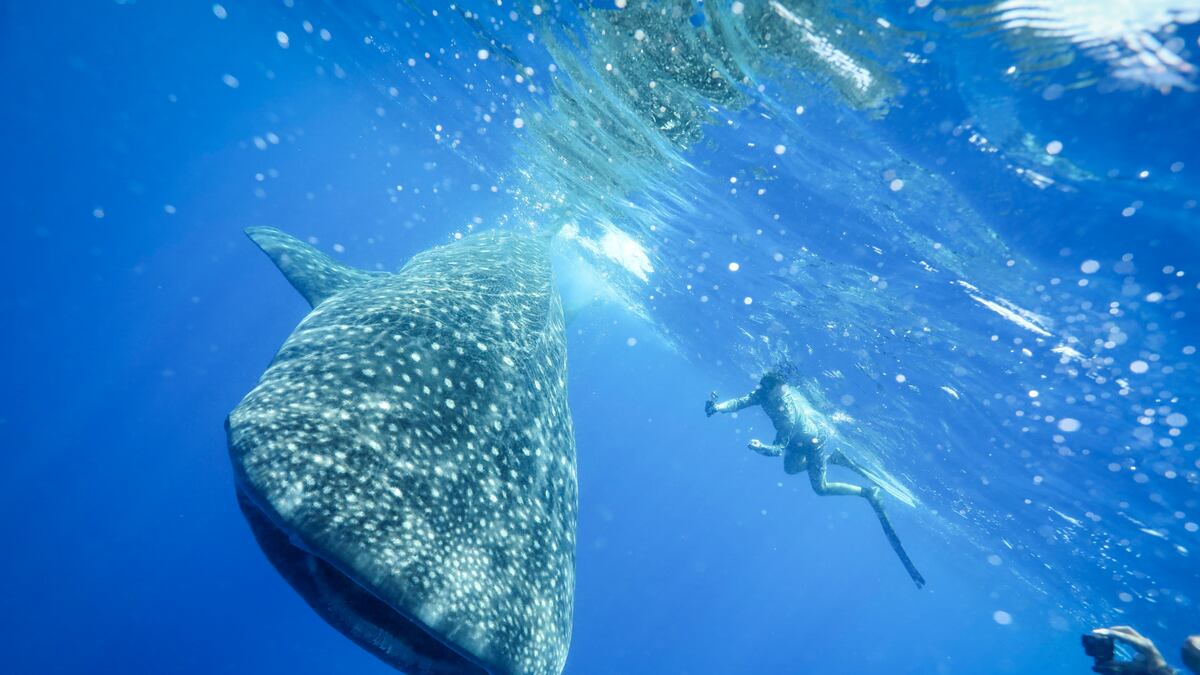
Alexander is 97 miles out to sea,15 feet below the surface. The water around him is cobalt blue and stirring with life.
He swims through sun rays that illuminate millions of glimmering eggs into an underwater disco. Likely laid by spawning fish, these eggs attract the whale sharks that feed on them. And it’s why the research team is here today, too.
The scientist is within an arm’s length now of the shark’s refrigerator-sized tail.
He makes a final dash toward the animal’s face and records the constellation of dots near his mouth. An eye as large as a golf ball flicks up and down, left and right. Alexander films his ridged sides, his broad head, the old tracker on his dorsal fin.
Then, with a single slice of its tail, the 26-foot fish dashes away.
The interaction between human and gentle giant lasts less than a minute.
“Oh my gosh,” Alexander says, coming up for air. He thinks he may have just filmed Larry, but he won’tbe sure until the images can be analyzed back on land. For a brief moment, the human sense of wonder and majesty supersedes science.
“This is once in a lifetime,” Alexander says.
But the time for celebration is short.
Behind him, three more whale sharks swim his way.
He dives back down.
The Tampa Bay Times last week joined a team of federal, state and university scientists as they ventured deep into the Gulf on a 12-hour research trip offshore Fort Myers Beach.
Their goal: locate, tag and take samples from the docile animals to better understand their population near Florida. They are a shark species, with five large gill slits, but get the “whale” title from their sheer size and filter-feeding behavior.
It was the second day on a three-day expedition to a rare aggregation, where whale sharks — usually on their own — gather to feed. These groupings make up just 15% of whale shark sightings and present an exceptional opportunity for experts to study several sharks at once.
“Whale sharks are a sentinel species for ocean health, a true canary in the coal mine,” said Eric Hoffmayer, the trip’s organizer and a research fishery biologist with the National Oceanic and Atmospheric Administration.
Getting an up-close look at their evolving movements and eating habits could reveal bigger shifts in the ecosystem, he said.
For reasons experts are still unraveling, whale sharks seem to know where and when fish will be spawning. Lately, that’s been offshore Southwest Florida. Last summer it was around Tampa Bay.
Unearthing the mysteries of where and how whale sharks feed could lead to better protections. Theirpopulations worldwide have declined by more than half over the past century, mostly from being struck by ships or getting tangled in fishing nets. The animals, which feed on the surface and are more vulnerable to passing boats, are considered endangered by the International Union for Conservation of Nature.
For Hoffmayer and his team, everything had to go right for the research expedition to occur.
The weather had to hold. A gloomy morning gave way to bright afternoon sun during the four-hour ride offshore. The seas were mostly calm, with some stretches of 3-foot chop. One researcher took Dramamine to fend off sea sickness and reminded others to keep their eyes on the horizon.
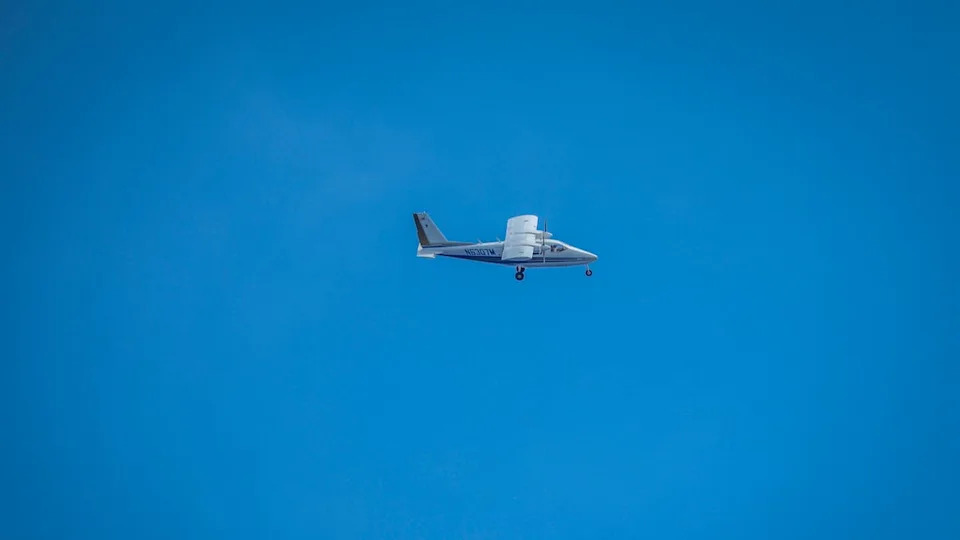
The whale sharks then had to surface, and a research plane buzzing overhead had to find them. Hoffmayer enlisted the help of pilot Joel Bickford and spotter Vicenç Moltó, who departed from St. Petersburg to search from the skies,where the shapes and pale markings of whale sharks were easier to see than from a boat deck.
If they could find Larry, whose location is sent to scientists in real time, they might find more sharks.
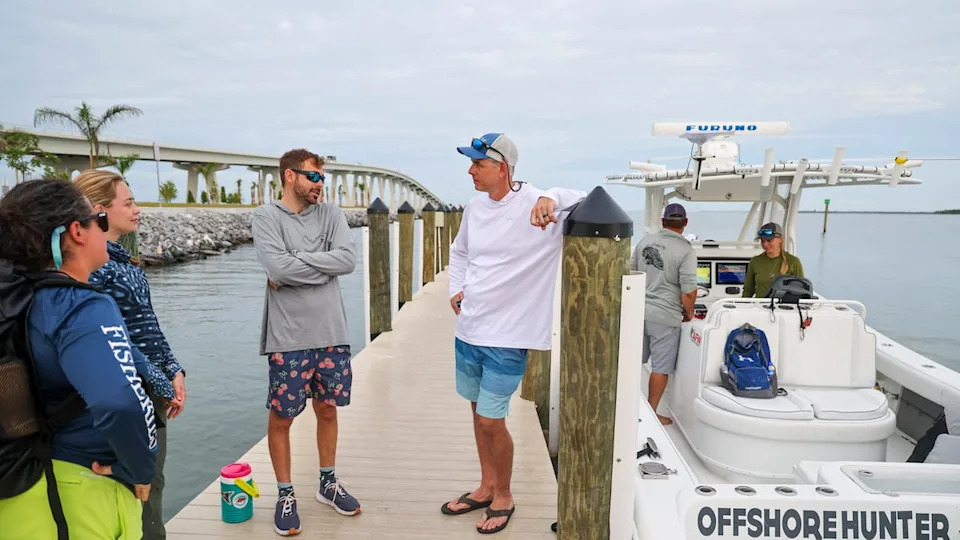
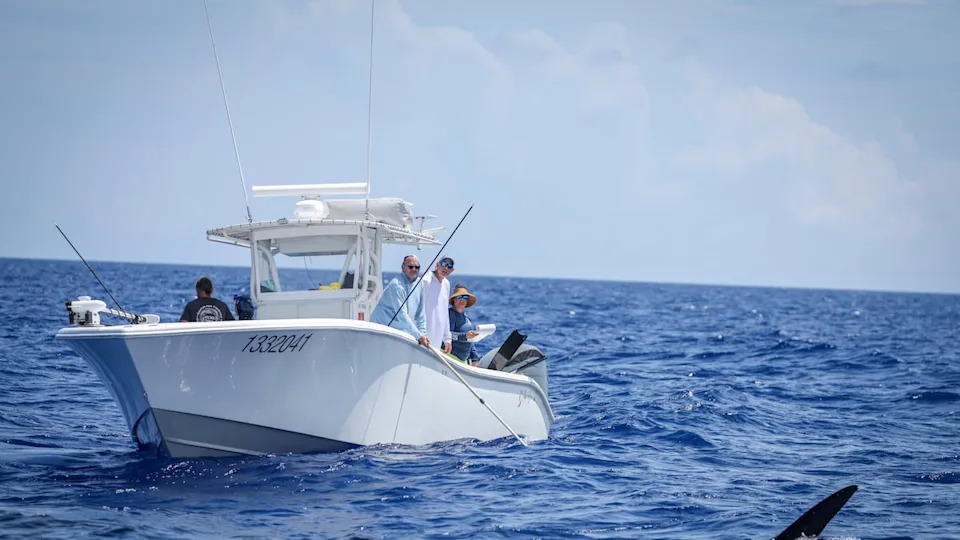
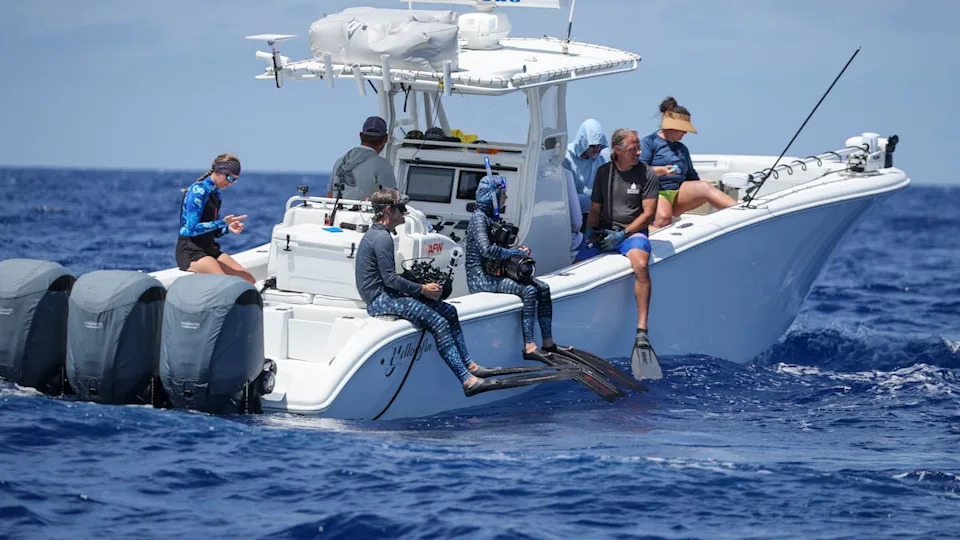
The delicate balance of nature and logisticsreached its third and final hurdle when a boat captain — Kevin Faircloth of Fort Myers Beach, who volunteered his 32-foot Yellowfin — had to drop the team of researchers into a perfect position.
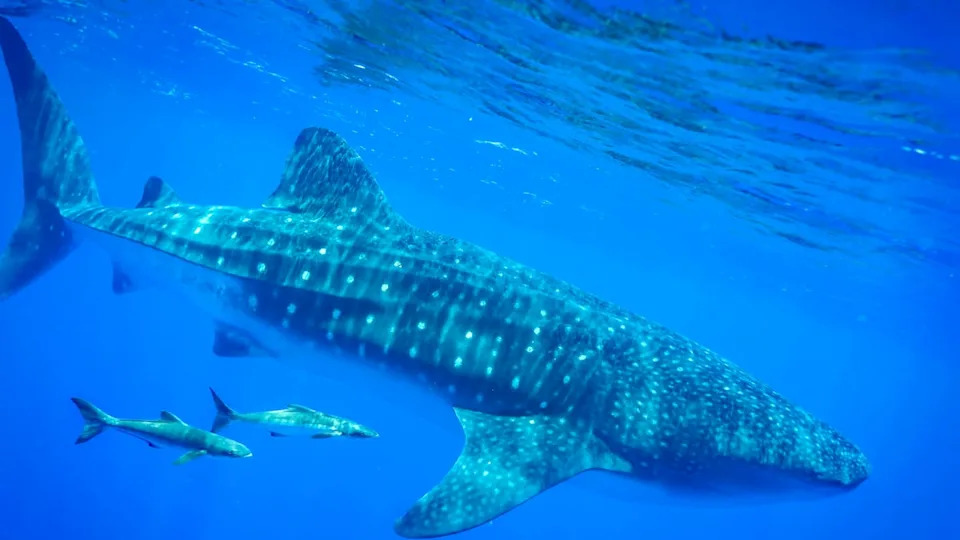
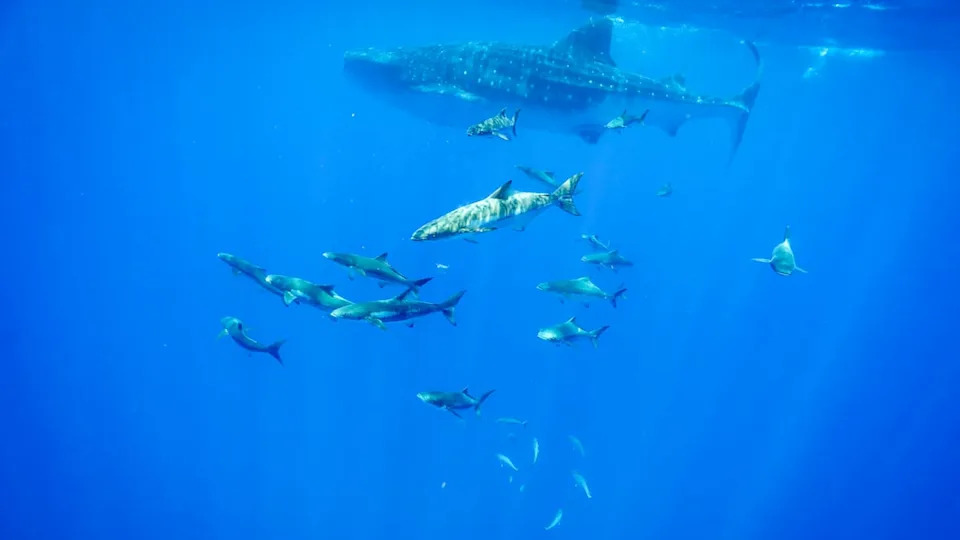
As Faircloth eased off the throttle after hours of boating, a mountain range of dorsal and tail fins rose from the sea. Whale sharks jolted, thrashed and idled calmly with mouths agape as they siphoned eggs from the surface.
Faircloth needed to drop researchers close enough to the sharks, but not too close, for the team to enter the water, swim into range and finish their work beside the 20-ton animals that can burst away with ease.
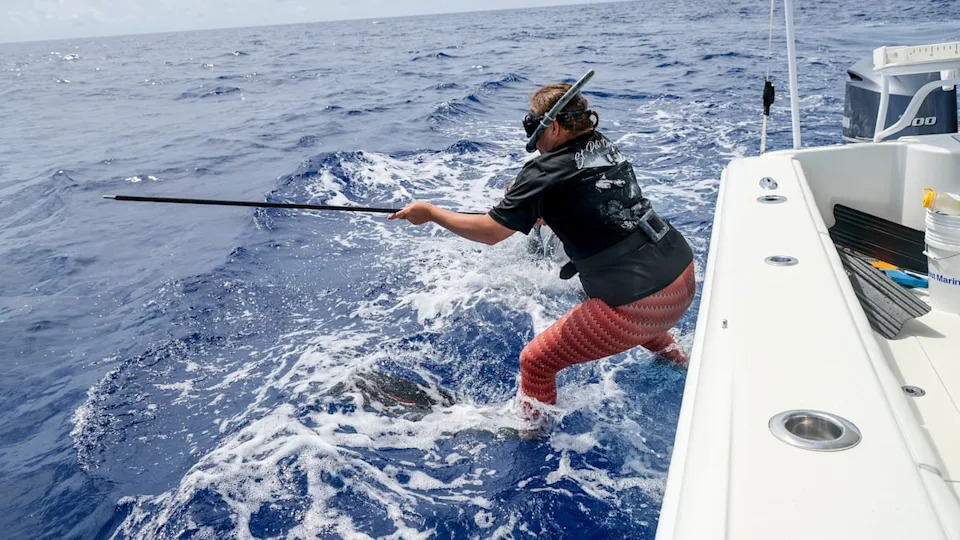
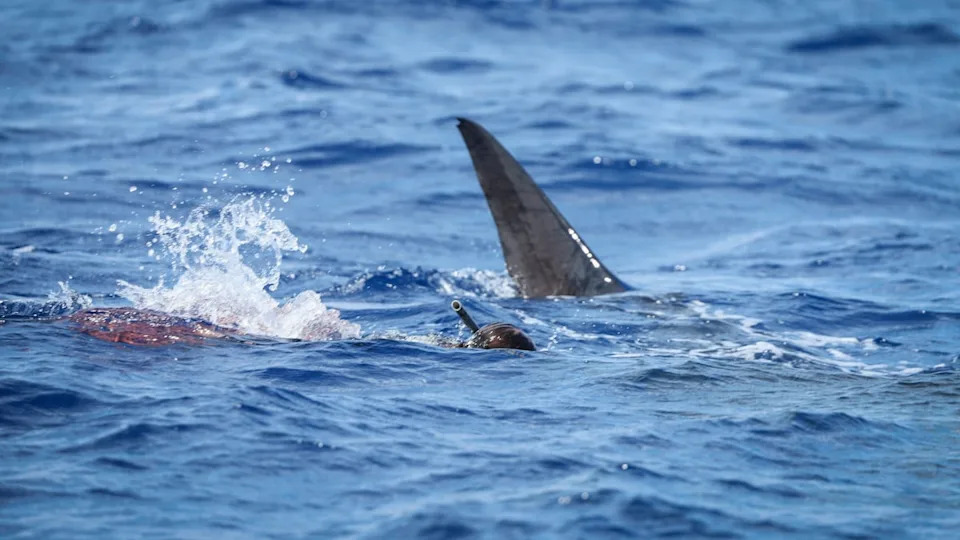
For the team of 10 researchers across two boats, leaping too early from the gunwales wasted energy. Too late, and the fish slipped beyond reach. If the placement was right, they could swim into the shark’s path to place a colored tag on a dorsal fin, check on a satellite-linked transmitter or collect a tissue sample.
From the plane, Bickford called down to the boat, alerting the scientists to get ready. A 20-foot female moved near.
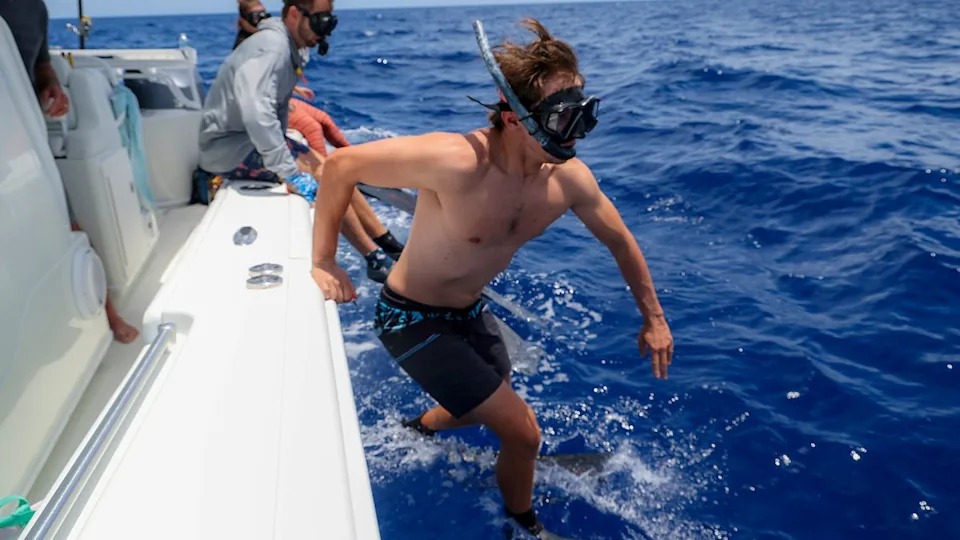
Alexander donned his mask and snorkel alongside two state scientists with the Florida Fish and Wildlife Conservation Commission.
Faircloth killed the engine and gave the green light.
“Dive! Dive! Dive!”
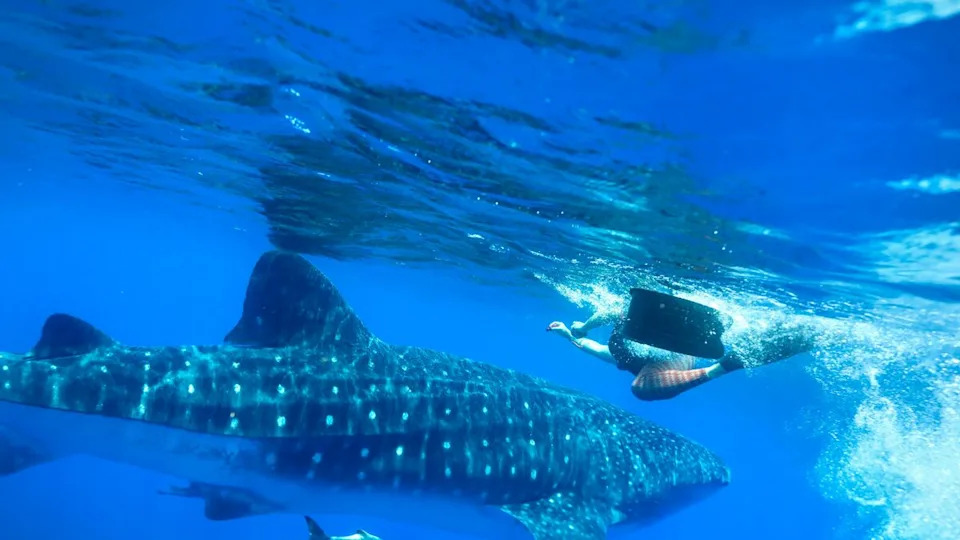
Despite their daunting size, whale sharks are tranquil animals.
They pose no threat to humans as they filter feed on plankton, fish eggs and small schooling fish. And they eat loads ofall of it: Last summer, whale sharks that were seen feeding offshore Tampa Bay could take in a staggering 330 pounds of food in one day.
With Larry as their guide, researchers ventured into the Gulf on June 9 with the hopes of finding a handful of whale sharks. Larry led them to 14. All were together feeding, opening a unique window for the team to spend several hours in the water studying them. Nearly all had likely never been documented, Hoffmayer said.
“You never know if you’re ever going to get another opportunity like that where you see all these animals,” he said.
The sharks spent several hours at the surface, opening their cavernous mouths to 4 feet wide and regularly breaching.
With so much time spent in the water column’s upper edge, it could be easy to forget the animals breathe air underwater through gills, not by the lungs of a mammal like their sizeable namesake, whales.
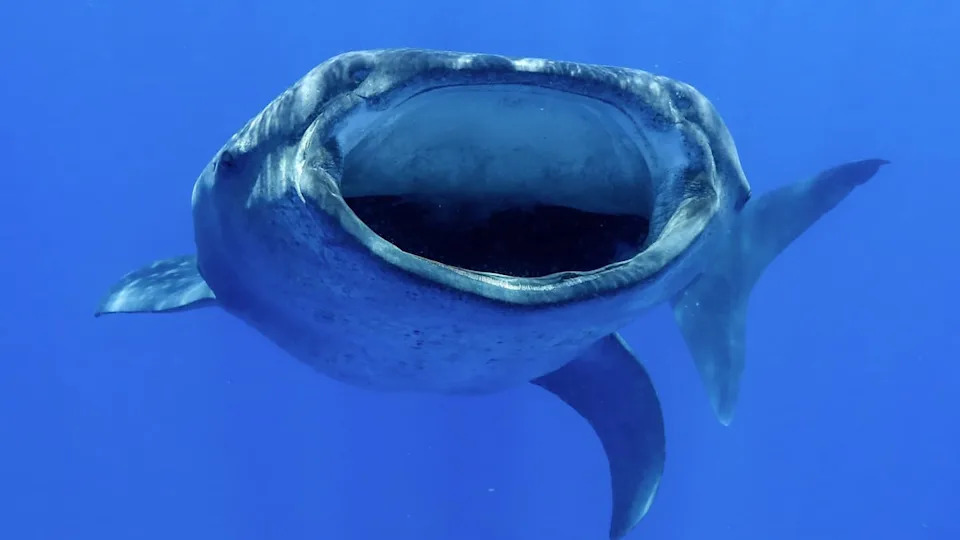
For years, some of the Gulf’s most dramatic whale shark gatherings were found off Louisiana’s Ewing Bank, where researchers found them by the dozens — and where many of the Gulf’s early satellite tags were deployed.
A 2021 study led by Hoffmayer reported 42 whale sharks tagged from 2008 to 2015, with two-thirds of those at Ewing Bank.
But that’s changed. Researchers in 2023 flew thousands of nautical miles over the bank and found none. It’s unclear whetherthe animals have moved or the population has declined.
The research has received several years of funding from the federal Bureau of Ocean Energy Management. Facing a lack of sightings and scientific encounters in the north-central Gulf, experts turned their focus offshore fromFlorida, where they had for years been receiving reports of sightings.
Larry, who was tagged 25 miles off Anna Maria Island last May, has since added clues: a continuous log of whale shark migration data over a full year. Larry left the Gulf then returned to the waters off Florida, indicating the region could be an important marine wildlife corridor for the animals.
Below: See a year of Larry’s movements throughout the Gulf in this data visualization created by the National Oceanic and Atmospheric Administration and shared with the Tampa Bay Times.
Design by NOAA
The expedition off Fort Myers Beach turned a covetedFlorida encounter into a chance for saturation — enough tags, tissue samples, sightings, feeding observations and satellite pings to inform theories about behaviors that have puzzled researchers for decades.
“We saw Larry move hundreds of miles, across the borders of multiple countries, to feed on fish eggs,” said Kara Choi, a research associate with Florida’s wildlife agency.
“It’s really neat to think about such small animals dictating the movements of the planet’s largest fish, and such a wonderful example of how we must consider the entire system when managing each individual species,” she said.
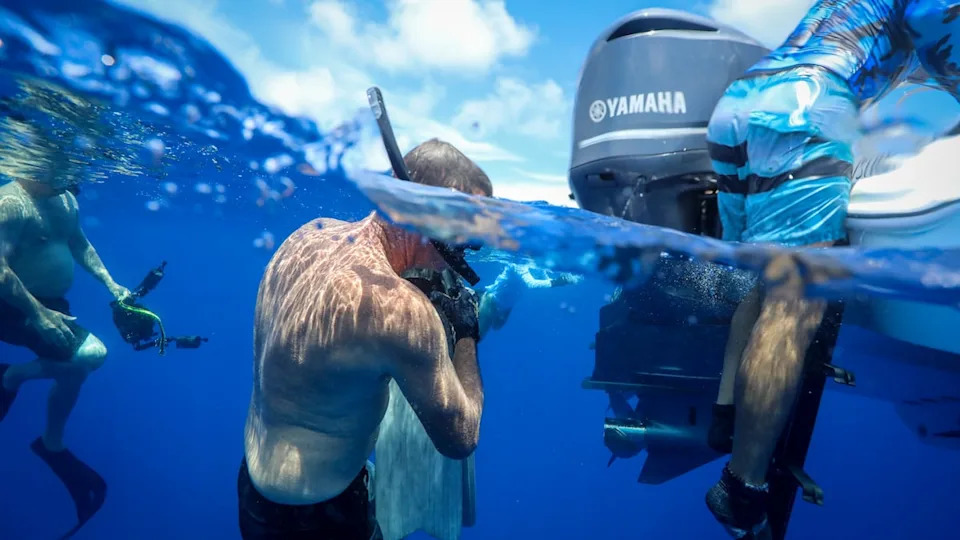
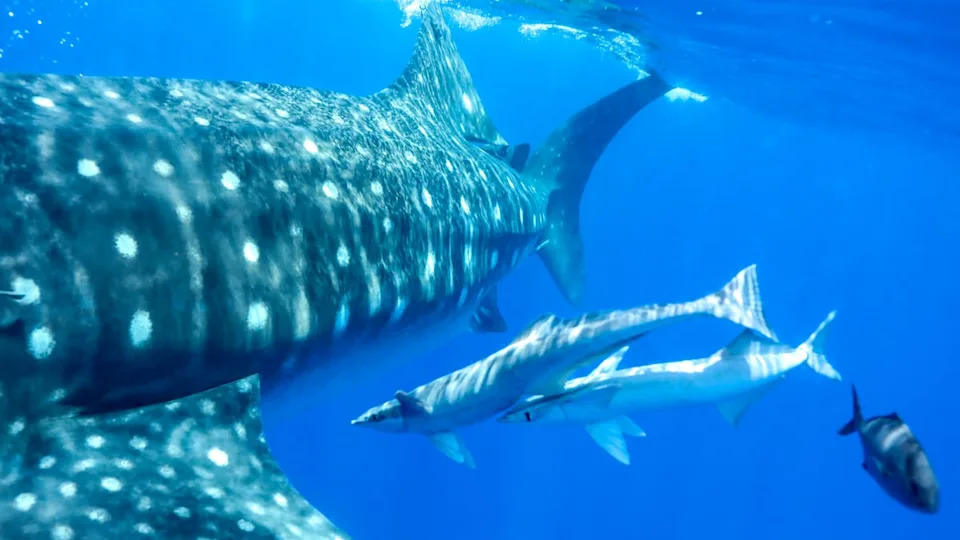
On the boats last week, everything began in its place: fins, masks, satellite transmitters, color tags and sample vials. But each shark triggered a scramble. As researchers dropped in, climbed back aboard and prepared for the next encounter, the deck became a wet jumble that had to be sorted and reset.
Choi was everywhere at once — coordinating who went in the water, who stayed back and what still needed to be done. When a smaller, more elusive whale shark needed a tag, she sprang into quick, practiced action.
She was thrilled when Hoffmayer first reached out for assistance from the state lab, which tracks where and when fish spawn.
“Not only do we get to interact with these amazing animals, but we can use our resources to help a colleague execute an amazing study,” she said. They could offer a licensed boat captain, pilot, and good working relationships with local anglers who could volunteer vessels to do the work, Choi said.
Other partners helped pull off the mission.The conservation nonprofit Wildpath, which combines science and storytelling to help shape Florida conservation policy, chipped in five satellite tags. The work is also supported by the University of Southern Mississippi, which has overseen a whale shark sighting database since 2003, and the nonprofit Blue World Research Institute Inc.
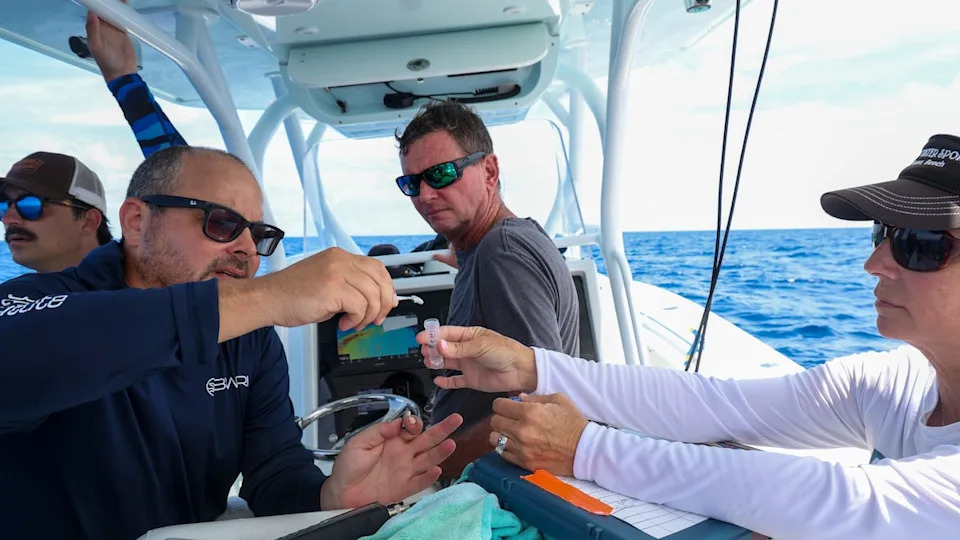
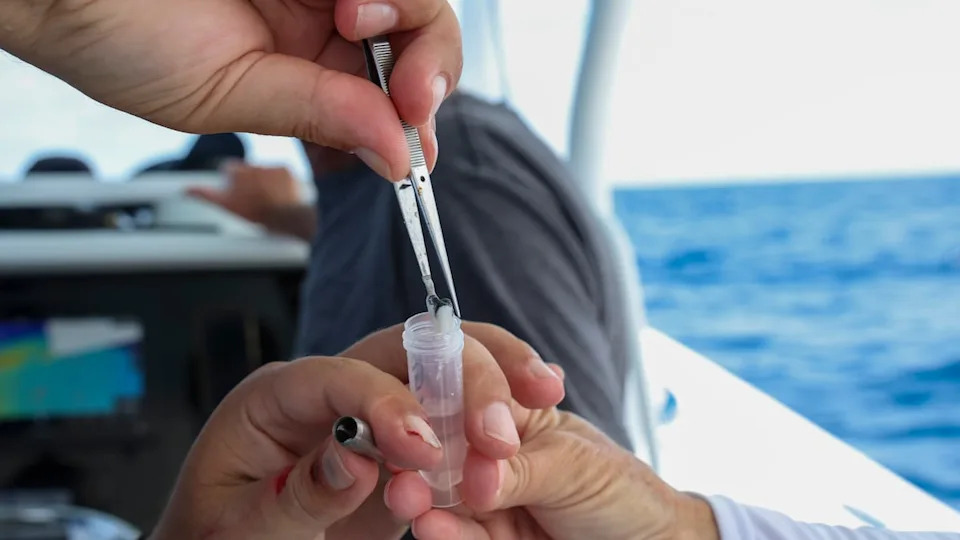
Each task was aimed at helping the greater scientific community answer fundamental questions:
Where do these giants go? What draws them together? Are they following fish eggs, currents, spawning events, temperature breaks or underwater features?
By roughly 4 p.m.on the day of the expedition, the whale sharks began to leave.
One by one, after hours of feeding at the surface, the giants angled downward and vanished into the deep blue.
Perhaps the food had scattered, the light had changed, or the sharks were responding to currents, temperature, chemical cues, or signals scientists have yet to decipher. The timing mattered: The sharks had surfaced within a particular window of conditions and disappeared as that window closed.
Those movements, for researchers, are all clues.
Soon, the last broad shadow faded beneath the surface. Almost all at once, the water fell quiet and calm.
Have you seen a whale shark in the Gulf? Report it to the University of Southern Mississippi to help researchers continue their work. To report a whale shark sighting, visit here. You can also email fisheries@usm.edu or call 228-818-8815.
The Tampa Bay Times launched the Environment Hub in 2025 to focus on some of Florida’s most urgent and enduring challenges. You can contribute through our journalism fund by clicking here.