
Aramis Ayala’s traffic stop resurfaces in public memory not for its drama, but for the trajectory it foreshadowed. Now Executive Director of Fair and Just Prosecution, Ayala leads a national network of elected prosecutors defending their independence against state and federal overrides.
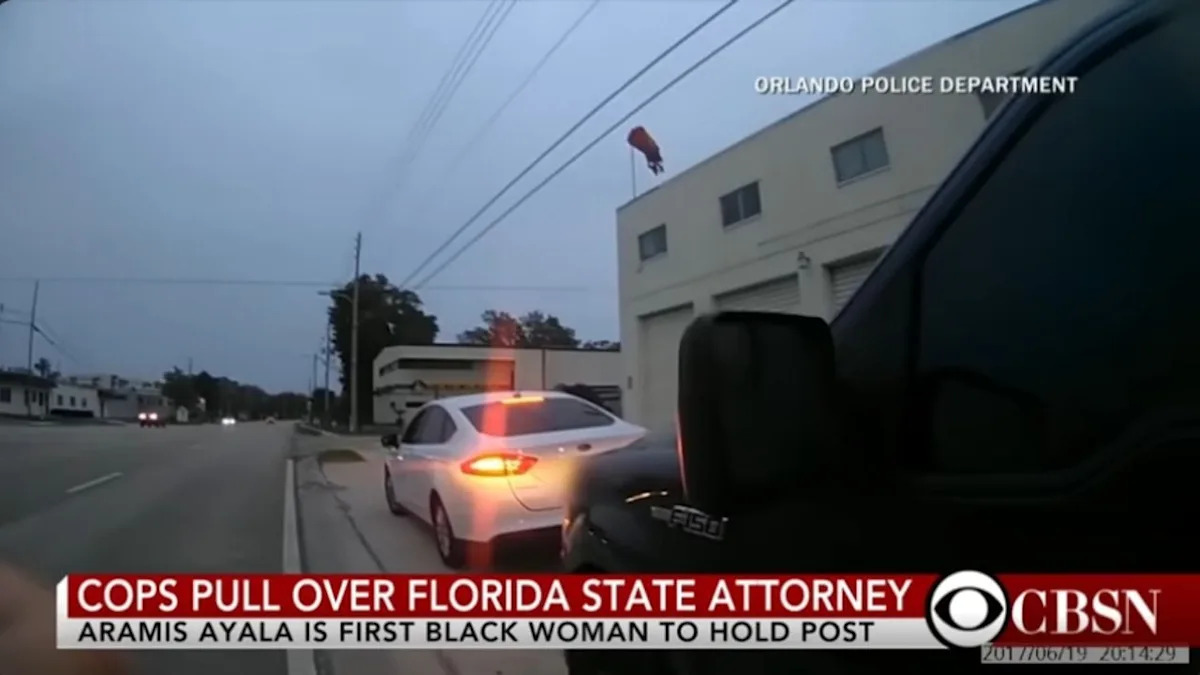
Orlando police officers pulled her over on June 19, 2017, shortly after 8 p.m. The state attorney for Florida’s Ninth Judicial Circuit had just finished teaching a class at Florida A&M University College of Law in the Parramore neighborhood.
Ayala has stated she violated no laws during the stop. She confirmed her license plate was properly registered and her window tint met Florida legal standards. The video generated significant public discussion about policing practices and the recognition of authority during traffic stops.
Her 2017 stop now represents a footnote to a career defined by challenging systemic norms and prosecutorial discretion battles. This incident, viewed through the lens of her subsequent advocacy, serves as a symbol of the persistent tensions between law enforcement authority and the officials elected to oversee justice.
A Brief Stop With Uneasy Explanations
Officers initiated the stop after a license plate check returned no information on her vehicle. The Orlando Police Department released the officers’ body camera footage the following month. The video spread across news outlets and social media platforms.
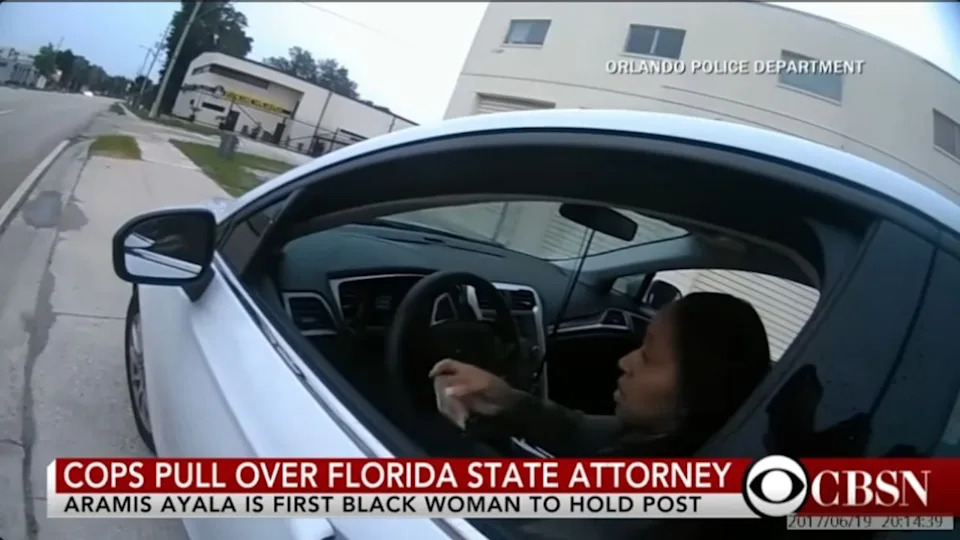
Image Credit: CBS News/YouTube.
Ayala is the first Black woman elected as a state attorney in Florida history. Not only did the footage capture an exchange that drew national attention, but the encounter also lasted only a few minutes and produced no citations.
Officers approached Ayala’s car and asked for her license. She handed over her identification and informed them of her position as state attorney. The tone remained professional throughout the interaction.
The body camera footage shows one officer approaching Ayala’s driver-side window. He took her license and asked, “What agency you with?” Ayala responded, “I’m the state attorney,” which shifted the dynamic of the encounter. The officer then explained the reasons for the stop.
“Your tag didn’t come back. Never seen that before,” the officer said. He clarified that the license plate check returned no vehicle registration information. Ayala asked why officers ran her plate in the first place. The officer explained they run tags to check for stolen vehicles.
The officer added that Ayala’s car windows appeared very dark. He noted he did not carry a tint meter to measure the exact darkness level. Ayala asked for the officers’ business cards. Neither officer had a card available, so one wrote their names on a paper.
Officer Conduct and Power Dynamics
The officers appeared to alter their approach after learning Ayala’s identity. Their initial explanation of the license plate issue shifted to include the window tint observation. Ayala listened to their statements and maintained a calm posture throughout the interaction.
The footage showed the officers clearing their throats and offering multiple explanations. One officer stated, “We’re good now,” after receiving Ayala’s identification. Ayala did not raise her voice or challenge their authority directly. She requested their contact information and accepted their paper with names.
The stop concluded with officers returning her license and allowing her to leave. No ticket or written warning was issued. Ayala drove away from the scene without further incident.
The video accumulated millions of views after its release. Social media users and commentators questioned whether racial profiling played a role in the stop. Ayala’s prominence as the state attorney contrasted with the officers’ apparent lack of knowledge about her identity.
The Orlando Police Department issued a statement defending the stop’s legality. Officers on patrol routinely check license plates for official purposes, according to the department. The statement noted the plate did not return as registered to any vehicle and the dark tint prevented officers from seeing inside.
Ayala released her own statement addressing the incident. She clarified she had filed no lawsuit regarding the traffic stop. She expressed interest in meeting with the Orlando police chief to discuss community relations. She stated her goal involved building respect between law enforcement and the public.
Aftermath and Larger Context
Ayala never filed any formal complaint against the officers or the department. Both parties agreed the stop appeared consistent with Florida law, although that did not stop the internet from rendering divided conclusions.
The officers faced no reported disciplinary action for the encounter. Coincidentally, the incident existed alongside Ayala’s dispute with Governor Rick Scott over death penalty decisions.
Ayala continued her duties as state attorney after the traffic stop. She had previously been removed from certain murder cases by Governor Scott. But more importantly, the 2017 traffic stop neither altered Florida law or police procedures nor forced policy changes within the Orlando Police Department.
In fact, Ayala’s subsequent legal battles with Governor Rick Scott over death penalty decisions garnered more attention than this brief encounter. She left office in 2021 after declining to seek reelection. The body camera footage remains available online, collecting views from new audiences each year.
The stop now represents a moment in time when body camera transparency met a high-profile public figure. It is also an enduring example of how professional demeanor and positional authority can shape an interaction. Meanwhile, law enforcement agencies across Florida continue to conduct random plate checks and tint observations.
If you want more stories like this, follow Guessing Headlights on Yahoo so you don’t miss what’s coming next.