
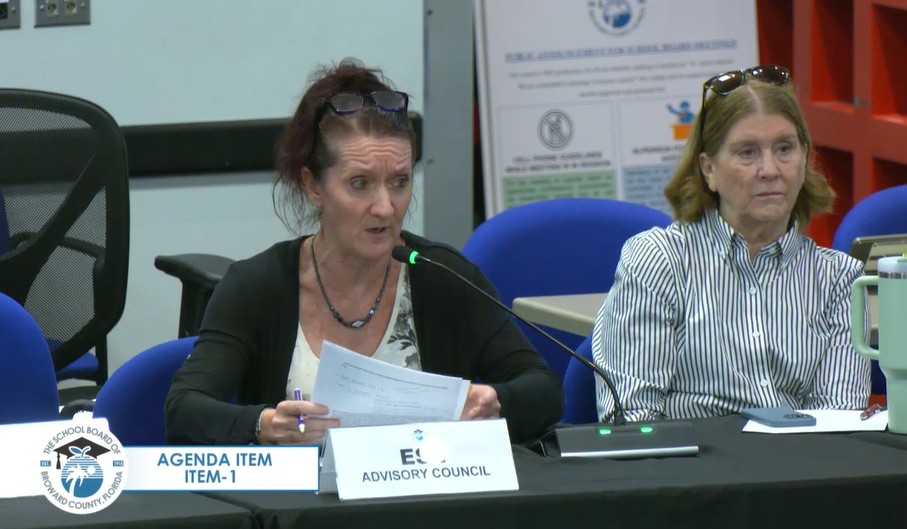
The last meeting of the School Board of Broward County lasted 10 hours, according to the online video.
The session on June 16 wasn’t even a formal meeting. It was a workshop, where board members discuss issues but no votes are taken. One reason was that volunteers who devote long hours on advisory panels gave detailed reports on their important but often overlooked work.
Board members also spent a full hour talking about how to change public speaking rules at meetings, in an effort to make meetings more businesslike — and hopefully shorter. The idea, proposed by a management consultant and supported by the school district’s new attorney, is fraught with potential problems.
We urge the board to leave its existing policy in place and avoid another potential public relations nightmare.
The current policy is very imperfect, but the changes as proposed could make things worse if parents and taxpayers feel as if their opinions won’t matter much anymore. In an election year, with a critical countywide vote on teacher pay up for a vote, the school district must reassure parents and taxpayers that their opinions matter more, not less.
A demeaning ‘cattle call’
A vote on the speaking policy is scheduled after a 9 a.m. hearing Tuesday at board headquarters. A close vote is likely: Four of the nine board members have criticized it.
If the changes are approved, people could address the board only at designated times, mostly at the start of meetings, for a total of one hour. This isolates public comment from issues when they are controversial.
Under the one-hour limit, individual speaking time could be drastically curtailed from the current three minutes to as little as a minute, if 30 or more people speak on the same issue. The current practice of allowing people to comment during debate on motions or amendments would end (the eight pages of new policy are part of Agenda Item 56 on Tuesday, June 23).
A close board vote is likely, as four of the nine members have already criticized it.
Board member Adam Cervera described a parade of public speakers at 9 a.m. as a dismissive “cattle call,” with people speaking on issues long before they are discussed.
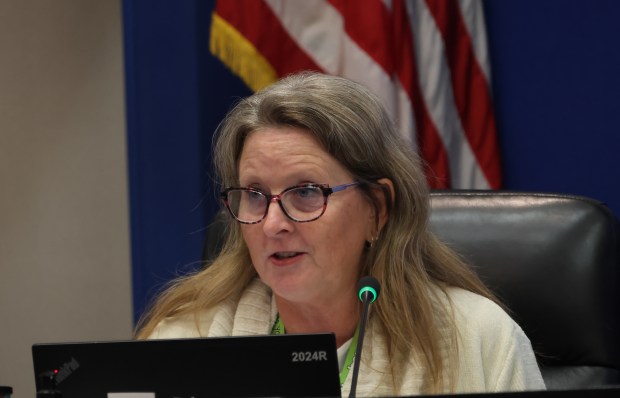 Broward School Board member Debra Hixon is opposed to a proposed time limits for public speakers.
“I am not a fan of this restrictive policy at all,” Cervera said. “It’s not fair.”
Board member Debra Hixon rejects the idea of curtailing speakers’ time if too many show up.
“If 200 people show up here, 200 people should be able to speak,” Hixon said.
Questions about timing, too
The timing of the policy raises questions, too. After school lets out for summer, many parents are traveling, planning family vacations or sending kids to camp.
“Honestly, I’m afraid to leave Broward, because I’m afraid of what’s going to happen when we’re not here to voice things,” said Jacqui Luscombe of Coral Springs.
Luscombe called it “reprehensible” that the district did not advertise the speaking policy more prominently on its own website so that more people would be aware of it. It was placed on an obscure site, civicplus.com, which the board lawyer said was required by law.
“The optics of this, and what the result will be, is incredibly bad,” Luscombe told the board.
Luscombe knows how to navigate the intimidating school bureaucracy. She was honored by the district in May for her advocacy on behalf of exceptional students.
Another long-time volunteer, Mary Fertig, said it’s never good when the board takes up thorny issues while school is out and parents are distracted. She cited a vote to restrict student cell phone use in July 2024 that she said caught many by surprise.
“You all are doing this at a time when you know people are out of town,” Fertig told the board. “I think that sends a terrible message.”
If the volunteers who know the district so well are suspicious, what’s the general public supposed to think?
The real culprit
Besides, the main reason that board meetings drag on is not the public, it’s the elected officials themselves. They just talk too much. At that workshop on June 16, board member Nora Rupert spoke without interruption for 14 minutes. That’s unacceptable, in our view.
It is true that public input can be tedious and repetitive, and some people are chronically critical or condescending or insulting. In politics that goes with the territory. We still live in a democracy. The public square should be noisy.
No government policy on speech should be imposed on everyone just to limit the voices of a few. That is completely backwards. The First Amendment protects all speech — including the speech that the people in power don’t want to hear.
The Sun Sentinel Editorial Board consists of Opinion Editor Steve Bousquet, Deputy Opinion Editor Dan Sweeney, editorial writers Pat Beall and Martin Dyckman, and Executive Editor Gretchen Day-Bryant. To contact us, email at letters@sun-sentinel.com.