
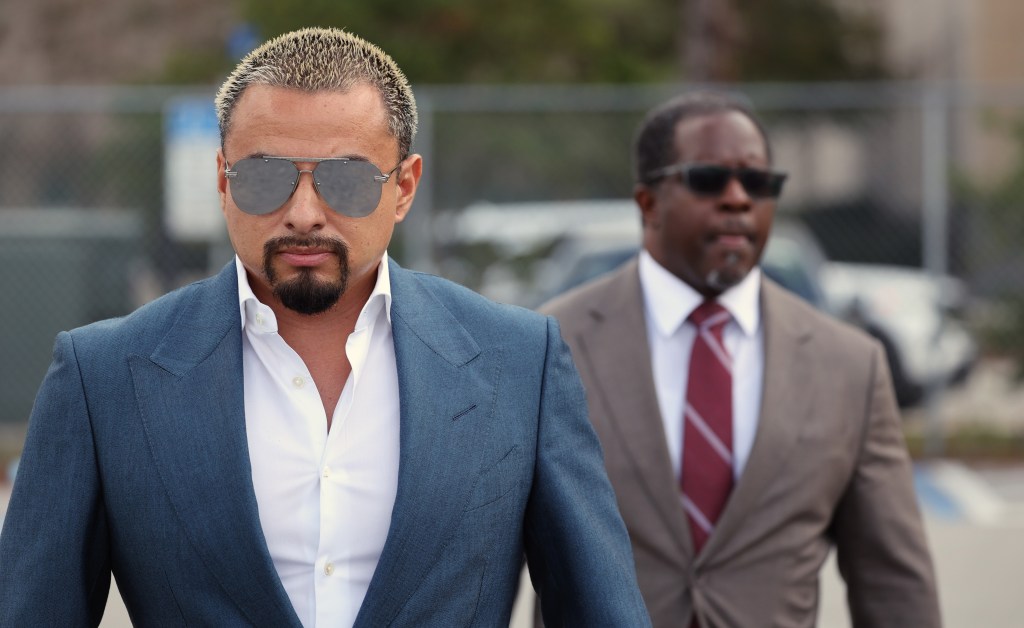
Christopher Delgado, the alleged ringleader of a Central Florida cryptocurrency Ponzi scheme who is accused of using other people’s money to live a lavish lifestyle, has agreed to plead guilty to federal fraud charges, court records show.
He could face up to 50 years in prison.
Delgado, 34, was arrested and charged in February for his role in the scheme, which prosecutors say involved millions of dollars and went on for three years. He initially pleaded not guilty but signed a plea agreement this week, admitting wire fraud and conspiracy to commit wire fraud. His official plea hearing is scheduled for Tuesday in federal court in Orlando.
As the former president and CEO of Goliath Ventures, the company at the center of the enterprise, Delgado used his clients’ investments to travel in private jets, drive Lamborghinis and buy flashy watches and jewelry and high-end homes, prosecutors say.
A Goliath investor in Canada, who spoke to the Orlando Sentinel on the condition that she was not identified by name, said she lost $141,000 by investing in the company and will now have to postpone her approaching retirement by three to five years.
Reacting to Delgado’s plea agreement, she condemned the man she once trusted.
“He’s not sorry for what he did. He’s sorry he was a failure and got caught,” she said. “The amount I lost was considerable and changed the course of my life…I hope he gets decades behind bars.”
While Delgado is required to pay at least $250 million in restitution to his victims as part of his plea deal, in part by forfeiting his extensive assets, the woman is not confident there will be enough to make all of his investors whole.
“I don’t believe that will come anywhere close to the amount people lost,” she said. “I don’t have much hope, but I will still try.”
Delgado and his attorney, Sean Shecter, did not immediately respond Wednesday to requests for comment.
Delgado and his co-conspirators portrayed Goliath as a “joint-venture cryptocurrency investment enterprise,” according to the agreement. The company attracted wealthy people and typically required a $100,000 initial investment. Investors believed money they transferred to Goliath’s accounts would be converted into cryptocurrency and escalate in value. Instead, over three years, at least 1,000 investors lost a total of $250 million or more.
“Investors were induced to give money to Goliath through personal referrals, professional marketing materials, luxury events, charitable sponsorships, and some monthly payments of purported returns, all of which were designed to establish Goliath’s bona fides with investors,” according to the plea deal.
But the majority of investors’ money sat as cash in Goliath’s bank accounts and cryptocurrency wallets. The scheme’s leaders used the money to pay for luxury travel, events, vehicles and other items used for personal enrichment and to lure other investors by projecting an image of success, according to the deal.
Delgado and his unnamed co-conspirators concealed the scheme from investors by providing them with fabricated financial statements, offering false explanations for delayed payments and allowing some investors to collect more money than they had initially invested, by paying them with the funds raised from other investors.
The scheme started around January 2023.
As part of the plea deal, Delgado agreed to turn over at least $250 million in proceeds from the fraud, as well as property he purchased using money obtained through the scheme, including eight Orlando-area properties; 11 luxury vehicles; 30 watches; 29 pieces of jewelry and cufflinks; 57 wallets and bags; and other personal items, including sports memorabilia and a collection of wine and spirits.
One of the properties Delgado agreed to turn over is a glitzy $8.5 million Isleworth mansion he purchased last summer and where he has been living since prosecutors charged him in February. That 11,000-square-foot property was described in a real estate listing as a “grand estate” providing “a lifestyle of unmatched elegance and comfort.”
The plea agreement says Delgado paid for the seven-bedroom, 13-bathroom home entirely using investors’ funds.
In addition to purchasing pricey properties and goods, Delgado made a number of charitable donations, according to records and interviews. He gave $350 to sponsor a team in the Apopka Little League, for example, more than $50,000 to help send the band and cheerleading squad at Apopka High School to London’s 2026 New Year’s Day parade and $250,000 to a drug-abuse prevention initiative.
These types of donations are a common tactic for fraudsters to build up the trust of their investors, experts told the Sentinel.
Goliath is now in bankruptcy, and the attorney appointed by a judge to oversee its finances is trying to recover assets, including those given to charities, to help pay back the company’s victims.
anmartin@orlandosentinel.com