
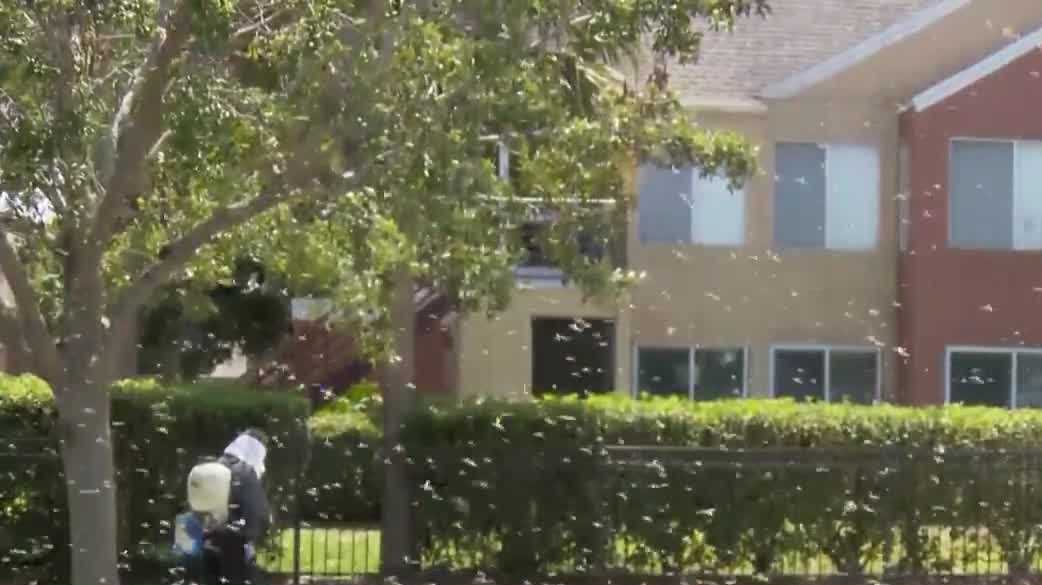
A strong El Niño is expected to bring hotter and wetter weather to Florida, and experts warn this could lead to increased pest activity, including mosquitoes that thrive in rain-filled habitats. Bo Butler, owner of Panther Pest Control, said his team is already seeing a large amount of pest activity. “We see anything from an increase in interest roaches, termites, mosquitoes,” Butler said. Experts say the wetter conditions associated with El Niño provide more opportunities for mosquitoes to breed. Eric Caragata, a researcher at the University of Florida, explained how rainwater creates ideal habitats for mosquito eggs. “Mosquitoes will lay their eggs in containers that collect rainwater. So if it’s raining more, they’re going to have more potential habitats for mosquitoes to lay eggs,” Caragata said. According to the University of Florida, mosquitoes can transmit diseases such as West Nile virus and dengue fever. The Florida Department of Health has reported 33 travel-associated dengue cases this year. “A lot of those cases are due to people who are traveling in other countries and then come back to Florida,” Caragata said. Caragata also noted that El Niño could intensify the situation. “El Niño might make that more extreme,” Caragata said. Experts recommend several measures to protect against mosquito bites: Avoid outdoor activity during peak hours at dawn and duskWear loose, light-colored clothingUse spray repellents with DEETDrain standing water where mosquitoes can breedEnsure doors and windows are properly screenedButler emphasized the importance of eliminating potential mosquito breeding grounds. “We instruct our guys to dump over anything from upside-down frisbees to trash cans, lose it upside down,” Butler said.
A strong El Niño is expected to bring hotter and wetter weather to Florida, and experts warn this could lead to increased pest activity, including mosquitoes that thrive in rain-filled habitats.
Bo Butler, owner of Panther Pest Control, said his team is already seeing a large amount of pest activity.
“We see anything from an increase in interest roaches, termites, mosquitoes,” Butler said.
Experts say the wetter conditions associated with El Niño provide more opportunities for mosquitoes to breed.
Eric Caragata, a researcher at the University of Florida, explained how rainwater creates ideal habitats for mosquito eggs.
“Mosquitoes will lay their eggs in containers that collect rainwater. So if it’s raining more, they’re going to have more potential habitats for mosquitoes to lay eggs,” Caragata said.
According to the University of Florida, mosquitoes can transmit diseases such as West Nile virus and dengue fever. The Florida Department of Health has reported 33 travel-associated dengue cases this year.
“A lot of those cases are due to people who are traveling in other countries and then come back to Florida,” Caragata said.
Caragata also noted that El Niño could intensify the situation.
“El Niño might make that more extreme,” Caragata said.
Experts recommend several measures to protect against mosquito bites:
Avoid outdoor activity during peak hours at dawn and duskWear loose, light-colored clothingUse spray repellents with DEETDrain standing water where mosquitoes can breedEnsure doors and windows are properly screened
Butler emphasized the importance of eliminating potential mosquito breeding grounds.
“We instruct our guys to dump over anything from upside-down frisbees to trash cans, lose it upside down,” Butler said.