

Key Biscayne Police continue to see an uptick of fraud cases in the village, with two new scams, one taking thousands from a local charity and another, separate fraud taking $130,000 in crypto from a resident.
The Key Biscayne Children and Education Foundation, headed by Vice-Mayor Oscar Sardiñas, raises funds for enrichment programs for children. It lost $4,520, but fortunately was able to get the stolen funds reimbursed through Quick Books. Police have not been able to identify a suspect.
On Oct. 1, someone pretending to be Sardiñas sent the foundation’s accountant an email requesting a wire transfer in that amount, according to a police report. But the email address used was not Sardiñas but rather a nearly identical email other than a slight misspelling, the vice-mayor explained.
“He called me right away and said, ‘Oh my God, I think, I think we’ve been hacked,’” Sardiñas recalled on Friday. “It looked like my email. It was very close,” Sardiñas said. “It’s incredible how sophisticated these guys go.”
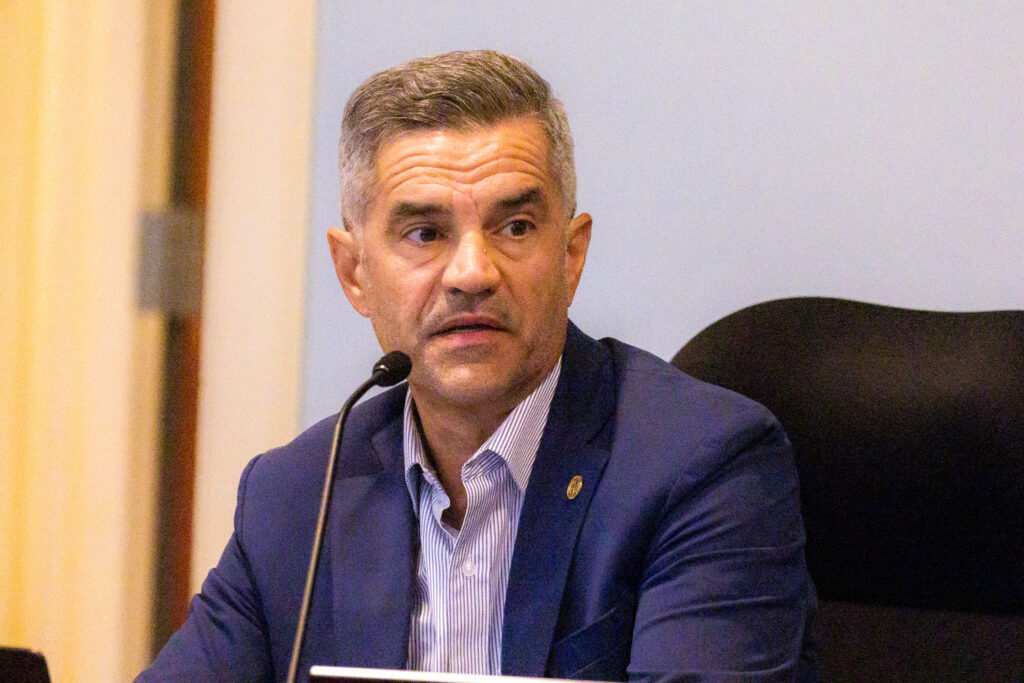 Key Biscayne Vice Mayor Oscar Sardiñas speaks at a Village Council meeting, Sept. 29, 2025. A charity he leads was recently attacked by hackers, but funds were reimbursed (KBI Photo/Tony Winton)
Realizing it was fraud, the foundation immediately contacted their bank in an attempt to stop the wire transfer, but were told that it was too late. Their accountant’s I.T.department was able to determine that someone had hacked into their system, forcing them to reset all of their security protocols.
“It was a marginal amount, and it was reimbursed to us back by QuickBooks,” Sardinas said. “I think it’s happening everywhere.”
Their bank has initiated an investigation regarding the fraud. The foundation reported it to police on Oct. 9.
Just two days earlier, a Key Biscayne resident reported being scammed out of $130,000 in crypto, according to another police report.
On Sept. 27, the 43-year-old Hispanic woman reported receiving an email claiming to be from Coinbase, a crypto currency exchange, alleging there was hacking activity on her account. The victim called the phone number listed in the email and was urged to transfer her crypto to a cold wallet for safekeeping.
Never miss a story! Sign up for our FREE newsletter
According to Coinbase, cold wallets are hardware-based, offline, and typically used for secure, long-term storage of cryptocurrencies while hot wallets are software-based online and used for regular transactions.
But the scammer pretending to be a Coinbase representative actually transferred her funds to a hot wallet on Safepal. The following day, she received a phone call from the scammers who again pretended to be a Coinbase representative and convinced her to transfer crypto from Kraken.
“The victim became suspicious during their phone conversation and hung up, then deleted her Coinbase exchange account,” police stated in their report. “The victim later realized that the emails used in the phishing scam had subtle differences to the actual company emails.”
The victim did not have the wallet key information for where the approximately $130,000 of her cryptocurrency was sent at the time she reported it to police.
A reporter for the Independent contacted the victim in this case, but could not reach her for comment.
Police Chief Frank Sousa spoke to the Independent about the uptick in fraud cases in the village. He cautioned residents to always take precautions and verify who’s asking and looking for things.
“We are planning on doing something with the Village to put out an informational campaign, but more information to come on that,” Sousa said.
Tony Winton contributed to this report

Jessica De Leon is a general assignment reporter at the Key Biscayne Independent.