
1 / 2
SANIBEL-CAPTIVA CONSERVATION FOUNDATION
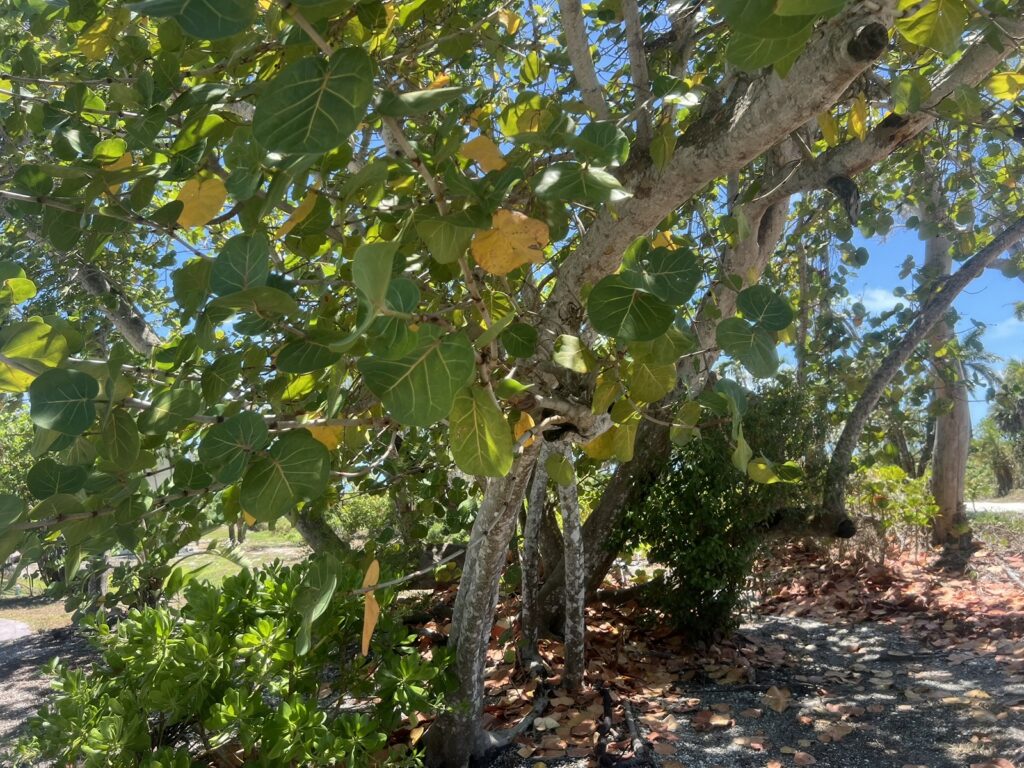
Seagrape tree
2 / 2
SANIBEL-CAPTIVA CONSERVATION FOUNDATION
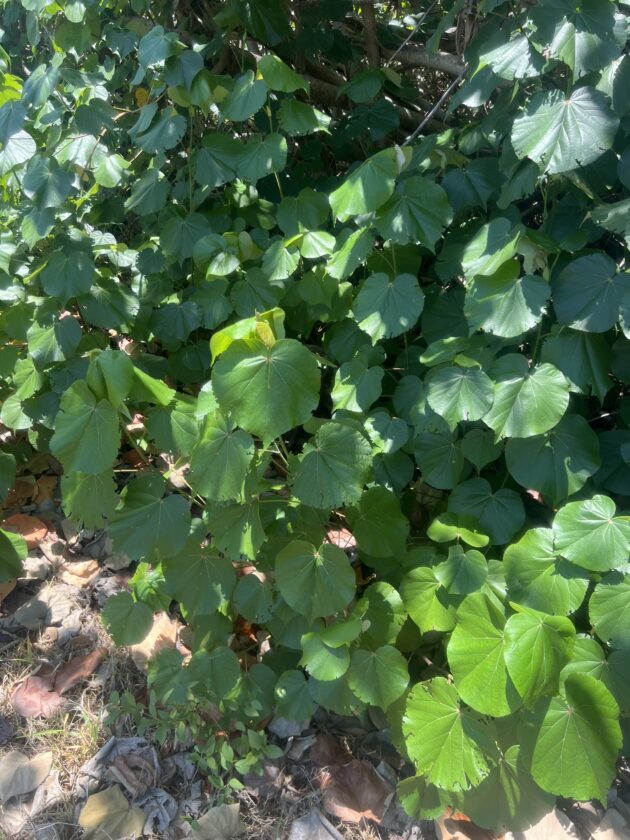
Mahoe tree
[expand]
close
The Sanibel-Captiva Conservation Foundation (SCCF) reported that sea grape (Coccoloba uvifera) is a native, coastal, broad-leaf evergreen that is common in the uplands of Sanibel. It is native to the Caribbean, South America and South Florida and can reach 35-50 feet tall.
They occur island-wide on Sanibel and Captiva and in the uplands, but are found only along the mainland coast because they cannot survive frost. The trees are common at the top of the beach ridge zone, which provides some of the natural shade on the island.
“Sea grape trees are very important for dune stabilization and are both salt-tolerant and wind-resistant,” SCCF Wildlife & Habitat Management Director Chris Lechowicz said.
The fruit of sea grape trees is eaten by many native wildlife species and is also used to make local jelly. Honey produced from sea grape blossoms is among the most treasured Florida-produced varieties.
The dense fallen leaves provide habitat for various vertebrate and invertebrate species, including isopods, eastern narrow-mouthed toads and ringneck snakes. Coastal gopher tortoises, which live in the uplands along with the sea grapes, often dig their burrows near the base of the trees, which increases burrow stabilization.
A BETTER OPTION THAN MAHOE
The SCCF reported that Sanibel has two similar-looking invasive, exotic trees called the seaside mahoe (Thespesia populnea), from Indonesia and other Pacific Islands that reach heights of 32-50 feet tall, and the mahoe tree, which is also known as sea hibiscus (Talipariti tilieaceum). Both occur all over and are equally invasive
“Many people assume that these are also sea grape trees because the leaves and growth patterns are similar,” he said. “The leaves are both roundish in shape, with the sea grape being the most circular and the mahoe leaf having two roundish lobes at the leaf base and a point at its apex.”
Sea grape leaves are also very waxy, hard and rigid, whereas mahoe is shiny on top, textured and dull on the bottom, and flimsy overall. Mahoe trees are also on the city’s prohibited invasive exotic vegetation list, which bans their planting on Sanibel.
“From a native habitat management side, these invasive trees can become an impenetrable wall that shades out most native plants underneath,” Lechowicz said. “If left unchecked, they spread out and multiply relatively quickly.”
When they mature, heavy machinery is usually needed to remove them. Herbicide treatments are needed to kill the stumps, as well as the inevitable seedlings that will sprout months later after sunlight is able to hit the ground. Due to their salt tolerance, they have done relatively well after the storm surges from 2022 to 2024.
“It is recommended that property owners remove these trees and replant with sea grape or other native species,” he said.