
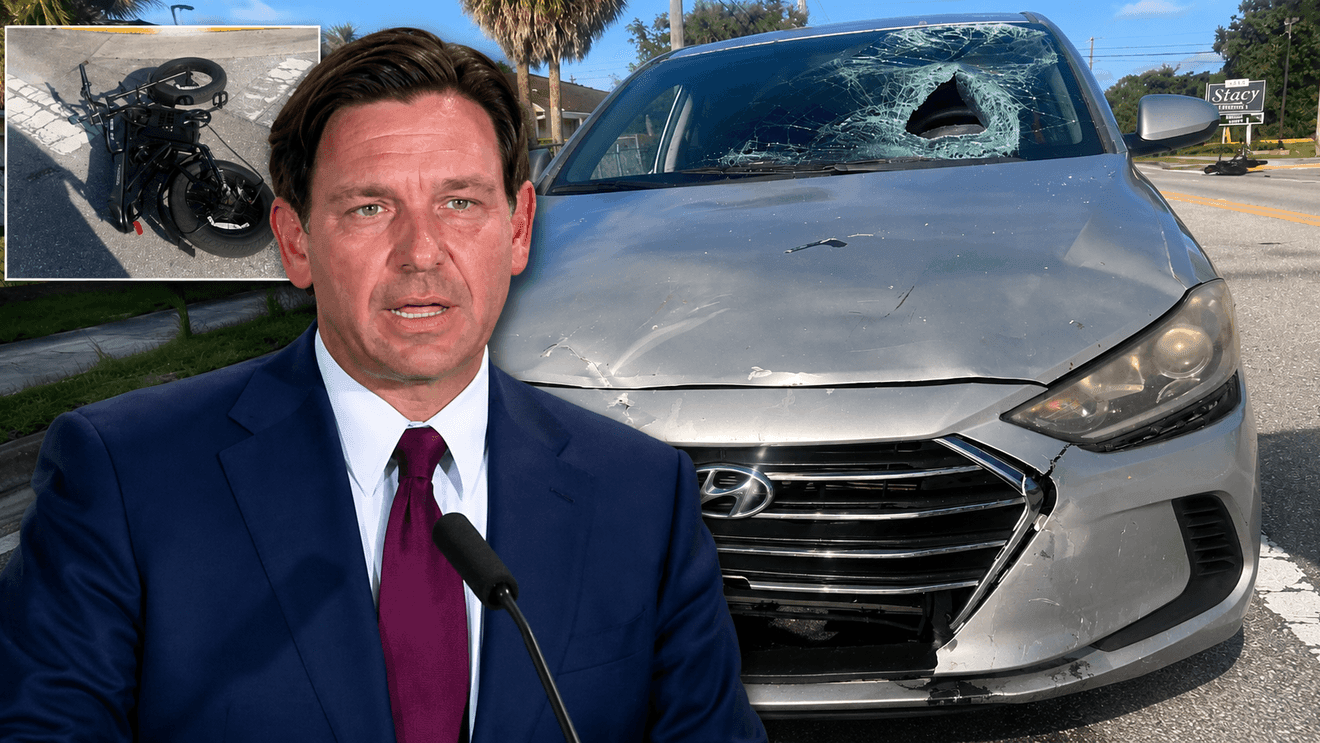
WEST PALM BEACH, Fla. (CBS12) — Gov. Ron DeSantis has vetoed a bill that would have placed new statewide rules on electric bicycles, saying the measure could lead to more surveillance and over-policing of riders, even as communities across Florida continue to grapple with crashes and safety concerns involving teens and children on e-bikes and scooters.
The bill, CS/SB 382, would have prohibited e-bike riders from traveling faster than 10 miles per hour when within 50 feet of a pedestrian. Riders who violated the rule could have faced a nonmoving traffic violation and fines of more than $100, according to DeSantis’ veto letter.
The legislation, which passed both the Florida House and Senate unanimously, also would have created a Micromobility Device Safety Task Force to study e-bike regulations and recommend additional changes. Law enforcement agencies would have been required to track e-bike crashes, including the age of the rider, the class of e-bike involved and whether the rider had a learner’s permit or driver’s license.
Supporters pushed the bill as a safety measure at a time when e-bikes and scooters have become more common on sidewalks, streets and school routes. The bill’s stated purpose was to encourage safe e-bike operation and prevent traffic crashes, injuries and fatalities involving the devices.
Recent spate of e-bike incidents
Earlier this month, a 17-year-old boy was hospitalized after a crash involving an e-bike and a vehicle in West Palm Beach. The driver involved in that crash told CBS12 News the teen appeared to be going too fast and not paying attention before the collision.
In Port St. Lucie, police recently urged caution after two brothers, ages 15 and 8, were injured when the electric scooter they were riding collided with a vehicle. Police said the case served as a reminder for drivers and children to be alert during the summer months, when more kids are out riding.
In Wellington, two teen boys were airlifted to the hospital after one boy lost control of an e-bike and struck another child, leaving him unconscious, according to the Palm Beach County Sheriff’s Office.
The issue has also been a concern in Jupiter, where town officials held an e-bike safety town hall after the death of a Jupiter Middle School student in an e-bike crash. CBS12 News previously reported that the crash prompted renewed discussion about enforcement, education and safety rules for young riders.
And in April, the Martin County Sheriff’s Office says it was moving from warning riders and families about e-bike laws to actively enforcing them, citing a growing number of complaints and safety concerns across the county.
DeSantis: Bill goes too far
Despite those concerns, DeSantis said the bill went too far.
In his veto letter, DeSantis wrote that the 10-mile-per-hour limit near pedestrians would be “difficult for a bicyclist to measure when safely operating an e-bike.” He also warned that the violation would “inevitably be enforced with speed detection and surveillance devices.”
“This bill will likely lead to enhanced surveillance by local governments against citizens,” DeSantis wrote.
At a news conference Friday, DeSantis expanded on his reasoning, saying he did not want Florida to create a system where e-bike riders are closely monitored by law enforcement.
“Maybe there’s problems,” DeSantis said. “But what it will lead to is more surveillance of people by law enforcement. And we don’t need that.”
DeSantis also questioned why the bill would create a task force while also immediately imposing new statewide rules.
“They also set up an e-bike commission,” DeSantis said. “But it’s like, okay, you’re already substantively legislating. Why are you doing a commission? If you’re going to do a commission, then the commission can come and do that thing.”
The governor said he believed the bill could have unintended consequences.
“Do we really want to have policing of e-bikes?” DeSantis said. “And are you going 10 miles or 8 miles or whatever? I think it was a little bit of an overreach.”
The veto leaves Florida’s current e-bike framework in place, while local governments and school districts continue to look for ways to respond to safety concerns. Some communities have already taken action, including restrictions or discussions around e-bikes and scooters on campuses, sidewalks and public paths.
The debate is likely to continue as e-bikes become more popular among students and families, and as police, parents and local leaders try to balance safety concerns with concerns about enforcement and government overreach.