
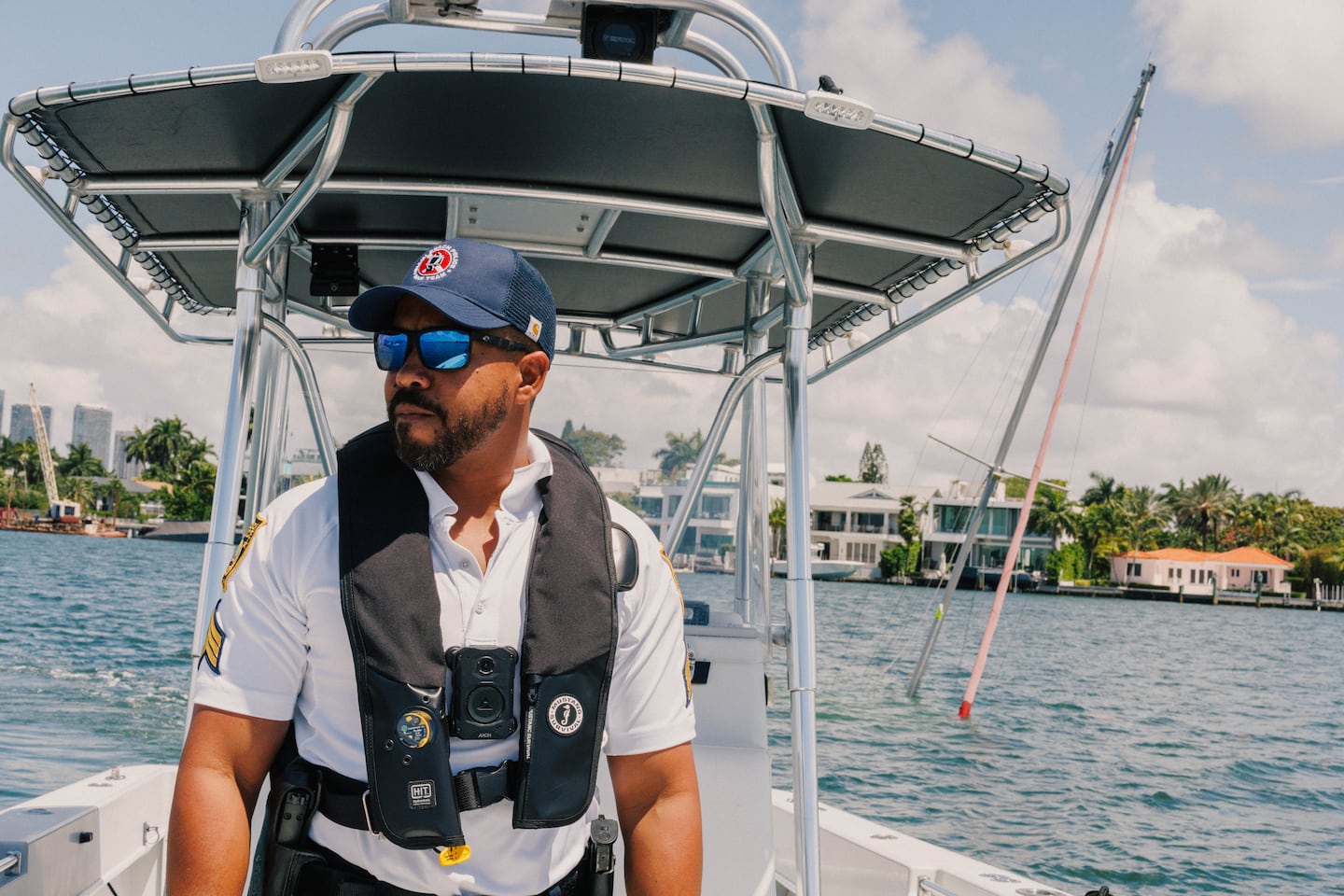
Suddenly, a sunken cabin cruiser, more than 30 feet long, came into view in the clear, shallow waters ahead, the top of its rotting wheelhouse jutting out at an odd angle. Fernandez’s boat turned to port to avoid a dangerous collision.
Get Starting Point
A guide through the most important stories of the morning, delivered Monday through Friday.
“This is where they end up,” he said.
The marine graveyard is one downside of an unprecedented surge in boating since the pandemic, spurred in part by an influx of well-to-do newcomers. With wealth flooding into Miami, boats have gotten bigger, driving up costs for things like marina space and maintenance for everyone. There were roughly 1.2 million registered boats in Florida in 2024, more than any other state, and up about 20 percent since 2023, according to the National Marine Manufacturers Association.
The abandoned vessels ranged from sailboats, cabin cruisers, and pontoon craft to center-console fishing boats, bow riders, and even a 60-foot custom-rigged catamaran, according to police records.
Derelict vessels are a danger to other mariners and a nuisance to property owners. Occasionally, abandoned craft break free of rotting lines and crash into the bulkheads near the seaside mansions dotting the affluent islands around Biscayne Bay. Leaking fuel can pose a threat to the environment.
The abandoned boats are a sign that the gentrification that’s taking place on land has spread to South Florida’s waterways. As billionaires bought properties in Miami’s most exclusive enclaves, the cost of living soared more than 36 percent in six years, outpacing the national inflation rate over that span of about 29 percent, according to Bureau of Labor Statistics data.
That has squeezed out some of the less well-off: More people are moving away from Miami than any other major US city, according to a study by the Bank of America Institute.
Those same forces have also put pressure on boaters – and some just give up.
The new wealth on display on the area’s crowded seas exists alongside a teeming mass of middle-class mariners. In Miami-Dade County there are 73,000 boats, including almost 5,000 that are more than 40 feet long. That doesn’t include super yachts flagged elsewhere that have been spotted cruising the channels and bays.
Soaring demand for marina space has left less-affluent pleasure boaters looking for moorings and crowded out businesses that serve them. The growing fleet has also made the waters more dangerous. There were 6.4 deaths per 100,000 registered boats in Florida in 2024, roughly 50 percent higher than the national rate, according to the most recent US Coast Guard data.
Earlier this year, a man was killed when a bigger boat ran over his dinghy while he was puttering around Key Biscayne with his 14-year-old son. Eleven people were seriously injured in Miami when their boat exploded during a birthday celebration. In early June, the body of a woman washed ashore on Hollywood Beach after being struck by a boat while snorkeling, police said.
Some 67 percent of fatalities involved boats helmed by captains with no formal training, and a third of accidents were collisions with fixed objects like channel markers, according to the Florida Fish and Wildlife Conservation Commission.
“There’s more congestion on the water,” said George Reynaud, a spokesman for the agency in Miami, “and more boats means more inexperienced boaters.”
Like many corners of the US economy, boating is experiencing an affordability crisis.
According to National Marine Manufacturers Association estimates, US power-boat sales fell about 10 percent in 2025 and aren’t expected to rise much this year. In Florida, sales slumped or were flat last year for almost every size of boat, according to the association.
One exception: yachts and super yachts, said Phil Purcell, chief executive officer of the Marine Industries Association of South Florida.
“You can look at it the same way as the real estate market,” Purcell said. The association owns the Fort Lauderdale International Boat Show, a mecca for yacht buyers. The five-day event in the late fall generated $800 million in sales last year.
“Boating is a big part of the culture, everyone catches on that it’s a great part of life in Florida,” Purcell said.
Buying a vessel and keeping it seaworthy is expensive. Boats under 26 feet long – the most popular class of boats sold in South Florida – sold for an average of $60,000 last year, while 26- to 35-foot boats averaged $170,000, according to Boats Group, which owns several online sales platforms.
That’s only the beginning: Annual repairs, docking, fuel, and insurance can come to about 10 percent of a boat’s value. Slips in South Florida typically cost between $25 to $55 a foot a month, but can soar to $100. New engines can run to $30,000 or more. With Miami marine mechanics in high demand, something as simple as a tune-up can cost hundreds.
In part because of rising costs, Florida has grappled with a derelict-boat problem. The state spent about $13 million to remove abandoned craft in 2024, and the Florida Legislature last year made it easier for police to remove vessels and toughened penalties for abandoning one.