
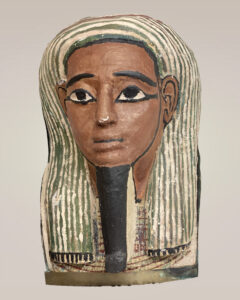
Bust of a Man, Wood sculpture, gesso, paint; modernly repainted. Egypt; Hellenistic Period; 26th Dynasty – Ptolemaic Dynasty, ca. 664–30ʙᴄᴇ. On loan from the Sorvats-Trebor Collection.
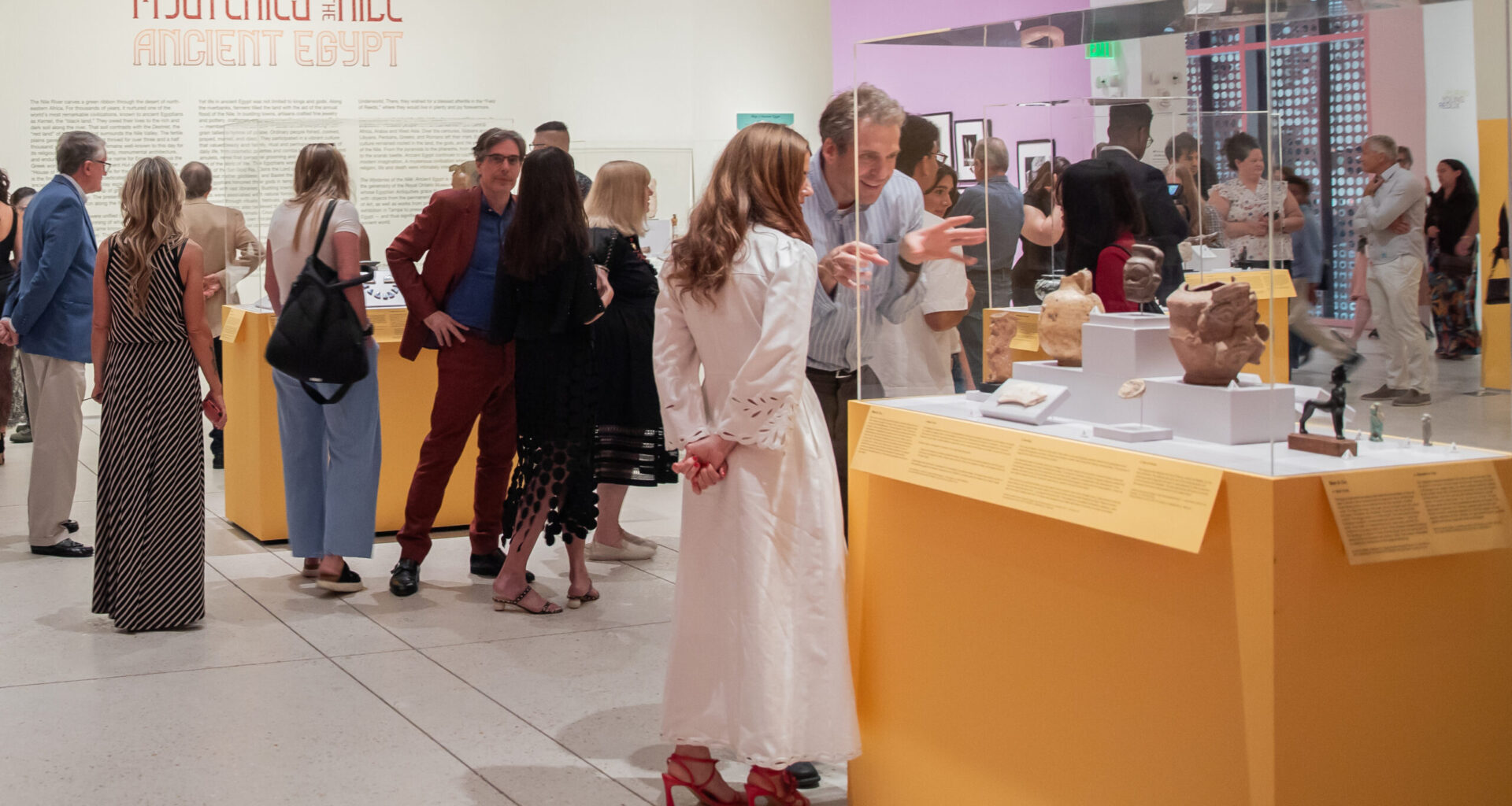
The largest art museum in Canada, Toronto’s Royal Ontario Museum, supplied more than one-third of the objects for Mysteries of the Nile: Ancient Egypt, which debuted Thursday at the Tampa Museum of Art.
The rest come from the Tampa Museum of Art’s permanent collection, and from local private collections. There are 117 objects in total.
Tampa museum administrators say that while other facilities in the region have exhibited art and artifacts from ancient Egypt, it’s the first time such things have been on view in their city.
Dr. Branko van Oppen, the museum’s Curator of Greek and Roman Art, was the curator of Mysteries of the Nile, and the liaison with the Royal Ontario.
“We have a couple of really eye-catching pieces,” van Oppen says. “We have a few objects that are really unique, and a few objects where the backstory is just breathtaking. There’s relief of the pharaoh who lived right after Tutankhamun. His name was Horemheb; it’s the only relief of that pharaoh outside of Egypt on view.”
Along with mummies, and pieces and sections of sarcophagi, he adds, “we have objects related to kings and queens, and we have a section about the gods and goddesses of Ancient Egypt.
“We couldn’t bring in the pyramids, or the Sphinx.”
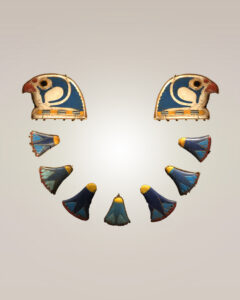
Collar with Falcon Heads, Glass and gold jewelry; Egypt; Hellenistic Period, Ptolemaic Dynasty, ca. 300–30ʙᴄ. On loan from a private collection.
Indeed, many of the artifacts are on the smaller side. “We have a little gemstone – it really is a fraction of an inch – and it used to be in a ring. On one side it shows a pharaoh in his chariot, defeating his enemies. On the other side, it shows his successor, Amenhotep II, and he is feeding his horse.
“An image of a pharaoh feeding a horse, there’s only one other object known in the world that shows that. It’s at the Bridge Museum in London. And this version is much more of a masterpiece.
“It’s easily overlooked because it’s so small. But it’s so cool that we have that on view.”
Van Oppen is especially enthused about the exhibit’s artifacts from everyday Egyptian life, including those related to their unwavering belief in an afterlife.
“The way the Egyptians though he the life hereafter was, was life in Egypt – but life in Egypt without illness, without warfare, famine and shortages,” he explains. “So, everything good about Egypt, that’s the ideal.
“The wheat grows a little taller, the cows are a little fatter, the geese are perfectly cooked. With lots of beer, lots of wine, everyone is happy and having a good time. That is life in the afterlife.”
Established in 1920, the Tampa Museum of Art is currently in the middle of a comprehensive construction and endowment effort, to fund more than 51,000 square feet of new space along the Tampa Riverwalk.
The museum is currently in the midst of its Centennial Campaign, a comprehensive construction and endowment effort funding an ambitious expansion that will add more than 51,000 square feet of new space along the Tampa Riverwalk.
More than $100 million in support has been provided by individuals, families and corporations for the museum’s ongoing capital campaign, including a $28 million lead gift from Tampa real estate developer Dick Corbett, as well as contributions from the City of Tampa, Hillsborough County and the State of Florida.
The proposed new addition will include a 150-seat auditorium, an art lounge, food services and dining space, a large event space, a proposed rooftop space and a sculpture garden.