
As the United States marks its 250th anniversary this Fourth of July, the American dream remains deeply personal.
For generations of immigrants, America has represented opportunity, safety and the chance to build a life otherwise out of reach. Today, that dream exists alongside an immigration landscape shaped by legal uncertainty and shifting federal policies.
For South Florida’s immigrants, the journey showcases how opportunity meets determination.
A mother’s search for sanctuary

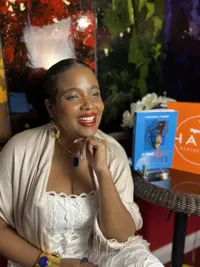
Marnatha Ternier, author and public servant.
(Courtesy of Hillary Pierre)
For Haitian immigrant Marnatha Ternier — an author and former minister of Haitians Living Abroad — the American dream was never about wealth; it was about protecting her children. She first made the decision to move to the U.S. during Haiti’s violent civil unrest in 2004.
“I was picking up the children from school when violent civil unrest erupted,” she recalled. “They placed burning tires both behind and in front of my vehicle. It was like dropping us in a corridor of fire.”
She bought plane tickets to Florida the next day. She later briefly returned to Haiti, but the 2010 earthquake and worsening instability eventually convinced the family to settle permanently in South Florida in 2016.
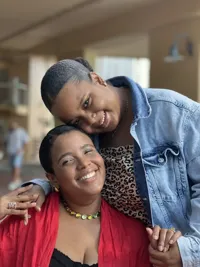
Marnatha Ternier and her daughter, Hillary Pierre.
( Courtesy of Hillary Pierre)
“I’m still thinking about my house [that was vandalized], the dream that we had for the house. Now it’s like there’s no home,” Ternier said.
Despite the loss, she has no regrets.
“Every strategic decision I made was governed first by the imperative to protect my children,” she said. “The objective was never simply a change of geography. It was about securing the freedom to build a meaningful life. Ultimately, the dream was about creating opportunity, not as a final resource for my family alone, but as a legacy to be shared.”
Adapting, however, was an uphill battle. The tight-knit community life she knew in Haiti was replaced by isolation.
“My professional network was non-existent, and my children had to rebuild their social circle from scratch. It was an existential reset,” Ternier said.
Her daughter, Hillary Pierre, experienced America through a different lens. Although she spoke English, Pierre struggled with reading comprehension and often ate lunch alone. Eventually, she found community in a reading class for Caribbean students.

Marnatha Ternier (left) and her daughter, Hillary Pierre.
(Amelia Orjuela Da Silva for The Miami Times)
Milestones like earning her first paycheck became symbols of independence.
“Getting my paychecks, I didn’t have to be fully dependent on my mom,” Pierre said. “Being able to accomplish that on my own made me feel good.”
She also credits the United States with giving her opportunities to pursue higher education.
“Haiti built the base for me to be able to transition into the United States and continue growing.”
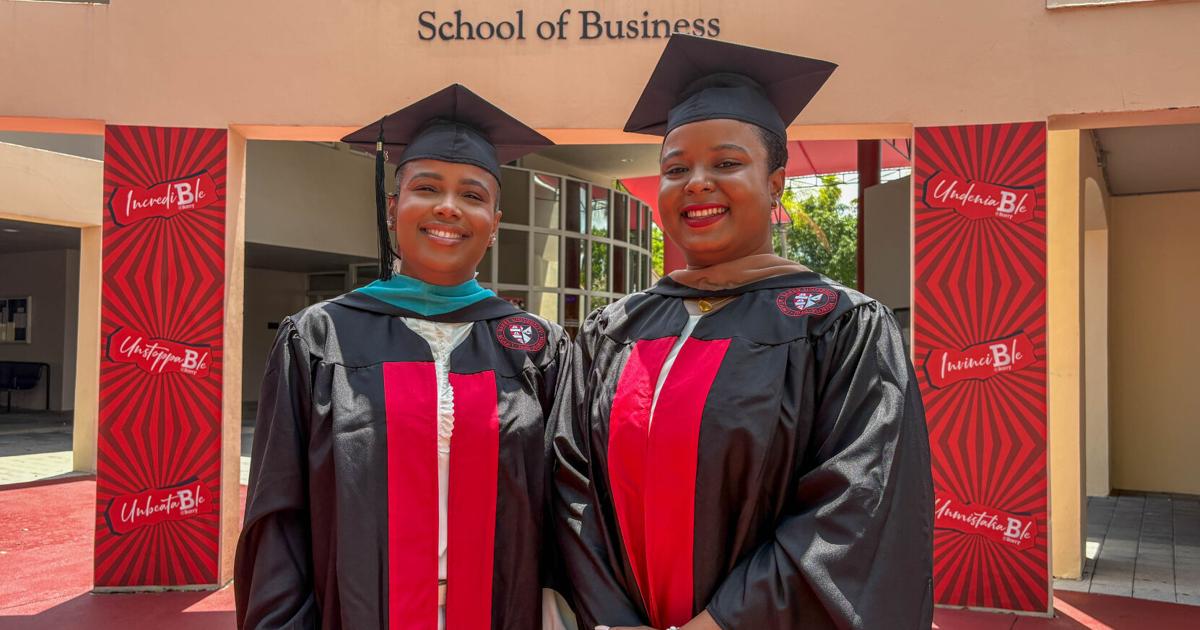
Last year, the mother and daughter graduated together with master’s degrees. Pierre is now pursuing a doctorate.
“It’s very sad to say, but I don’t think my country, Haiti, would have been able to provide that to us,” Pierre said. “We came here seeking stability, seeking education, and we got that.”
Looking at her children’s accomplishments — one son working as a generative AI engineer, another playing professional soccer and Pierre continuing her doctoral studies — Ternier believes her dream has been fulfilled.
“The American dream is right here in front of me,” she said. “I can actually feel it, touch it. This is the fruit of my work.”
Designing a life
For Guyanese fashion designer Deborah Rose, the journey to America started with love. After building a successful design business in Antigua, she moved to South Florida in 2004 to be with her now-husband, who she had met during a trip to Miami.
Years earlier, she had written in her diary: “When my daughter’s of age to be going to college, I will come up here to support her.”
Settling in Miami, she realized that dream had become reality.

Deborah Rose Designs boutique in Fort Lauderdale.
(Amelia Orjuela Da Silva for The Miami Times)
In Guyana and Antigua, people knew Rose’s work; in Miami, she had to build a customer base from scratch. Following her husband’s advice, she began selling her designs at a local flea market before eventually opening her storefront,Deborah Rose Designs.
“When I arrived, I saw lots of opportunities,” she said, noting how accessible financing was compared with what she experienced in the Caribbean. “I felt that now I’m not just a designer that came from Guyana; I am now an international designer, and that was a very good feeling.”
What surprised her most was how Americans appreciated her talent.
“A lot of people really believed in what I do,” Rose said. “People saw this skill as precious, so I started to see myself better and bigger because of a bigger world, bigger mindset, greater mindset, greater opportunities.”
Today, her Fort Lauderdale boutique specializes in custom clothing, from wedding gowns and prom dresses to men’s suits. Her proudest accomplishment extends beyond the storefront: her daughter recently earned a master’s degree in Mental Health Therapy.
“I’ve achieved what I wanted, which is having a boutique, which is having Deborah’s designs out there, which is having my daughter’s education as far as she can go,” Rose said.
A dream of service
When Dr. Rachel Nambusi arrived from Uganda at age 17, the United States matched her expectations.
“It was exactly what I’d imagined,” she said. “Only better that it wasn’t a dream now — I was here.”
Her mother had immigrated first to support her family and village. After Nambusi’s sister became ill, the family reunited in Chicago.
Today, Nambusi is a physician, an Air Force Reserve flight surgeon and the founder of My Health and Wellness Medical Group, a practice focused on longevity and preventive care that opened in 2024.
Nambusi says none of that would have happened had she stayed in Uganda.
“I would not be a physician,” she said. “The U.S. is definitely the place that has allowed me to get into spaces I would never dream of being in.”
Nambusi says her practice reflects her philosophy of empowerment. As a designated civil surgeon, she performs immigration medical examinations for permanent residency applicants and mentors internationally trained physicians.
“I like empowering others because I think that’s what has been afforded to me,” Nambusi said. “Entrepreneurship gives me the opportunity to pretty much work out the American dream the way I see it, not just follow someone else’s dream.”
Living between two worlds
Circle of One Marketing President and CEO Suzan McDowell often describes herself as a “Jamerican.”
Born in Jamaica, McDowell moved to Texas at age 11 after her parents divorced. In Jamaica, race had never defined her identity, but the U.S. brought a harsh financial and social reality.
“In Jamaica, you are unburdened by race,” McDowell said. “I went to America and my mom had run out of all her alimony money. So we were on food stamps. They treated me like a piece of dog doo-doo.”
The move forced her to navigate two entirely different worlds. In Jamaica, McDowell was the daughter of a successful dentist, living what she described as “a soft life.” In the U.S., she suddenly found herself adjusting to a very different financial reality while learning what it meant to be Black in the United States.
Those experiences would later become one of her greatest professional strengths.
Moving to Miami and working at Hot 105 radio allowed McDowell to reconnect with her roots. Her dual perspective became the foundation of her multicultural marketing agency, bridging Caribbean and African American audiences.
“I feel like I have almost the good side of two things,” she said.
For McDowell, the dream is about using her influence to strengthen communities. She mentors young people, advocates for literacy and supports small businesses.
“When I realized the kind of influence I had,” she said, “I realized I can take the popularity I gain over the years and help somebody.”
Shifting immigration policies
But for newcomers today, the American dream is fading.
“When I came to the United States, the dream was about opportunity,” Ternier said. “But I feel like today it’s not the same thing. It’s about survival.”
She worries about Haitian families facing an uncertain future amid shifting immigration policies. Last week, the Supreme Courtallowed the Trump administration to end TPS for Haitians and Syrians, in addition to upholding a policy permitting border officials to turn away many asylum seekers.
“There are moments that remind you that you’re still a foreigner, that you don’t belong here,” Ternier said.
Rose also acknowledged that what she has achieved is becoming harder for others to replicate. She sees the impact firsthand in her boutique, where finding employees has grown increasingly difficult.
“Right now I need workers — can’t find any,” Rose said. “Because that’s what immigrants do. Immigrants are the hardest working people. If there were more immigrants around, I would have somebody come in today.”
So, is the American dream still attainable?
“I think, yes, it is,” Pierre said — but with one caveat.
“I think the American dream that was portrayed 10 years ago is not the same American dream that is being portrayed now. It’s becoming more of a challenge.”