
The Florida Board of Education on Tuesday voted to ban immigrants without legal status from state colleges and adult education programs.
The board approved one amendment requiring all students admitted to Florida colleges to be citizens, or lawfully in the United States; and another mandating adult education programs to create systems to ensure students are citizens or immigrants with legal status.
“If you’re here illegally and go to a state university, it doesn’t make sense. I would rather have that spot go to a Florida resident,” Gov. DeSantis said at a press conference following the vote.
All public comment made during the meeting was opposed to the legislation, and a challenge from a legislative committee looking into whether the board illegally overreached and is acting outside of its powers.
Three public officials who opposed the amendment are children of immigrants.
Rep. Anna Eskamani, D-Orlando, is the daughter of Persian immigrants. She said these amendments are morally and legally flawed.
“It’s important to note that we are all God’s children, and the attempt to restrict a child’s access higher education based on the documentation status that is no fault of their own is un-American, is unfaithful, and is also constitutionally concerning.” Eskamani told the board.
Eskamani later said she believes the decision is ripe for legal challenge
“There’s a really strong foundation for students to serve as plaintiffs and to challenge this decision by the State Board of Education,” Eskamani said. “The board operated unilaterally without the legislature giving them statutory authority of direction. So I’m very hopeful that we will see some court challenge.”
Sen. Carlos Guillermo Smith, D-Orlando, born to a Canadian mother and Peruvian father, is the first member of his family to be born in the United States. He saw Tuesday’s vote as part of a larger trend.
“It is a gradual progression of the legislation that passed last year that reversed the Florida law that allowed for undocumented students to qualify for in-state tuition,” Smith said.
Smith is a member of the Florida Legislature’s Joint Administrative Procedures Committee. The committee conducts oversight of Florida’s executive agencies, making sure they stay within the authority given to them by the legislature.
Last week, the committee’s chief attorney sent a letter to the Department of Education and State Board of Education questioning the board’s legal authority to create and enforce policies like the ones adopted Tuesday.
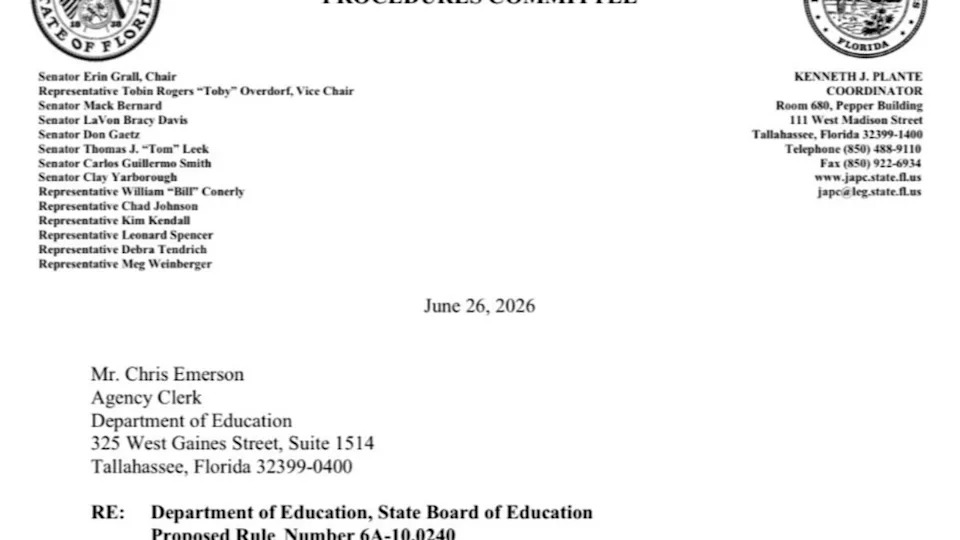
Smith said the board has yet to respond to the letter.
“They don’t have the authority to do this,” Smith said. “They are pursuing Gov. Ron DeSantis’ final wishes.”
Board of Education member Daniel Foganholi was the sole no vote on both immigration amendments. Foganholi was appointed to the board by Gov. DeSantis in 2024 following a term on the Broward County school board. He is the son of Brazilian immigrants.
“I believe we are a nation of laws, and our immigration laws should be enforced. However, I do not believe the State Board of Education’s role is to enforce immigration policy,” Foganholi said in a statement. “Our responsibility to oversee education. … We should remain focused on expanding educational opportunity while leaving immigration enforcement to the appropriate agencies.”
Foganholi said he based his vote on his understanding of the board’s responsibilities and mission. He also emphasized his pride in being the first person in a family of immigrants to graduate from college.
“I know firsthand what education can mean, not only for an individual, but for an entire family,” he said.