
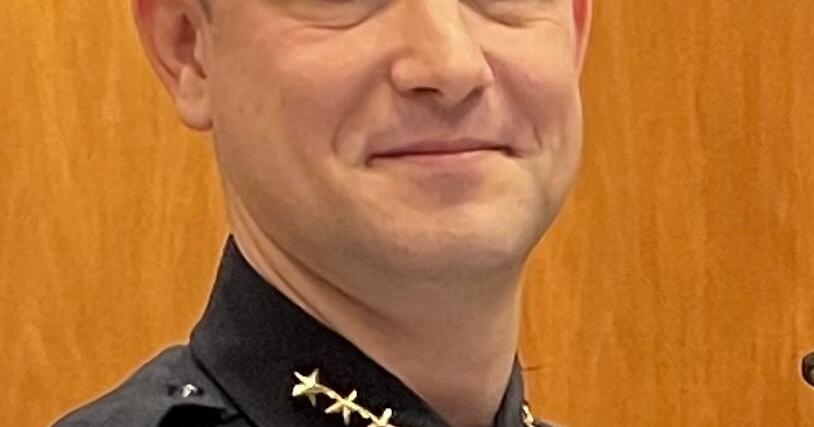
EDITOR’S NOTE: This is the first of two stories resulting from Hometown News conducting a recent one-on-one interview with Chief David Smith.
FORT PIERCE – It’s not that Fort Pierce Police Chief David Smith isn’t comfortable in his own skin. Just don’t ask him to talk about himself.
He’s good discussing how Fort Pierce “can’t arrest itself out of homelessness” or how his family – even the dogs – love their new community. But he struggles with questions about himself.
“I don’t like talking about myself or being the center of attention,” he explained in a 90-minute, wide-ranging interview with Hometown News. “I’m more comfortable talking about the department and our sworn and professional staff.”
He’s been where his young police recruits are, wondering in their 20s if law enforcement will be a good career. Smith said when he meets them each Friday, they don’t see the teenager who sauntered into an Army recruiting office one day after finishing his shift at Olive Garden, declaring he wanted to jump out of airplanes.
“Law enforcement was always something I thought about, but at that time in my life, I was very directionless.” That was before four years in the U.S. Army and two in the National Guard.
Today he leaves those career pep talks to his recruiting officers, saying, “I don’t think they want to hear from an old guy.”
He will be 48.
What he likes to talk about are terms like welcoming, supportive, caring that he uses to describe Fort Pierce, the community, his department and other area law enforcement agencies.
The Smiths came here from northern Virginia, just outside Washington, D.C. He retired as a division commander after 25 years there, before beginning a new chapter here.
Smith said Fort Pierce is not a stepping stone to another job for him.
“When I’m done here, I’ll be retired, retired.”
Job One now for the new chief is being out, seen by the community and demonstrating a “commitment to my personnel, to treating everyone with dignity and respect and being transparent.”
“We build trust by being transparent. We’ll own our mistakes. But we also can expect a little bit of grace. Inevitably things happen. But be patient with us and help us build those relationships.”
Smith faced tension in the hiring process after City Manager Richard Chess picked him as one of three job finalists in a field that included no internal candidates favored by some staff and community members.
From all appearances, Smith has quickly gained favor among his command staff, rank-and-file, and at city hall.
A retired Fort Pierce deputy chief and current Deputy Chief Robert Ridle have helped him learn the nuances of the department and the community, Smith said.
Greg Kirk was a Fort Pierce cop for 33 years, retiring in 2014 as deputy chief. He responded to the scene in 1991, when 29-year-old Sgt. Danny Parrish was fatally shot during a traffic stop. And Ridle returned to his deputy chief duties when Smith was hired earlier this year, after Ridle led the department through tumultuous months following the pressured resignation of former Chief Diane Hobley-Burney.
“They really helped me get my bearings,” Smith said.
Ridle retires this summer. “I would not be here,” Smith said, if Ridle had chosen to be a candidate for the job, praising his deputy as “such a welcoming and likeable guy,” who “made a lot of progress” during his interim time as top cop.
Cooperation between law enforcement agencies often gets “lip service,” Smith said. But he says he’s found it to be the real deal here.
“My relationship with (St. Lucie County) Sheriff (Richard) Del Toro has been outstanding. We partner well with Port St. Lucie Chief (Leo) Niemczyk,” Smith said. “They’re willing to say ‘whatever you need’ and mean it. I don’t think people realize how unique that is.”
Personnel turnover has been a concerning, costly issue for the local department. An outside consultant said 53 officers resigned, retired or were fired from 2021-24. Training to get a new cop out on the street costs an estimated $1 million.
Smith reported turnover has declined in the last nearly five months. But he concedes the department still faces wage competition with other agencies that can offer more.
Community concerns about homeless issues are not new to Smith who has ideas about managing enforcement expectations through information and offering coordinated services.
“Being homeless or panhandling or having mental health problems are not crimes unless there are other behaviors like being disorderly, being physical with folks or being a threat to yourself or others,” he explained. “People don’t always understand there are limits on what law enforcement can do. We can’t arrest our way out of these problems.”
In his Virginia community, Smith said street signs were posted around panhandling sites, advising people against handing out cash that would likely be used “to support the drug of alcohol addiction.” The signs had a QR code that could be scanned, leading donors to a vetted group of charities and service providers.
Smith said one Virginia area purchased a vacant Gander Mountain store to house a crisis receiving center where people living on the street were not just dropped off until they were stabilized. Setting them up with mental health appointments, medical care, housing, clothing and veterans’ services began.
“I commend this community for wanting to get involved and show support,” said Smith. “I think something like a Treasure Coast Regional Crisis Receiving Center would be an opportunity for everybody to partner a little better. Law enforcement is just one piece of it.”
Homelessness has become a high-profile issue in Fort Pierce, especially downtown. But in his short tenure, Smith said calls for service don’t match the outcry.
“People would be surprised by how few phone calls we really get,” said the chief. “If someone is sleeping on the sidewalk or in the parks or harassing people for money, call us. But it’s important for the community to understand what we can enforce and what we can’t.”
FPPD has a full-time homeless liaison officer whose responsibility includes time checking in with military veterans who live on the streets here.