
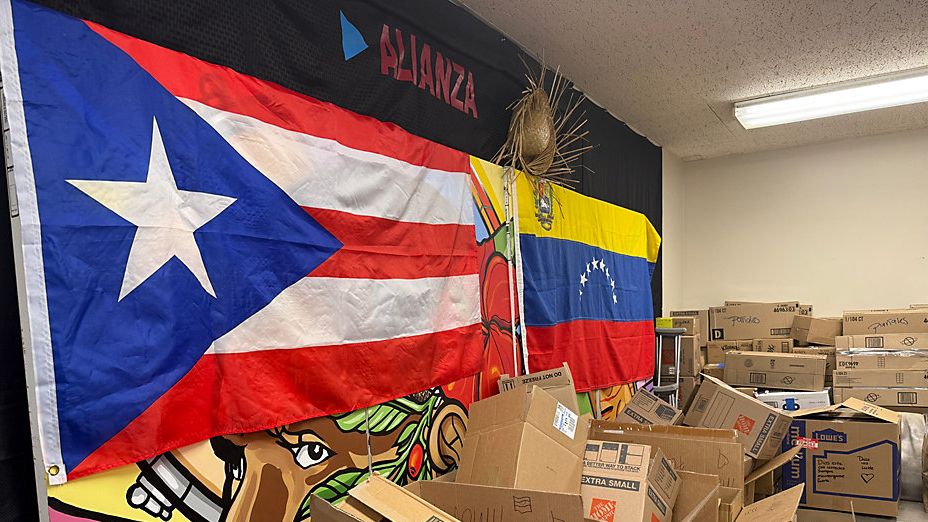
Eight days after an earthquake in Venezuela, Central Florida volunteers and organizations have collected hundreds of boxes of supplies. But getting those donations into the country remains a challenge because the main airport in Caracas is still closed.
The donations include boxes filled with canned goods, gloves, and other supplies. Volunteers said the items are ready, but they are now waiting for a way to move them to people in need.
Mayaly Nunes, a 17-year-old Venezuelan volunteer, began helping after the earthquake. She partnered with Alianza Center to collect and pack donations.
“Everyone is capable of doing something,” Nunes said. “It doesn’t matter where you are. It doesn’t matter your age.”
Paola Santini Dosal, climate and clean energy manager for Alianza Center, said the organization has already sent 234 boxes to Miami. Between those boxes and the ones still in Central Florida, she said people have donated about 634 boxes worth of supplies.
Alianza Center has become a hub for donations as volunteers look for storage. Organizers said they are relying on other groups to provide trailers to hold the supplies until they can be sent to Venezuela.
Pierani Garcia, another volunteer, said her effort started small.
“We started with two boxes at my house, and then when we realized, we had 20 of them,” Garcia said.
She said she and her husband lost family members and friends in Venezuela. She said helping with donations has been meaningful, but they want to do more.
“It helps a lot that we are helping, but really want to be there,” Garcia said. “We want to be there taking out the rocks, helping people to get out there.”
For now, the biggest obstacle is transportation. The international airport in Caracas remains closed, and only some regional airports in Venezuela are allowing planes to land.
Michael McCormick, an associate professor at Embry-Riddle Aeronautical University, said smaller regional airports may not have the infrastructure needed to handle international flights.
“That is also going to slow down the ability to get into and out of those smaller regional airports throughout Venezuela that don’t have the infrastructure in place to handle those international flights,” McCormick said.
McCormick said he anticipates it could be at least a month before more air traffic returns to the area. He said damage could include radars, radios, control towers, and navigational aids needed for safe flights.
Volunteers said they are prepared to send the donations as soon as transportation becomes available.
“Keep working,” Garcia said. “It is not just today, not just last week. It is going to be a lot of months working on it.”