
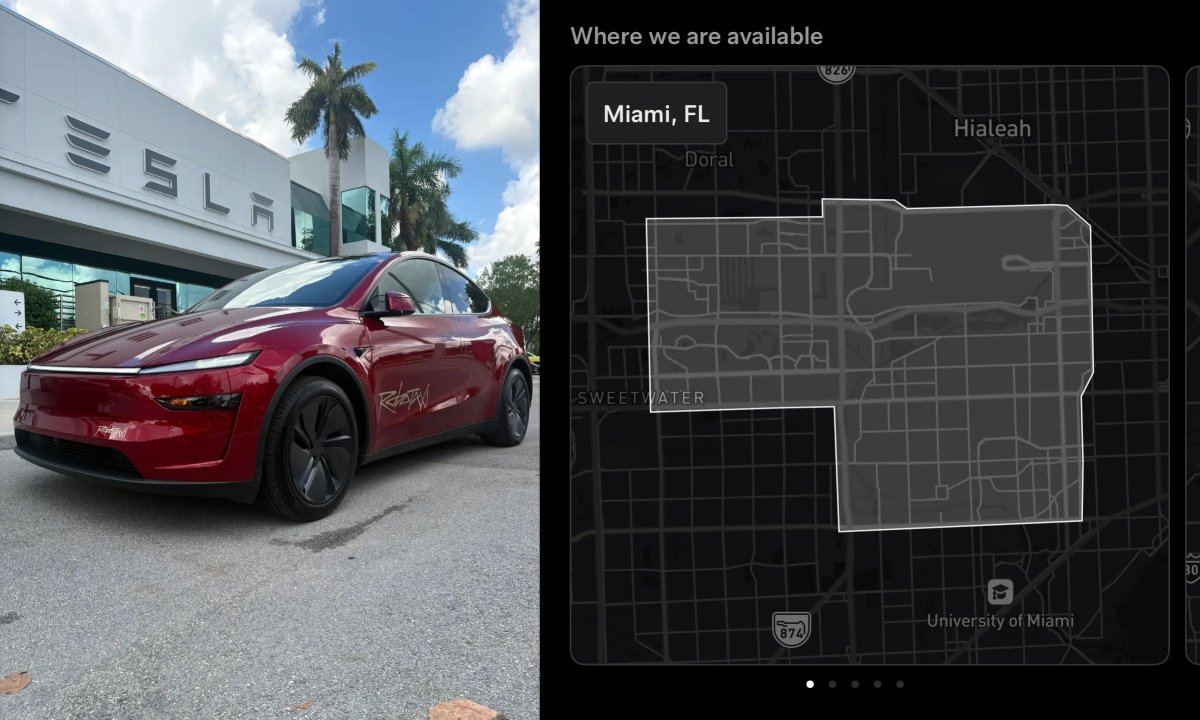
Tesla is picking up the pace with its autonomous ride-hailing network, officially entering one of the biggest tourist and transit markets in the country. Florida residents can now open up their phones and request a vehicle that comes completely empty. The expansion comes just days after Tesla celebrated its first full year of the Robotaxi service after launching it as a pilot program in Austin back in June 2025.
As spotted by longtime Tesla watcher @SawyerMerritt, the driverless platform is officially live in Miami. One X user under the handle @unlimited_ls has already uploaded real-world footage riding inside one of the very first Tesla Robotaxi rides in the city. The video confirms that the service is running completely unsupervised, showing a Model Y navigating city streets seamlessly with no driver or even safety monitor inside the vehicle.
Robotaxi first ride in Miami – @elonmusk @robotaxi @cb_doge @niccruzpatane https://t.co/TrWybDRPsX pic.twitter.com/uLDg6BkMlT
— Unlimited L’s (@unlimited_ls) July 3, 2026
Mapping Out the Magic City Grid
Miami residents living or traveling within the active service area can download the official Robotaxi app on iOS or Android to call a ride. The initial geofence spans roughly 20 square miles, covering most of the core transit and commercial hubs of the city. Notably, while Miami International Airport sits directly inside the service zone, Tesla vehicles are not legally authorized to perform terminal pick-ups or drop-offs just yet.
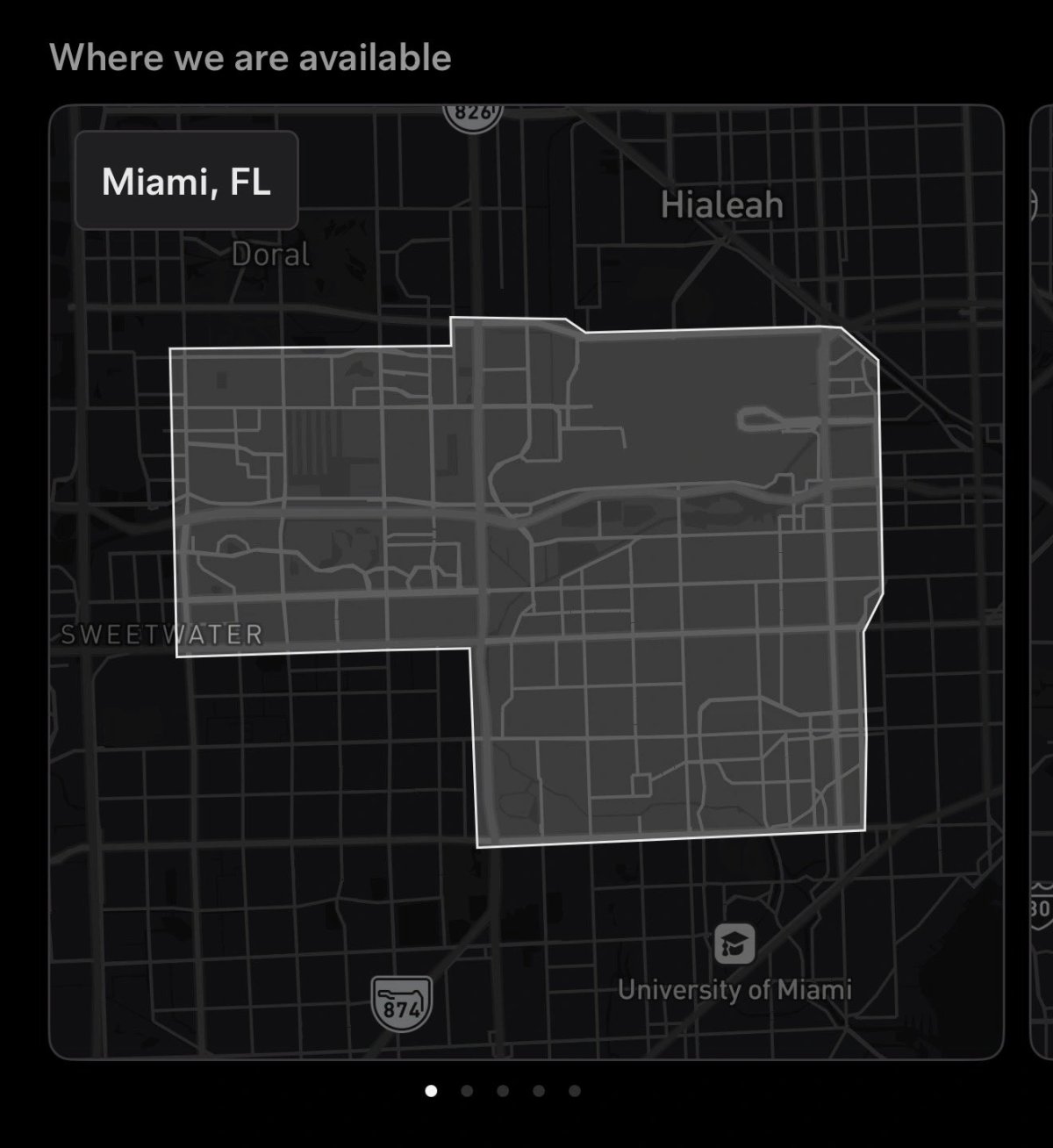
@SawyerMerritt / X
This milestone marks a major step forward for the network geography. Tesla’s last Robotaxi launch came in April when it introduced fully unsupervised rides to Dallas and Houston. Miami now stands as the second major market outside of Texas to join the network. This brings the Robotaxi service to five distinct operational territories: Miami, Dallas, and Houston utilize fully unsupervised Model Y vehicles, Austin runs a mix of unsupervised cars and vehicles with safety monitors, and the San Francisco Bay Area remains limited to rides with safety monitors only.
Scaling Up Ahead of FSD V15
While the current fleet relies entirely on the Model Y, the long-term goal is to transition to a custom robotaxi vehicle. The purpose-built Tesla Cybercab just started testing on public roads without a steering wheel, pedals, or any manual driving controls in Austin. Once the new model debuts, it is expected to deploy straight into active Robotaxi markets and quickly dwarf the Model Y in total numbers.
Robotaxi walk-around after it dropped me off✨ – MIAMI @robotaxi pic.twitter.com/Pvi9Se3uTL
— Unlimited L’s (@unlimited_ls) July 3, 2026
Tesla might launch the Robotaxi service in a few more regions over the coming months — there’s already an expansion plan in place for Phoenix, Arizona, and Tesla has filed permits for 5,000 ride-hailing vehicles in Nevada. However, Tesla has said that large-scale Robotaxi expansions will have to wait until the release of Full Self-Driving version 15. The software update, expected later this year or early next year, will feature 10 times as many parameters as current builds and bring the system ever closer to true autonomy.