
Rising costs from inflation and the war in Iran have left U.S. consumers at a crossroads. In Florida, residents say they are coming to terms with eye-watering bills and thinking twice before making everyday purchases.
Some said they are struggling just to afford essential goods.
“Everything is really very, very expensive, from paying for gas, to electricity, to power, to food,” said St. Petersburg resident Susana Garcia, 71.
The Consumer Price Index, used for measuring inflation, showed a 4.2% year-over increase across the board in May — the largest jump since April 2023, according to U.S. Bureau of Labor Statistics data. Driven by gasoline price hikes, May was the third straight monthly increase.
Ballooning costs are leaving consumers frustrated, with no clear indicators of relief anytime soon.
If and when the situation in Iran is resolved, it’ll still take months to see prices return to normal, said Ryan Moore, community financial center manager for GTE Financial. Market conditions are fickle. A single social post from Elon Musk can be enough to impact them, he said.
“We’re a very connected global economy these days, so something [that] happens on the other side of the planet is going to impact how much we spend for a pound of beef at the grocery store,” Moore said.
Price hikes in one area impact supply chains in another, said Kyle Mouton, talent development manager at GTE Financial.
“Gas prices go up, then that means transportation costs go up,” Mouton said. “Everybody’s going to increase their prices along the way.”
John Rainey, Walmart’s chief financial officer, said in an interview with CNBC last month that consumers at gas stations have begun filling cars with less than 10 gallons on average for the first time since 2022.
“The high-income customer continues to spend with confidence in many categories, whereas the lower-income consumer is a little more budget-conscious, even navigating some financial distress,” Rainey said regarding how inflation has affected Walmart customer spending.
Bank of America CEO Brian Moynihan said in an interview with NBC in June that Americans are still spending money despite inflation.
“They’ll shift from this grocery store, which might have a higher price point to another grocery store,” Moynihan said.
The Tampa Bay Times spoke to residents across Tampa Bay to find out how inflation has affected them.
Feeling the pinch
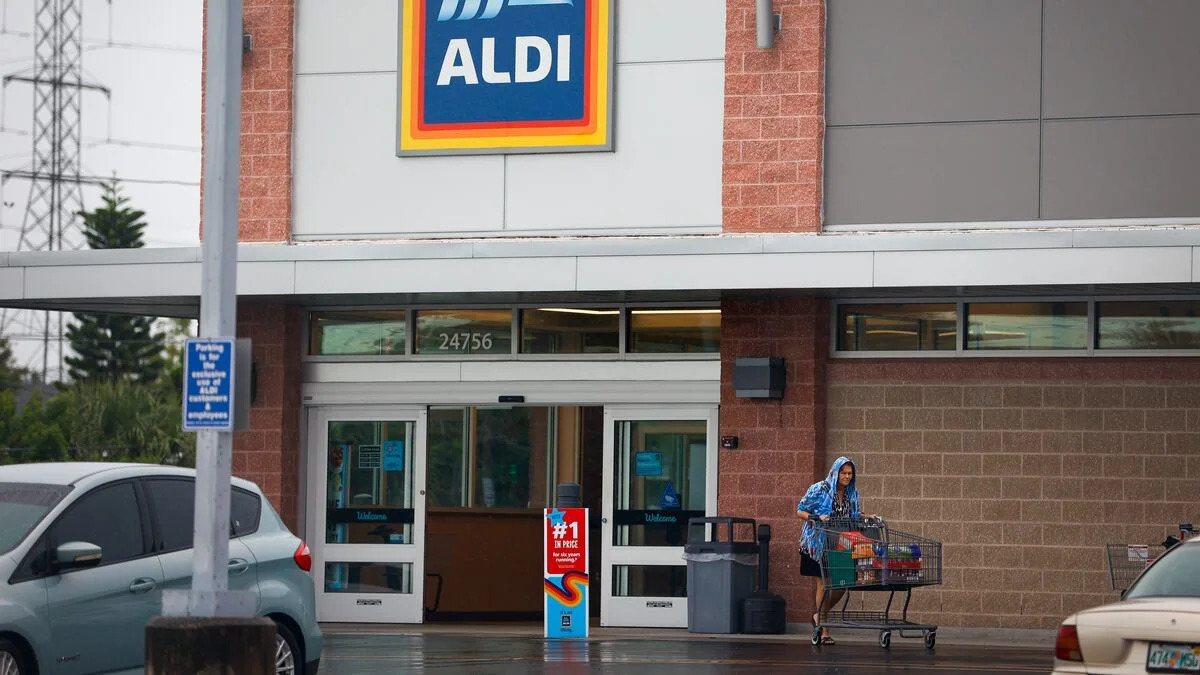
St. Pete residents Ally Williams, 30, and Nicholas Ramentol, 32, used to shop at Publix before rising costs drove them out. Now, Williams said, they shop at farmers markets for produce and go to Aldi and Costco for everything else.
Story Continues
“I feel like we all need to take a deep look as a country and maybe think about our leadership,” Ramentol said. “It feels self-inflicted.”
Last month, President Donald Trump downplayed rising consumer price data, and reiterated that rising prices will fall quickly once the conflict with Iran concludes.
As a software engineer, Ramentol said he’s seen computer equipment get at least 20% more expensive. A monitor he bought for $700 is now worth nearly double that, he said.
Even concert tickets have surged in price, Williams said.
When inflation first ramped up, Jen Parramore, 73, said she and her husband were financially comfortable enough not to worry.
Then, prices kept climbing.
“Now, it’s more troublesome,” said Parramore, who lives in St. Pete. “I shop more carefully; very little red meat, lots more beans, legumes, vegetarian diet.”
Although she’s retired, gas is still a concern. While driving, Parramore keeps an eye out for gas stations priced a few cents lower.

“I certainly think the war in Iran was ridiculous,” she said. “It was completely just made up. It has not done what he [Trump] claimed it was going to do, and it’s only going to cost.”
Soliana Rusi, a junior at St. Petersburg College, said that all the groceries she used to buy from Walmart or Target, she now gets at Aldi. Amid fluctuating gas prices, Rusi, 20, said she only drives when she has to.
“There’s no taking different routes or doing extra hangouts that would be unnecessary,” she said. “We pretty much only drive to work.”
Being from Greece and Albania, Rusi’s family travels overseas often to see relatives and she says inflation hasn’t been exclusive to the United States.
“Accommodations literally went up twice the amount, and like the flight tickets as well,” she said.
St. Pete resident Sage Fradley, 37, said seeing prices skyrocket is a sign the United States, like other countries, is leaving its residents with no disposable income for nonessentials like eating out for vacations.
Ways to save
The first place to start is to budget, said Moore with GTE Financial. That will inform families exactly where their expenses are going on a daily and monthly basis.
“Once that’s done, then we can look at it together and say, ‘OK, you’ve got 13 different streaming services that you’re paying for, is that really a necessity?” Moore said. “If it is, do you really need to pay for the ad-free?”
Before considering any major financial decisions, like taking out a loan, Mouton from GTE Financial said families should understand every detail of the agreement. Free educational resources like the Consumer Financial Protection Bureau can help people understand financial agreements.
One of the most common mistakes Moore sees people make is not taking interest and overdraft fees seriously — which can rack up over $100 a month easily.
Mouton said he understands credit cards are necessary in the current economy, but people should use companies with good rates, not the first card they see in the mail.
While shopping, Moore said families shouldn’t feel pressured to stick to the brand-name foods and should be open to alternatives that taste nearly identical at a lesser cost.