
Throughout the hurricane season, we see plumes of Saharan Dust that move off of Africa and eventually makes its way over Florida. The latest: Weather coverage from WPBF 25 News Interactive radar: South Florida weather coverage from WPBF 25 NewsSaharan Dust season typically runs from now through August. Saharan Dust moves off of Africa and travels thousands of miles across the Atlantic Basin. The Saharan Air Layer is 50% drier than the Tropical Atmosphere and it helps prevent tropical development as well as create wind shear in the upper levels of the atmosphere which also tears tropical systems apart. Once the dust reaches Florida, it has other impacts like absorbing moisture and limiting widespread rainfall and storm coverage. The dust can also affect people and animals’ health. Will Redman with the National Weather Service of Miami said, “The main negative with Saharan dust is increased heat. Drier air will allow for more heating during the day as well as the dust will also absorb the sunlight and trap the heat closer to the ground more than normal. So, because of that we can have increased heat concerns. And also, when some of the dust settles closer to the surface, we can have an increased risk of allergies or allergy development and any other respiratory illnesses. That may occur from lower air quality.” Sunrises and sunsets can appear to have more yellow and reddish hues because the low angle sunlight passing through more of the atmosphere before reaching our eyes. The Saharan Dust will enhance this effect leading to more vibrant colors. Get the latest weather updates with the WPBF 25 News app. You can download it here.Weather | Radar | Hurricanes | Traffic | uLocal | Facebook | X | InstagramShare with us: Upload your weather photos and videos via uLocal
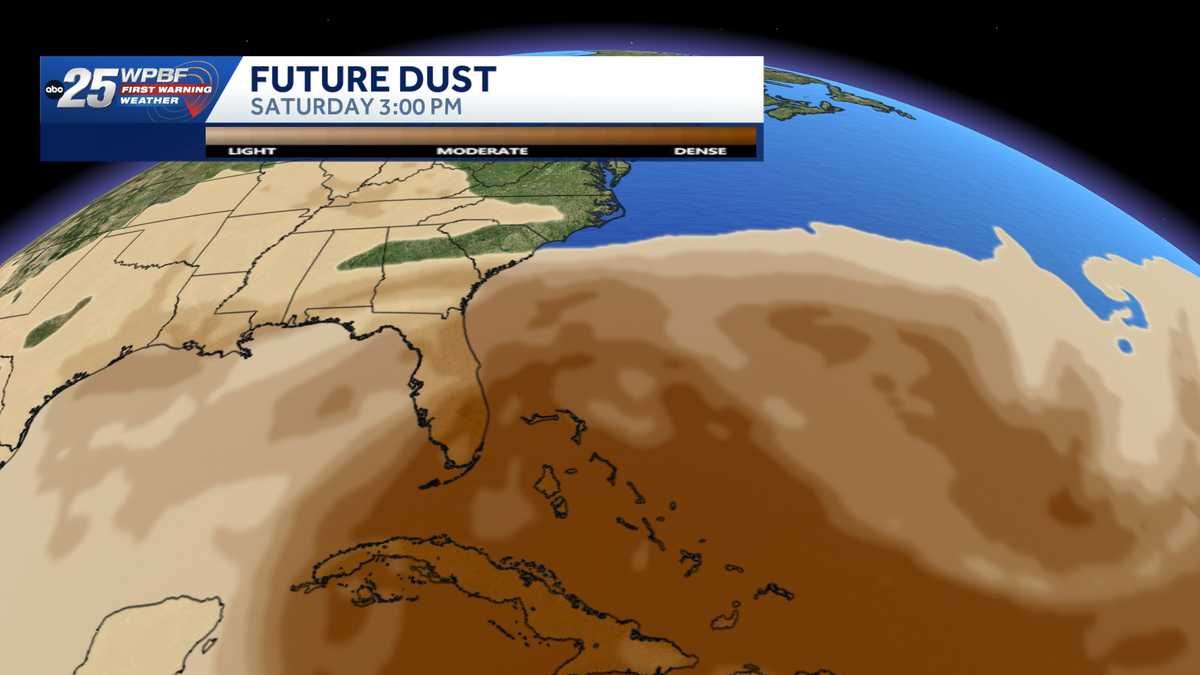
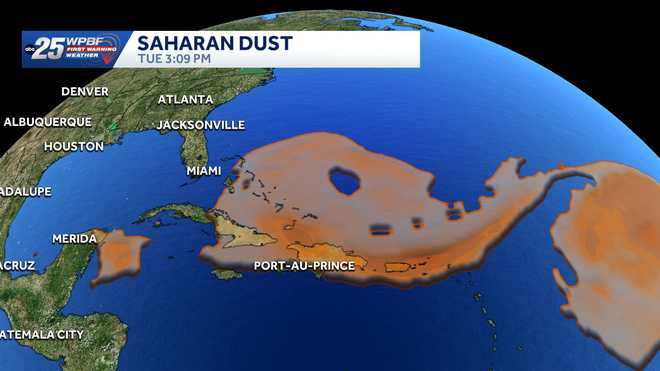
Throughout the hurricane season, we see plumes of Saharan Dust that move off of Africa and eventually makes its way over Florida.
The latest: Weather coverage from WPBF 25 News
Interactive radar: South Florida weather coverage from WPBF 25 News
Saharan Dust season typically runs from now through August.
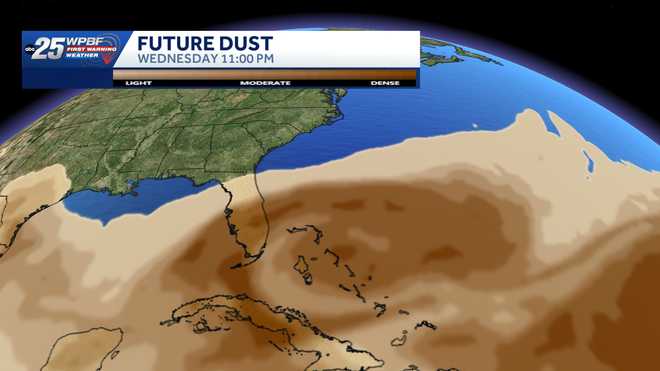
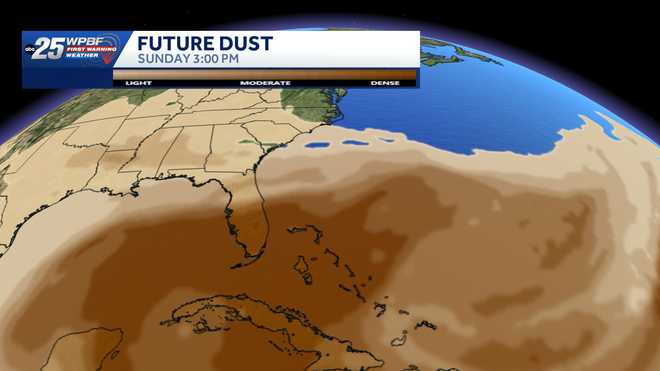
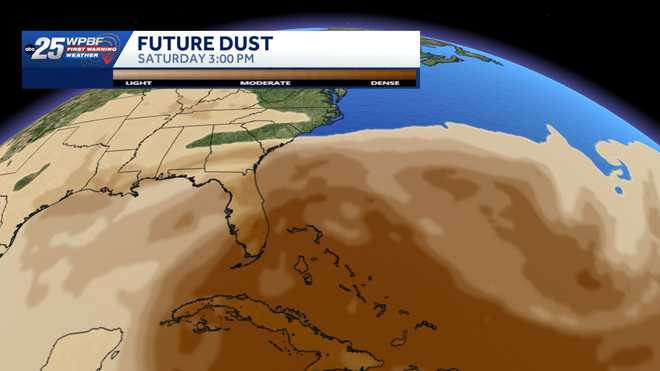
Saharan Dust moves off of Africa and travels thousands of miles across the Atlantic Basin.
The Saharan Air Layer is 50% drier than the Tropical Atmosphere and it helps prevent tropical development as well as create wind shear in the upper levels of the atmosphere which also tears tropical systems apart.
Once the dust reaches Florida, it has other impacts like absorbing moisture and limiting widespread rainfall and storm coverage. The dust can also affect people and animals’ health.
Will Redman with the National Weather Service of Miami said, “The main negative with Saharan dust is increased heat. Drier air will allow for more heating during the day as well as the dust will also absorb the sunlight and trap the heat closer to the ground more than normal. So, because of that we can have increased heat concerns. And also, when some of the dust settles closer to the surface, we can have an increased risk of allergies or allergy development and any other respiratory illnesses. That may occur from lower air quality.”
Sunrises and sunsets can appear to have more yellow and reddish hues because the low angle sunlight passing through more of the atmosphere before reaching our eyes.
The Saharan Dust will enhance this effect leading to more vibrant colors.
Get the latest weather updates with the WPBF 25 News app. You can download it here.
Weather | Radar | Hurricanes | Traffic | uLocal | Facebook | X | Instagram
Share with us: Upload your weather photos and videos via uLocal