
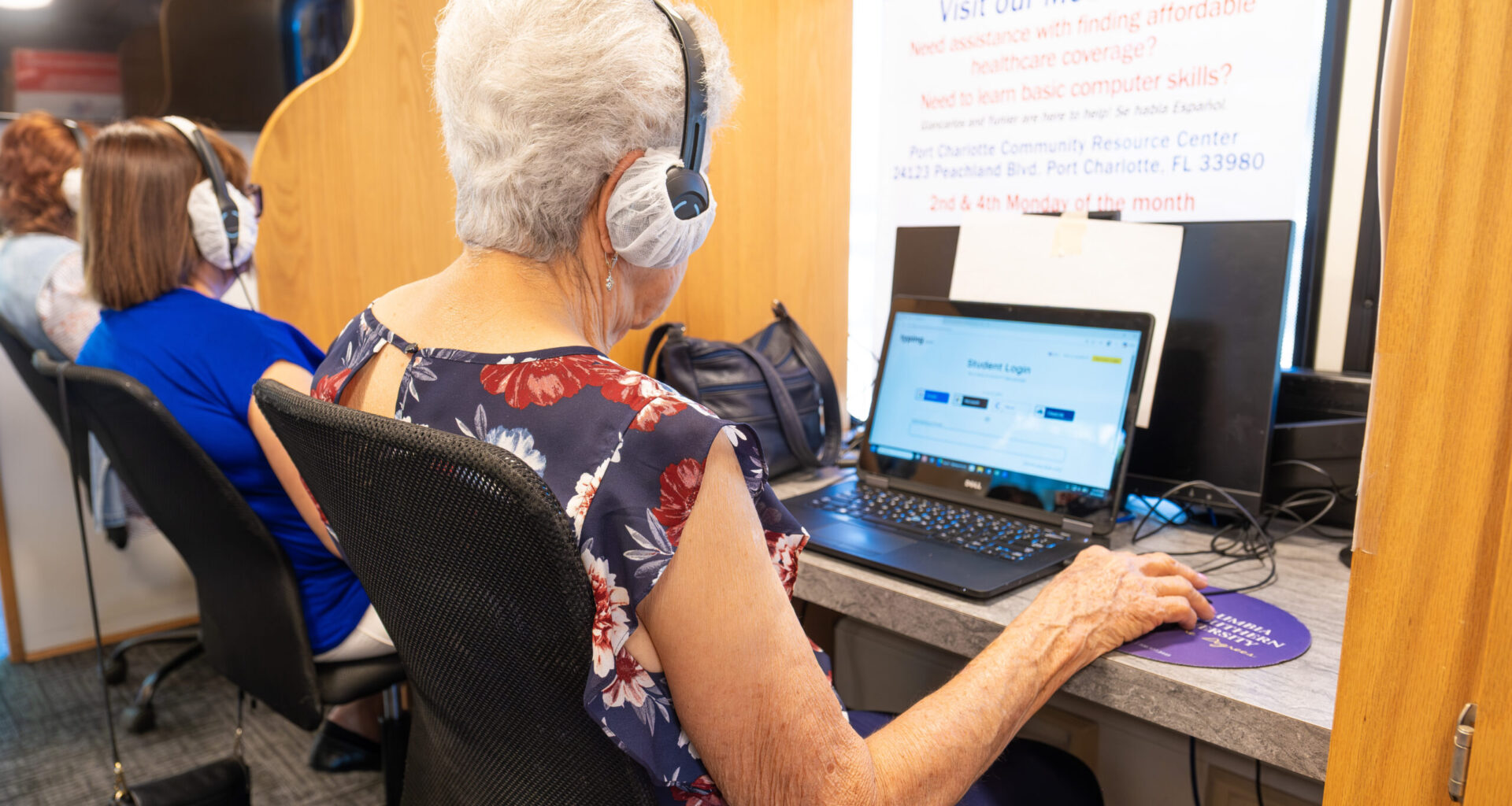
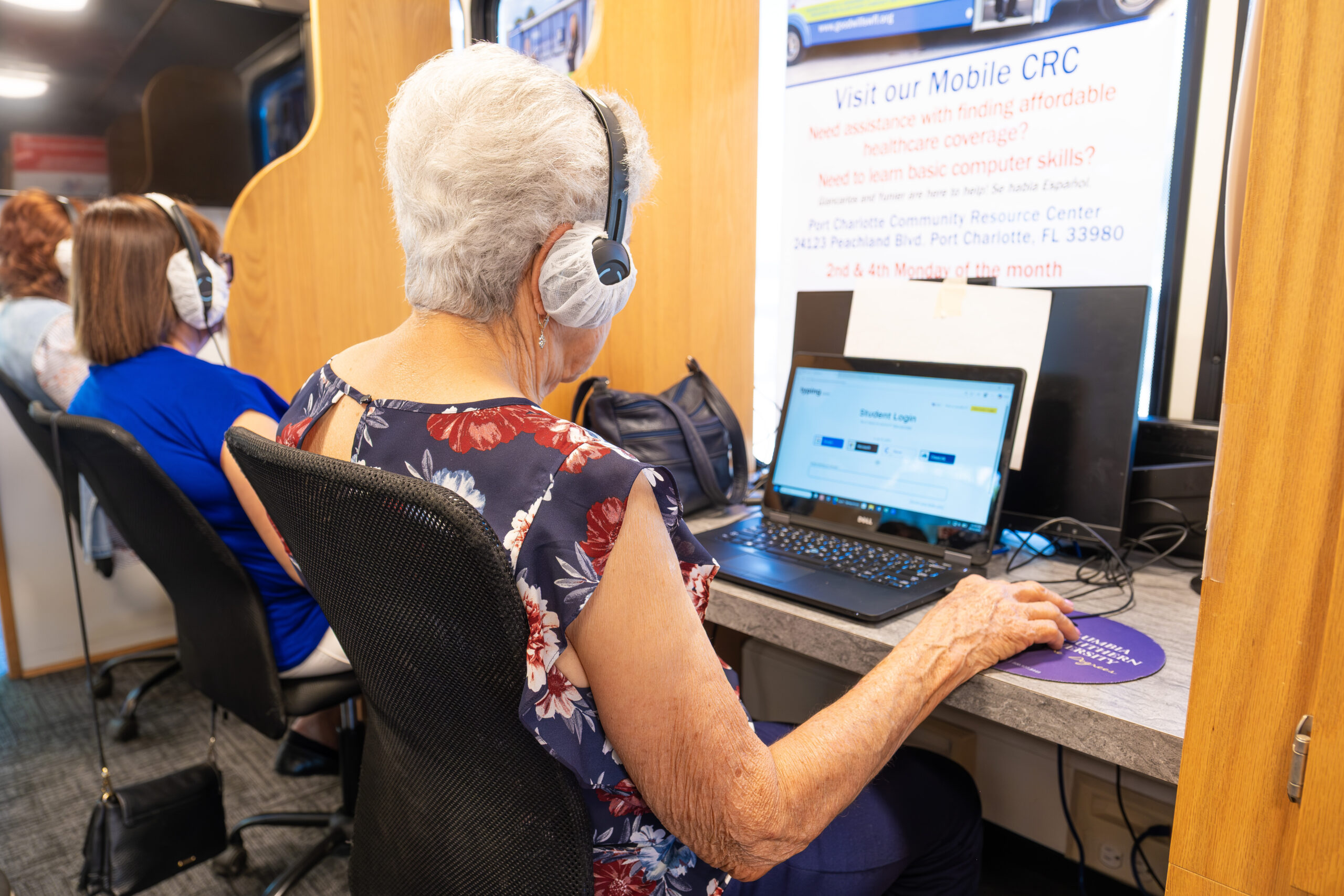
Research suggests many older adults are interested in learning about AI and see potential benefits. -DAVID WISHTISCHIN / FLORIDA WEEKLY
(This is the second in a three-part series about seniors and technology)
When the Cape Coral Computer Club began in 1995, its goal was to help older adults navigate the waves of emerging technology – such as personal computers, email and flip phones. These days, they’re learning about artificial intelligence.
“It’s definitely part of the conversation every time we meet, in one way or another,” said Tony Costa, 63, president of the 60-member club.
Costa even uses AI programs like Claude and ChatGPT to make his presentations – PowerPoint-style slides complete with graphics and stats. Costa said club members, who tend to be more interested in technology than most seniors, aren’t afraid of AI. In fact, they report using it for everything from troubleshooting computer problems with ChatGPT to wearing a device to manage medications and appointments.
“I think for the most part, people recognize they’re going to get a value out of it,” Costa said. “They’re recognizing that the world is changing, and it’s worth understanding the technology rather than just fearing it.”
Roughly 23% of Americans age 65 and older have used an AI chatbot, up from 12% in 2024, while 77% still report never using one, according to Pew Research Center. Yet research suggests many older adults are interested in learning about AI and see potential benefits, even as worries about trust, privacy and scams remain high.
“Everybody has a little bit of concern about how fast things are changing, what it’ll mean for the future,” Costa said.
Florida Weekly asked three experts – in the areas of engineering and technology, healthcare and cybersecurity – about the potential of AI to reshape the lives of seniors in South Florida.
A smarter future for healthcare
The only thing certain about AI is how uncertain its implications will be for many sectors of society – especially healthcare.

Dr. William Carracino is a neurologist and chief digital health executive for Lee Health. -COURTESY PHOTO
“It’s starting to be a wild ride,” said Dr. William Carracino, a neurologist and chief digital health executive for Lee Health. “I don’t know what’s going to happen. Whatever it is, it’s going to be an ethical, medical, legislative and grassroots combination.”
For now, the hospital system’s primary concern with AI is how to use it safely. Senior care, he said, is a major component of that.
“Seniors, in our research, aren’t a whole lot different than some other parts of the population,” he said, citing studies showing older adults are interested in virtual healthcare. “It gives us the comfort that we’re not making things too difficult for a group that doesn’t want it.”
Carracino noted several ways Lee Health is integrating AI into patient care. He said AI is “percolating” into programs like remote patient monitoring, in which patients can have a doctor check their vitals from home.
Lee Health is rolling out Voice Agent AI, a program that enables AI agents to interact with patients and assist with tasks like appointment scheduling, pre-op check-ins, and disease monitoring.
“This voice agent can either take a call from a patient or place a call to a patient and access the databases,” Carracino said, adding that patients can feel free to complain or ask questions to a sympathetic AI.
“If a human calls, the patient might think they’re being judged. But AI doesn’t judge,” he said. “It’s like an educated, thoughtful, empathetic concierge, all in one.”
He also says having AI handle smaller patient interactions gives doctors more time for complex cases. “Everybody we show it to is excited, and we’re going to start looking to roll that out for missed office visits and post-hospital follow-up.”
The organization is also developing AI insights in electronic health records to improve care and automate authorizations.
“Your doctor said, ‘Hey, you need this test,’ but you have to get your insurance company to authorize it first, and it can take an hour, a day, a week or two weeks,” Carracino said. “They’re starting to do that automatically.”
For hospital stays, AI will record vitals “ambiently” without staff having to wake a patient. Ambient listening will become a feature of doctor visits. The room will record conversations – with patient consent – and provide notes to the doctor. “This way, the doctor is looking at you and not their laptop,” Carracino said.
He envisions a future where a patient’s smartwatch or other device can make an appointment, schedule a self-driving Uber to take them there, and then afterward ask the patient if they need to go to the grocery or the pharmacy. “I think that’s going to be the cool part,” Carracino said. “That changes aging at home.”
Carracino said research has shown AI’s potential to diagnose conditions like atrial fibrillation and ALS through EKG data and voice patterns. An AI can look at a scan down to the pixel and see what human eyes can’t.
This inevitably leads to the question: Will there be AI doctors?
“We’re going to head in that direction,” Carracino said, adding he doesn’t know what the implications might be. “Is it ethical? I don’t know. Will it be statutorily limited? I don’t know. Will it be reimbursed? I don’t know that either.”
But he understands the appeal of a virtual doctor to take questions at midnight, and who has the entirety of medical knowledge at their command.
Carracino said Lee Health was one of the first hospital systems in the country to form an AI governance committee. Its primary goal is to look at every potential medical use of AI and decide if it is necessary and ethical. “That book is still being written.”
Learning the language of AI
Recently, when Dr. Leandro de Castro gave a presentation in Naples to a crowd of about 200 people, mostly seniors, he was surprised by their interest in real-world uses of AI.
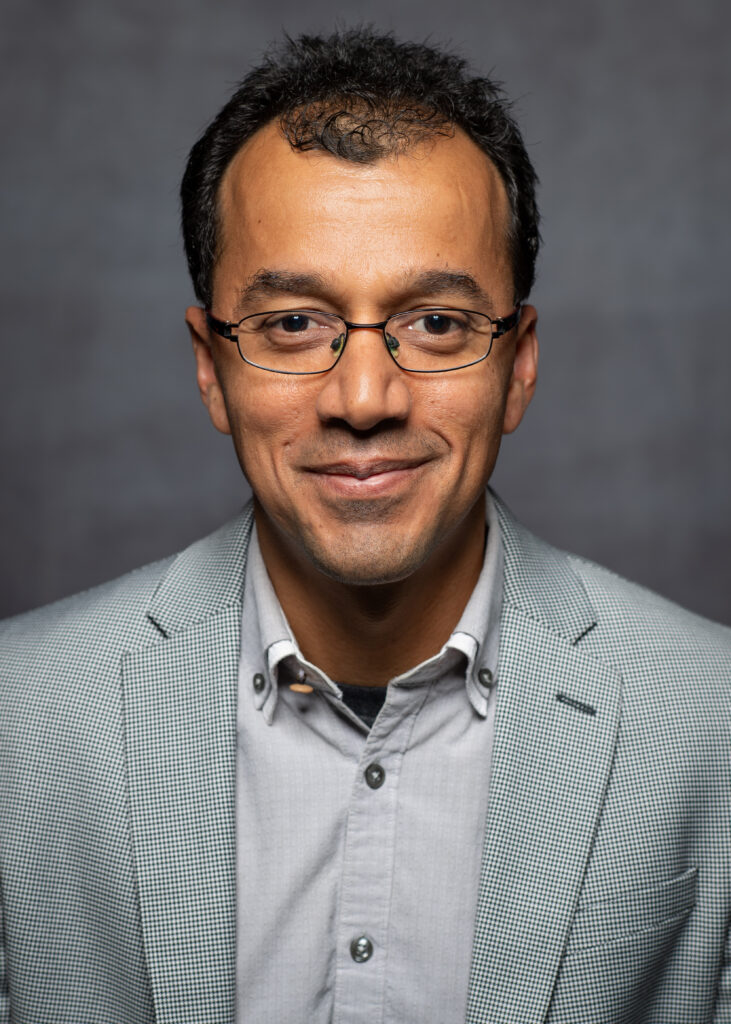
Dr. Leandro de Castro is the founding director of the Dendritic Institute for Human-Centered AI and Data Science at Florida Gulf Coast University. -COURTESY PHOTO
De Castro has been studying AI since 1995, when he was an undergraduate majoring in electrical engineering. Now, as the founding director of the Dendritic Institute for Human-Centered AI and Data Science at Florida Gulf Coast University, his work involves how AI can solve problems for businesses, healthcare and the environment.
“AI is going to affect our lives in many different ways. For example, it may affect healthcare, it may affect communication, transportation, a lot of accessibility, a lot of assistive technologies,” he said.
Inspired by their interest, de Castro offered a program for seniors at the university’s summer academy called “AI for Everyday Life.” The goal is to make tech advances more understandable. “We are concerned with creating specific programs that can support and bring knowledge to seniors, and to the community in general, who don’t find it that easy to understand and interact with technology,” he said.
The major current trends in AI are self-driving vehicles, robotic automation and AI agents to simplify work. All of these, de Castro said, have enormous potential benefits for seniors.
Smartwatches can track vital signs and monitor falls. Autonomous vehicles can provide a stress-free ride to doctor appointments or the pharmacy. AI chatbots can supply social connections to retirees adjusting to post-work life.
“AI can help us get better connected,” de Castro said. “AI can help us in the sense of having an interactive entity with which to exchange some information and to help us do tasks.”
But researchers are also studying the risks that AI could make seniors even more socially isolated. “For example, AI companions could reinforce delusions in people with some cognitive impairment,” de Castro said.
There’s also concern that AI might evolve so quickly that seniors can’t keep up.
De Castro hopes not. He said technology survives when it’s user-friendly. “It has to be designed for different categories of users, so there should be some AI solutions specifically designed for seniors and their specific needs,” he said. “This may even be a very interesting business area to look into.”
When scammers use AI
Every year, Brent Sudeck flies from Palm Beach to Las Vegas for DefCon, one of the world’s largest gatherings of computer hackers.
Not a hacker himself, Sudeck has been a cybersecurity professional for 25 years. As the owner of TrustPoint Cyber, he protects companies from digital threats, and he needs to know what’s happening on the “bleeding edge” of tech.
One of the highlights of DefCon is a “social engineering” competition – a test of a hacker’s ability to get companies to divulge confidential information.
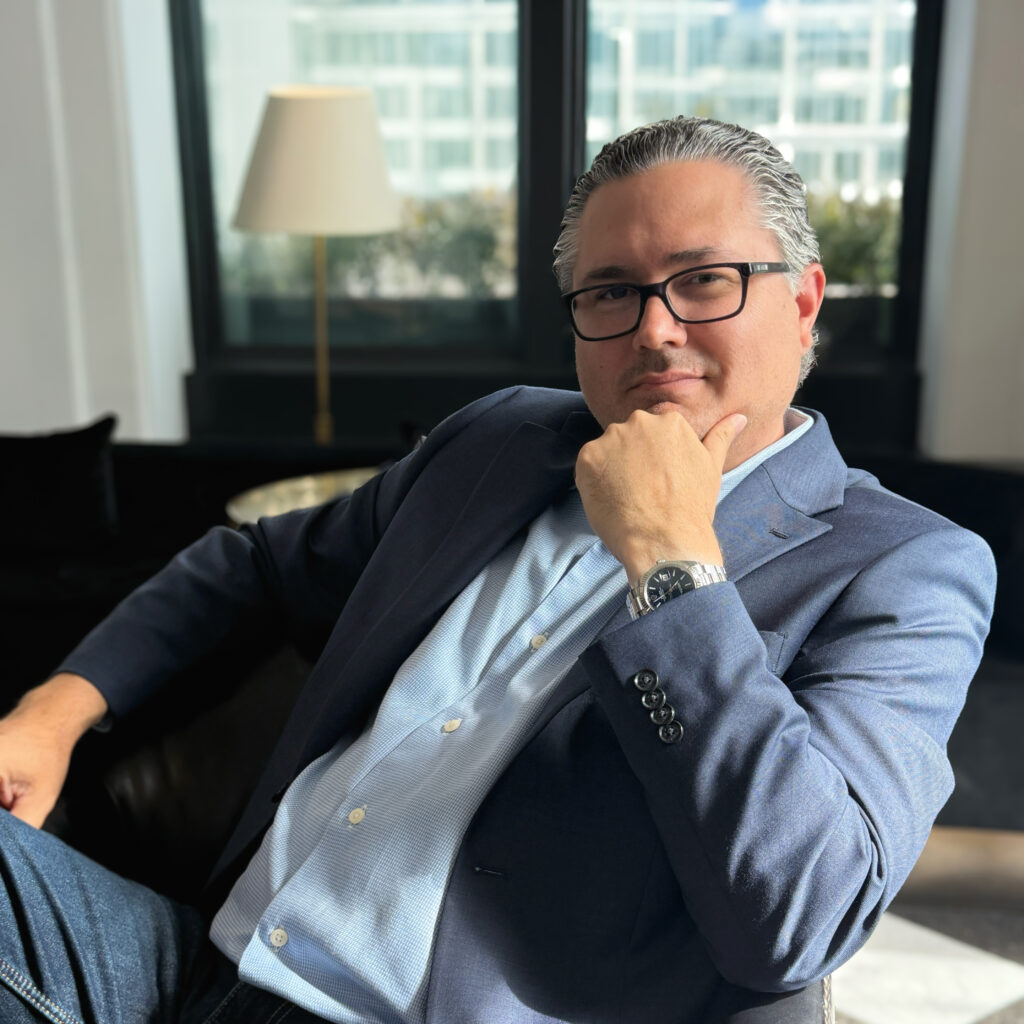
Brent Sudeck owns TrustPoint Cyber. -COURTESY PHOTO
But this year’s competition was different. For the first time in 33 years, there were no human contestants. The participants were all AI agents. “Some of those teams did extremely well and were able to get lots of information,” Sudeck said.
Sudeck said scammers now use autonomous AI agents to extract information from individuals and businesses. And just like with human scammers, seniors are a prime target. “They grew up in a generation that was just more friendly and more trusting,” Sudeck explained.
A common AI scam targeting seniors is voice cloning. An example is a grandparent getting a call from a scammer claiming to be a grandchild in trouble and asking for money.
“A scammer can take a clip of someone’s voice and reproduce it and have it say anything you want. It’s scary, and it sounds legitimate,” Sudeck said.
The simplest way to defeat these scammers is to use a predefined security phrase or word that only family members know. He recommends using a password manager to provide complex passwords and make sure multi-factor authentication is turned on for all accounts, especially banking.
He also suggests seniors request a credit freeze with the three major credit bureaus – Equifax, Experian and TransUnion, to prevent someone from opening new accounts in their name.
Sudeck said AI agents are merely digital tools, and not all are used nefariously. More and more companies are using them to improve efficiency. “They take the load off of your employees of repetitive tasks that would require lots of skill and lots of time to do, and they really do amazing things, and everybody’s offering them now.”
Sudeck also started another company, Staffinity, to provide AI agents for regulated industries, such as finance and insurance.
So, are seniors ready for their own AI agents? Sudeck cautions the technology isn’t quite there yet, but it’s rapidly evolving. “I think that’s the direction we’re going. AI agents are going to assist us in doing lots of tasks that are usually just a waste of our time,” he said. “I think that will help seniors, and I think there will probably be versions of AI agents that are senior-friendly that we’ll see in the future.”