
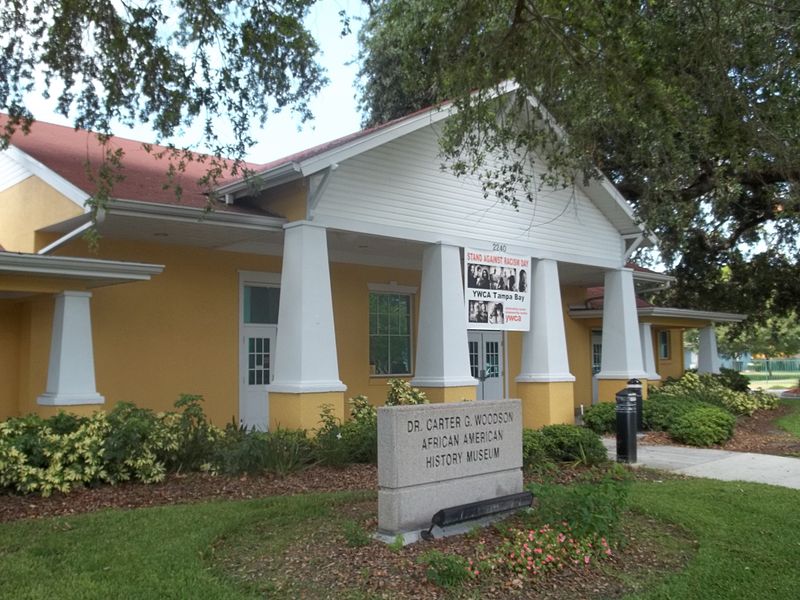
The Woodson African American Museum of Florida will mark 20 years in St. Petersburg with a grand reopening and Smithsonian-linked exhibition, putting one of the city’s leading cultural institutions back in the spotlight as St. Petersburg continues debating where its permanent future should be.
The museum will hold its grand reopening Saturday at 11:30 a.m., debuting “Many Voices, One Nation — Our Community,” a Smithsonian Museum on Main Street exhibition developed in collaboration with the National Museum of American History.
The event will include remarks from Rep. Michele Rayner, Mayor Ken Welch, Pinellas County Commissioner Rene Flowers, Foundation for a Healthy St. Pete President and CEO Dr. Kanika Tomalin, Florida Humanities’ Dr. Nashid Madyun, Woodson Lead Curator Manitia Moultrie, and Woodson Executive Director Terri Lipsey Scott.
“As we celebrate 20 years of service, we are honored to partner with the Smithsonian and Florida Humanities to share the voices and stories that have shaped our community and our nation,” Scott said in a news release.
Founded in 2006, The Woodson African American Museum of Florida preserves, presents, interprets and celebrates the history, art and culture of people of African ancestry, with a focus on Florida and the African Diaspora.

The reopening follows renovations at The Woodson’s current home at 2240 9th Ave. S., where the museum has operated from a roughly 4,000-square-foot former community center in Jordan Park. The Woodson indicated that the work includes restroom renovations, HVAC improvements, enhanced lighting and new flooring, upgrades meant to strengthen the visitor experience and preserve the existing space while the museum continues working toward a purpose-built home.
The reopening comes as a larger vision for the museum remains tied to redevelopment efforts at Tropicana Field and the surrounding Historic Gas Plant District.
In 2019, then-Mayor Rick Kriseman announced the city would commit $1 million toward a new Carter G. Woodson African American History Museum as part of the Deuces Rising plan, which focused on revitalizing the 22nd Street South corridor in Midtown. At the time, the new museum was expected to sit on a 5-acre plot along 22nd Street South, with a community-driven capital campaign helping fund the new facility.
By 2021, the City Council had approved $700,000 for the museum’s planned new location on 22nd Street South. The museum was then expected to cost between $18 million and $20 million, with funding expected to come largely through donations, grants and fundraising.
The Woodson launched its “Invest in Black History” campaign in 2022, seeking $27 million to build and operate a new facility on city-donated land in The Deuces, according to the St. Pete Catalyst.

The museum’s permanent future then became connected to St. Petersburg’s pursuit of a redevelopment deal with the Tampa Bay Rays and Hines that included a new ballpark and a broader mixed-use district. The city indicated that deal included a $10 million investment in a new Woodson African American Museum of Florida.
But the deal collapsed, sending St. Petersburg back into another redevelopment process for land once occupied by the predominantly Black Gas Plant neighborhood, which was razed decades ago to make way for Tropicana Field.
The Burg Bid, selected by Welch as the city’s preferred path forward for the site, again includes a permanent home for The Woodson, this time within Samuel Davis Park, a 13-acre central park envisioned as the civic and cultural heart of the district.
The proposal places the museum along a diagonal pedestrian corridor called the Legacy Link, connecting City Hall with the Manhattan Casino and The Deuces District. Under the plan, The Woodson would serve as “an anchor and a civic landmark for the Gas Plant District.”
That plan is not final. The city must still negotiate terms with The Burg Bid development team, and any final agreement would have to return to the City Council for approval.
The proposal has also drawn scrutiny from Welch’s opponents, including City Council Member Brandi Gabbard, who has urged the city to slow down before moving forward with a deal for what she has called St. Petersburg’s most valuable remaining public asset. Gabbard is a candidate in the upcoming mayoral election.
The reopening also follows a year in which public markers of Black history and identity in St. Petersburg became part of a state-led effort to clamp down on public art. The state targeted five St. Petersburg street murals for removal in that effort, including the Black History Matters mural on 9th Avenue South near The Woodson.
At the time, Welch said the city did not have a legal path to stop the removals without risking millions of dollars in state transportation funding and potentially tens of millions more in broader state funding. But he also said St. Petersburg would respond through new public art and cultural expression.
The reopening gives The Woodson a tangible milestone after years of shifting plans, even as questions about its long-term home remain tied to the city’s latest effort to redevelop the Historic Gas Plant District.