
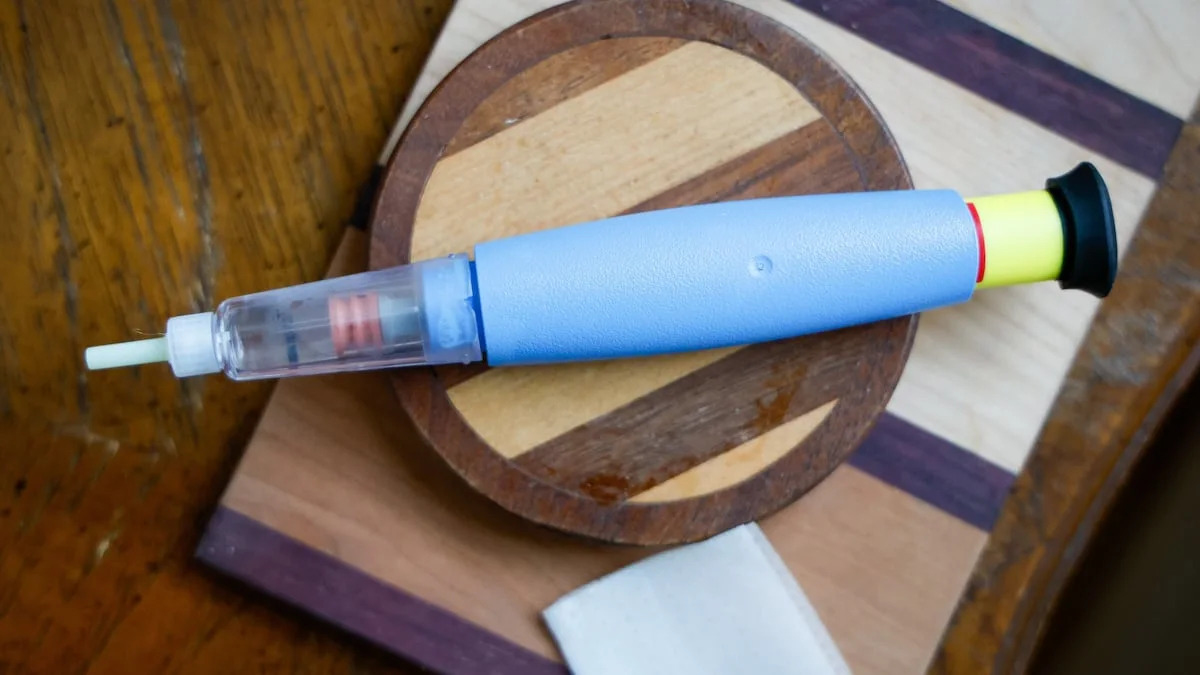
Tampa General Hospital filed a lawsuit last week against one of the world’s largest pharmaceutical companies. The suit comes shortly after the drug manufacturer, Eli Lilly and Co., stopped supplying discounted medications to Tampa General, which it had long done in compliance with a federal initiative to support safety-net hospitals — or those serving low-income and uninsured patients.
The lawsuit, filed in U.S. District Court in the Middle District of Florida, marks a boiling point between the drug company and hospitals that rely on it to get medications to patients. It follows months of tensions that arose after Eli Lilly announced it would cancel discount pricing for entities that did not turn over claims data earlier this year.
In late June, Lilly made good on its promise and cut Tampa General off from reduced pricing, resulting in an uptick in spending by the hospital on Lilly products by an average of 25%-50% and far more for outliers, according to the lawsuit. Tampa General has no choice but to continue purchasing many drugs through the manufacturer, the lawsuit said, because it is the only supplier in the market of a variety of medications.
The effects have already trickled down to patients. After the rollback of price reductions last month, Marylou Wells, 80, of Clearwater, got a call from pharmacy staff at Tampa General. The osteoporosis medication she was on typically cost her around $5 a month. With the change, a pharmacist told her, the price would soar to around $5,000.

“Lilly is lining its pockets with illegal profits on drug sales allocated to the needy,” the lawsuit states. “Savings TGH would otherwise have used to improve health outcomes and expand healthcare services throughout the region will instead be used to bolster the bottom line of a company slated to take in around $85 billion in revenue, and over $20 billion in profit, in the current fiscal year.”
Eli Lilly and Co. responded in a statement shared with the Tampa BayTimes.
“This lawsuit is just another part of the broader hospital campaign to fight transparency and hide the fraud, waste and abuse,” the statement reads. “The claims data Lilly requires hospitals to share is information they already collect and send to insurers regularly. Refusing to share that same data with Lilly shows that hospitals are more concerned with hiding rampant abuse in the program than improving its integrity.”
For more than 30 years, pharmaceutical companies have entered into agreements to provide front-end discounts on drugs purchased by safety-net hospitals like Tampa General through a federal program called 340B. The idea was that pharmaceutical companies, with large operating margins, help offset the cost of care for hospitals serving people who can’t pay for services by providing outpatient drugs at a discounted rate in exchange for having their drugs covered by certain Medicaid and Medicare plans.
The 340B program hasn’t been without controversy, perhaps a byproduct of its rapid expansion over the last two decades. In 2023, according to analysis by The Commonwealth Fund, health and pharmacy providers under the 340B program purchased $66.3 billion in outpatient drugs. As program volume has increased, so have allegations and findings of fraud.
That’s why, Eli Lilly announced in January, it would begin requiring entities who it supplied through the program — like Tampa General — to turn over claims data, including things like the drug code identifying the medication dispensed, the date the prescription was written and filled, the prescriber’s identity, the patient’s insurance bank identification number and the prescription number.
Attorneys representing the hospital say that demand is a massive overstep in its authority. The company, they say, is essentially presuming fraud by all of the entities it sells to, rather than investigating those in which evidence has emerged to suggest it.
“With its broad declaration of fraud and abuse systemwide, Lilly is tarnishing all of its primary customers with a system-wide accusation regardless of whether it has any evidence or reasoning,” said Jayashree Mitra. “There is a whole federal agency that is deputized with the task of monitoring this program and providing a platform for audits.”
If changes are to be made to how the program is monitored, Mitra said, it’s the responsibility of the government to make them, not for-profit companies acting on their own volition.
Scott Abeles, who is representing the hospital alongside Mitra, said Lilly’s move violates Florida law and the Florida Deceptive and Unfair Trade Practices Act. Because the company is the sole producer of several medications, it holds a monopoly, he said.
“You can’t fool people, you can’t trick the market, and you can’t engage in unconscionable sales practices, which are practices that shock the conscience — that are outside the bounds of even what very aggressive competitors should do, and so we think this crosses the line,” Abeles said.
A final issue, both attorneys said, is that Lilly’s demands are not applied equally. Several states, including Colorado, Rhode Island and Tennessee, have laws in place that explicitly prohibit “conditioning 340B discounts on claims-data submission,” leaving them exempt from the demands.
In a letter that Eli Lillysentto Department of Health and Human Services Administrator Thomas Engels earlier this year, the company said around 70% of 340B program participants had already complied with its requests.
The attorneys for Tampa General said doing so sets a dangerous precedent, one where major for-profit companies can set their own terms rather than complying with federal requirements and demand data that taken together could be used to identify individual patients.
Multiple trade organizations have issued statements in agreement.
“Congress should immediately use its oversight authority and demand HHS take a position on drug companies’ attempts to hijack the 340B program through burdensome claims-data demands,” Rick Pollack, CEO of the American Hospital Association, wrote in a statement. “These manufacturer-imposed requirements would drain scarce resources from 340B hospitals and threaten patients’ access to lifesaving drugs.”

Until then — or until the lawsuit advances — patients like Wells, will be forced to make tough decisions.
Wells is nearly finished with her treatment plan and only needs another month of medication. She said she’s been working with her pharmacist at Tampa General to try and find a solution. But she feels for other patients — those with cancer, or other life-threatening conditions, that rely on Lilly medications.
“I feel so sorry for those people who are faced with this,” she said.