
TAMPA, Fla. — Heather Curley wrote a stack of letters a few years ago.
They were all addressed to her daughter for the milestones, birthdays and special moments Heather knew she would miss.
“I wrote her 21 birthday cards,” she said, looking down at the stack in her hands.
Her daughter, Palmer, was three years old at the time of writing the letters. Heather hoped with every cell in her body that she would live to see Palmer’s fifth birthday.
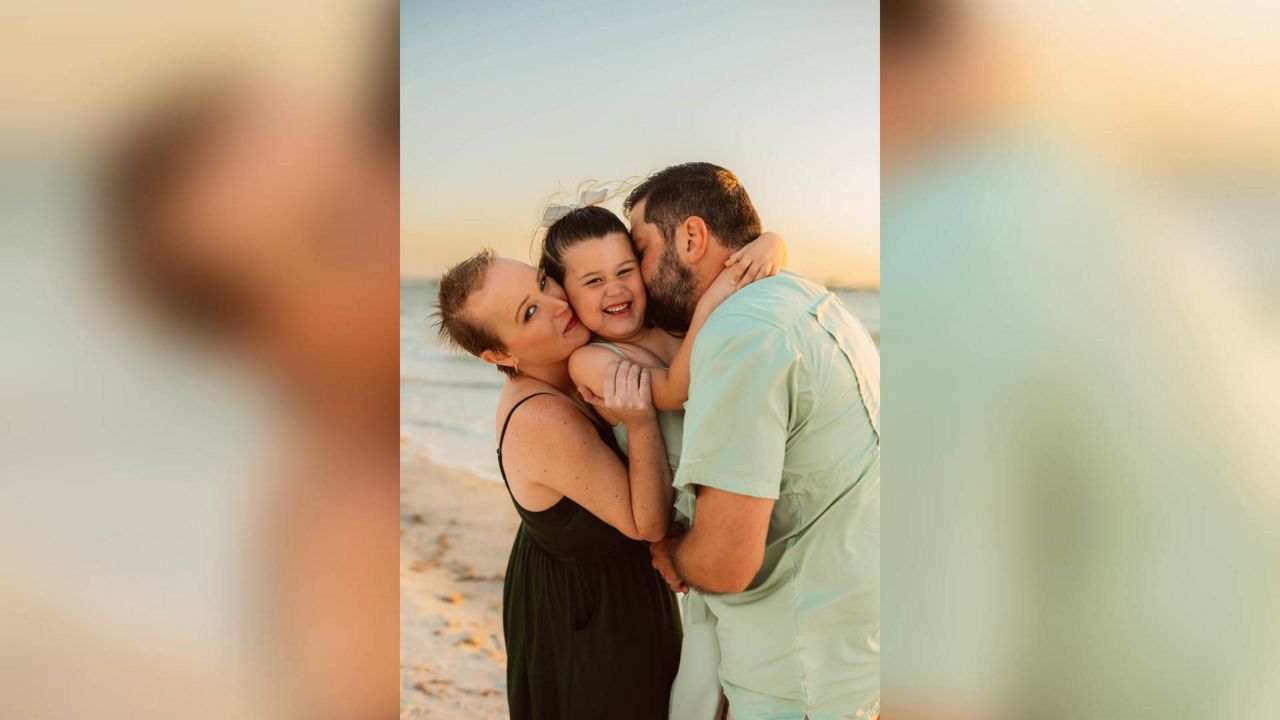
Heather Curley with her husband and her daughter. (Photo Courtesy: Heather Curley)
“I just wanted to make it past that birthday because I don’t really have any memories of my dad. And so I wanted to get her to that age where she will have memories of me,” said Heather.
Her dad died unexpectedly just before her fifth birthday.
Then, at 32, Heather was diagnosed with stage four metastatic breast cancer. The cancer had spread all over her body.
“She (Palmer) is the reason I fight. She is the reason I wake up every morning. She brings me so much joy and strength, and honestly, I don’t think that I would be this way if it wasn’t for her,” said Heather.
The breast cancer diagnosis would be bad enough, but to add to it the breast cancer led to leptomeningeal disease (LMD).
LMD is a complication of advanced-stage cancer that lives in the spinal cord and around the brain.
It is almost always fatal.
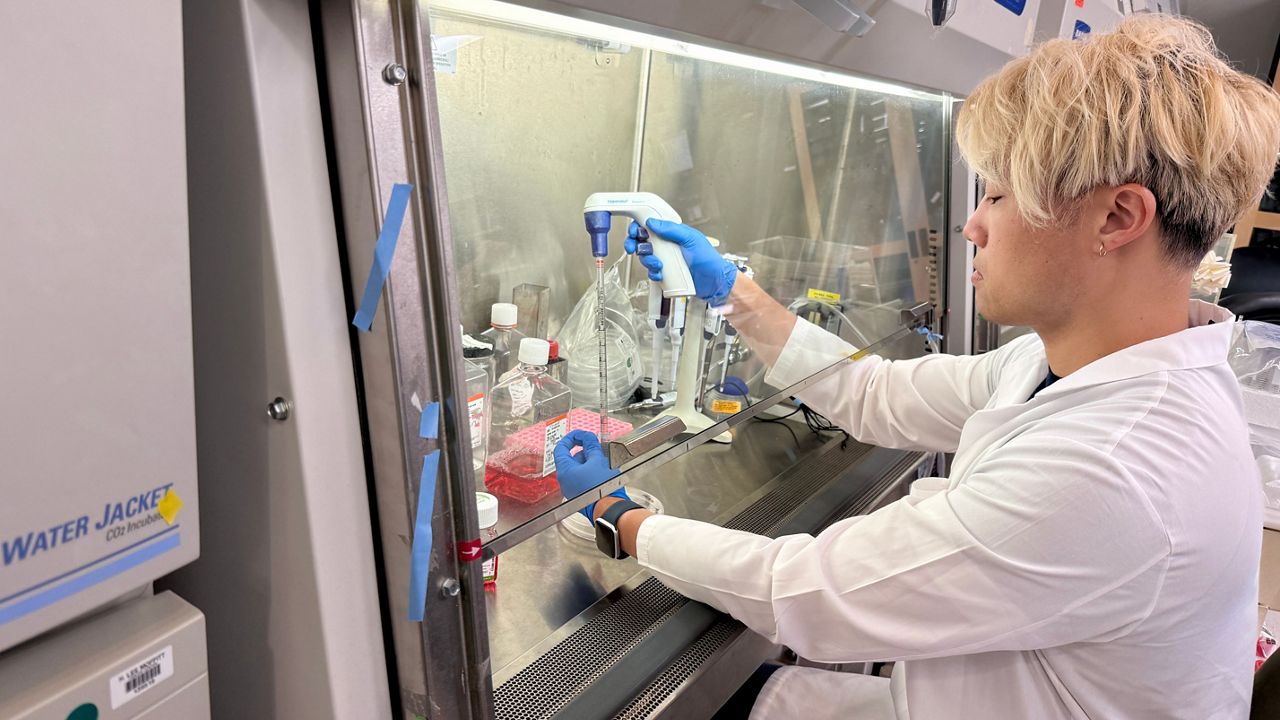
But as luck would have it, one of the few doctors working to cure this poorly understood disease just happens to work at Moffitt Cancer Center.
“It’s just like, perfect place at the perfect time,” said Heather. “I’m at Moffitt getting breast treatment and Dr. Forsyth is on the team there. And he’s going to be my doctor. He is like the leading expert in leptomeningeal disease.”
“Everybody got beaten down by this disease. Doctors say, ‘Look, there’s nothing we can do,’ but we had a different attitude,” said Dr. Peter Forsyth, the Neuro-Oncology Chair at Moffitt Cancer Center. “We can understand it. We need to get together as a group and as a team and do something about it.”
Forsyth and a team of others at Moffitt launched a trial involving dendritic cells. There are a handful of other hospitals around the country working on these trials too, and Forsyth says they communicate any new finding amongst each other.
Simply put, these are cells that alert the immune system to attack the LMD.
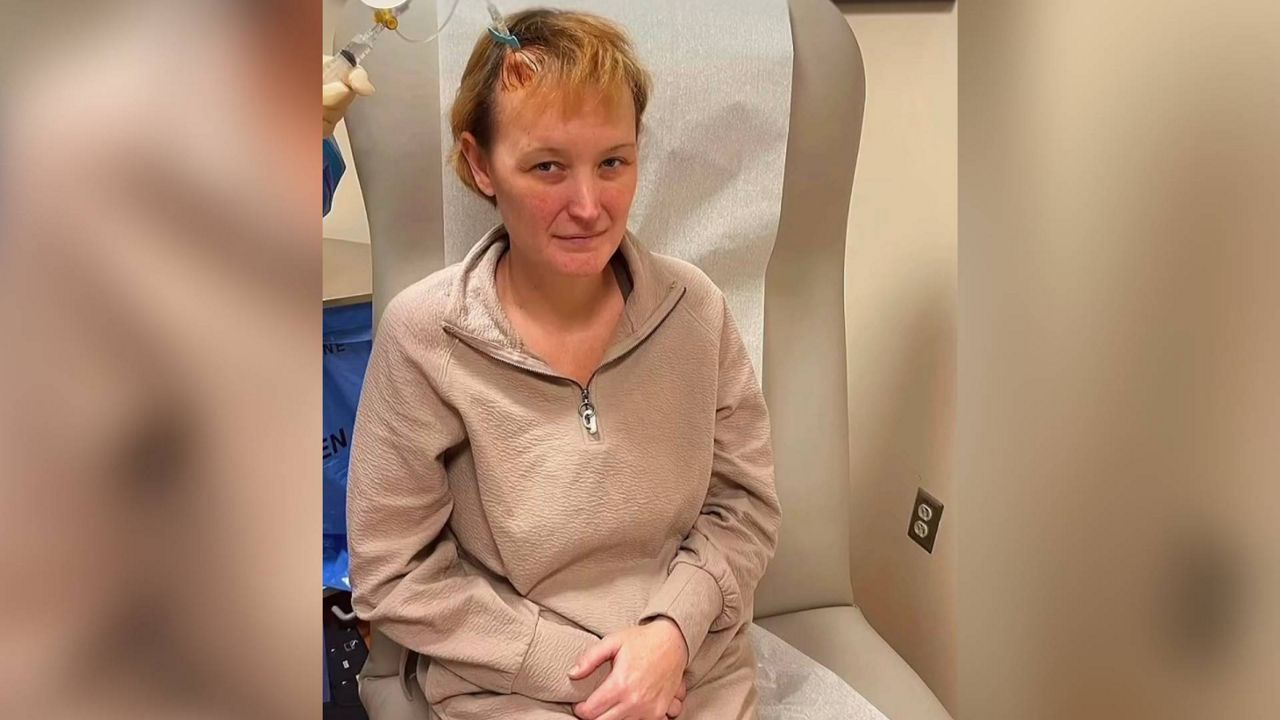
Heather Curley undergoing treatment. (Photo Courtesy: Heather Curley)
“So we’re educating those dendritic cells. So, they learn, and they can turn on all their other friends that actually kill stuff. So, we put it back through a brain port called an Ommaya once a week for three months and see how it goes,” said Forsyth.
Heather was the second patient in the first trial, and for 16 weeks they put a personalized dendritic vaccine into her skull, hoping for the best.
So far, the best outcome has happened.
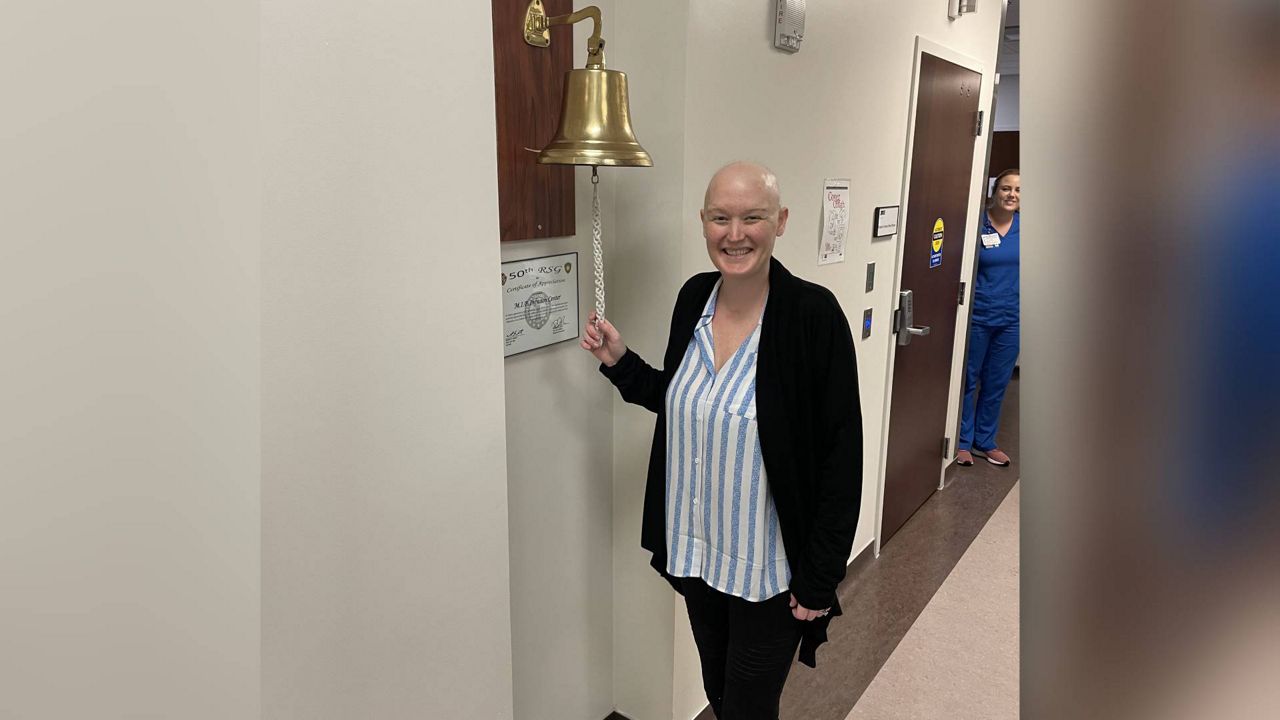
Heather Curley rings the bell at Moffitt Cancer Center after a positive response to her treatment. (Photo Courtesy: Heather Curley)
LMD usually kills in less than two years, but Heather is now over two years since diagnosis. She holds onto a promise made to her by Forsyth.
“My promise is to take good care of her and always have options,” said Forsyth.
Options when it comes to an incurable disease, that might be the rarest gift of all.
Right now, Heather lives her life for the next three months. She lives each day leading up to the next scan, the next time she can toss another card away.
“I look forward to also throwing out all of these,” she said, looking down at the birthday cards.
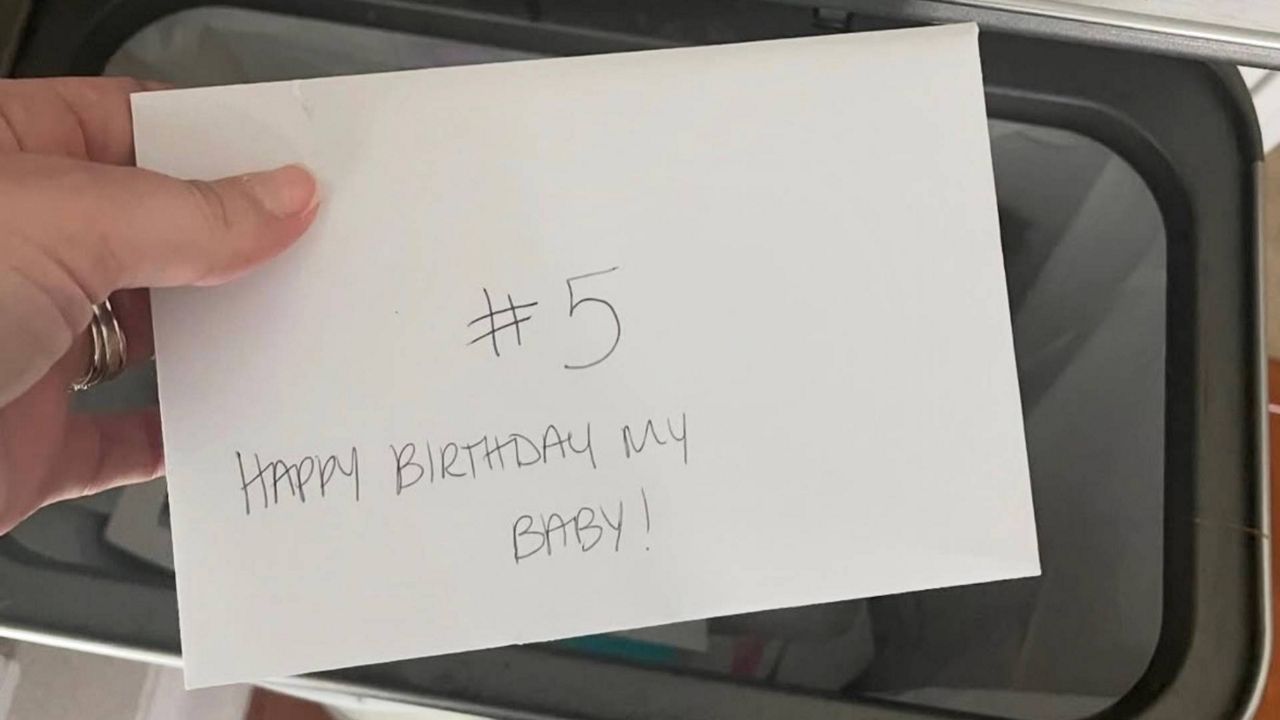
Heather Curley now gets to throw away some of the prewritten birthday cards for her daughter. (Photo Courtesy: Heather Curley)
Throwing away cards means she lived through another milestone in-person with Palmer.
“The gift of time and the gift of memories together outweigh anything else,” said Heather. “And that’s all I pray for is just more time.”
In October 2025, Dr. Forsyth was awarded a $22.4 million grant from the U.S. Department of War to open two new trials targeting LMD.
Forsyth said the first of those will open within a few weeks.
They are welcoming new patients into the trial — patients, Forsyth said, will come from across the country and the world.
They are welcoming new patients into the trial, patients he said will come from across the country and world.