
Two futures of artificial intelligence are unfolding in South Florida.
In one, scientists use machine learning to forecast water levels, detect crop diseases, and guide restoration efforts in the Everglades. AI is helping researchers understand complex environmental systems, improve water management, and reduce unnecessary chemical use in agriculture.
In the other, the infrastructure powering AI — massive data centers — is expanding across regions, consuming vast amounts of water, electricity and land.
The contradiction is becoming impossible to ignore.
 Sayri Proano is a graduating University of Florida student studying biology with minors in innovation and sustainability studies. (courtesy, Sayri Proano)
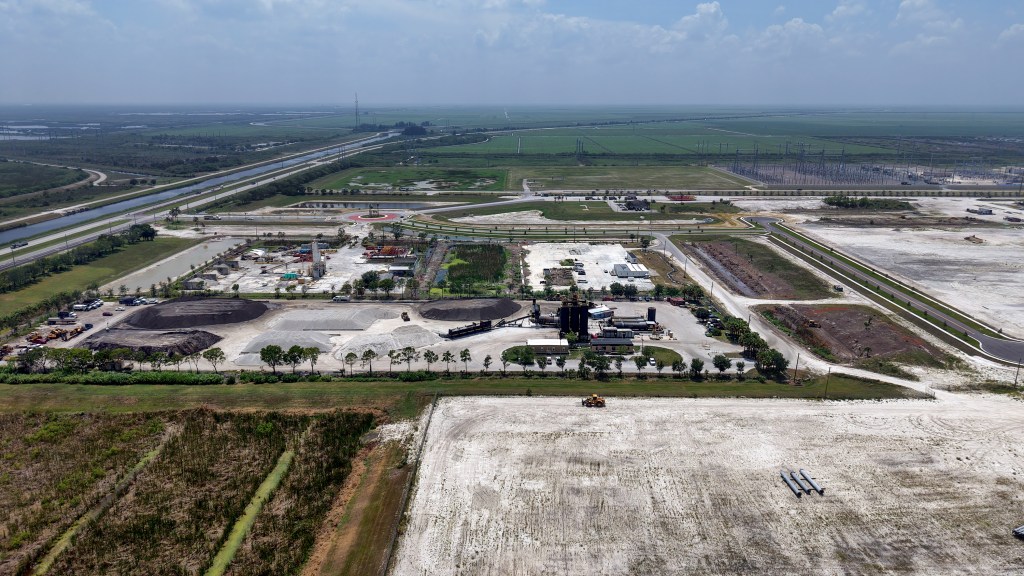
A proposed hyperscale data center in Palm Beach County, known as Project Tango, has sparked debate. Planned near Loxahatchee, the project spans hundreds of acres and could grow to over a million square feet. It has already drawn widespread opposition from residents concerned about water consumption, constant noise and long-term environmental impacts.
This is not just another development project. It represents a deeper question: Can a technology that protects ecosystems also harm them? The Everglades, located just miles from the proposed site, is one of the most delicate ecosystems in the world. It depends on slow-moving water flows, seasonal timing and precise ecological balance. It protects Florida’s water supply, supports biodiversity and acts as a natural buffer against flooding and climate impacts.
Yet it is already under pressure from development, climate change and decades of environmental disruption.
Developments like Project Tango introduce a new kind of stress: industrial-scale resource demand.
Data centers operate continuously. Their servers generate heat and require constant water-intensive cooling. In a region where water management is already a challenge, adding a permanent, high-demand user raises serious concerns.
The energy impact is just as significant. Data centers don’t simply use electricity; they reshape energy systems. As demand increases, utilities must expand capacity, often relying on fossil fuels in the short term to meet immediate needs. This creates long-term emissions at a time when Florida is already facing rising sea levels, stronger storms and increasing climate vulnerability.
Supporters argue that projects like Tango bring jobs and economic growth. But those benefits are often overstated. Construction may create short-term employment, but long-term staffing is relatively limited. Meanwhile, the environmental costs — water use, land disruption and increased energy demand — are ongoing and local.
There are also growing concerns about how these projects are introduced to the public. In the case of Project Tango, key details, including the identity of the end user, have not been fully disclosed. The project expanded significantly over time, and many residents felt it moved forward without meaningful transparency or discussion.
This lack of clarity matters. Infrastructure at this scale is not just a private investment — it has lasting impacts on communities, ecosystems and public resources.
At the same time, not all arguments against Project Tango are straightforward. The site sits near existing industrial infrastructure, including a power plant and reclaimed water systems. Some argue that placing data centers in already-industrialized areas is more responsible than building them in undeveloped regions.
This highlights a broader reality: AI infrastructure is not going away.
Demand for computing power is accelerating, and data centers will continue to expand. The question is not whether they will be built, but how and where they are built.
Technology and sustainability don’t have to conflict. In fact, they should reinforce one another. AI has the potential to improve environmental monitoring, optimize resource use and support climate adaptation. However, those benefits are undermined when the infrastructure behind it creates new environmental pressures.
That is where Florida’s responsibility becomes clear.
Florida has an opportunity to set a precedent. That means requiring full transparency for large-scale projects, establishing strict limits on water and energy use, and ensuring that ecologically sensitive areas — like the Everglades — are not treated as acceptable trade-offs for technological growth.
It also means redefining progress. Innovation should not be measured only by computational power or economic output, but by whether it strengthens or weakens the systems that sustain life.
The Everglades is not just a backdrop for development. It is a living system that protects communities, supports wildlife and cannot be easily restored once damaged.
Florida shouldn’t make the Everglades pay for computing growth.
Because if the state fails to draw that line now, Project Tango will not be the exception. It will be the beginning of a much larger shift, one where even the most critical ecosystems are seen as negotiable in the pursuit of digital progress.
And that is a future Florida cannot afford.
Sayri Proano is a graduating University of Florida student studying biology with minors in innovation and sustainability studies. She is from Weston and focuses on the intersection of artificial intelligence and environmental sustainability.