
Updated July 13, 2026, 2:46 p.m. ET
Bed bugs have made a resurgence in the U.S. due to factors like pesticide resistance and increased travel.Pest control company Orkin ranked the 50 worst cities for bed bugs.Adult bed bugs are visible, about the size of an apple seed, and often hide near where people sleep.Bed bug bites can appear as red, swollen marks in a line or zigzag pattern, but may take up to 14 days to show.To eliminate an infestation, experts recommend hiring a licensed pest control company and using methods like heat treatment, vacuuming, and mattress encasements.
Once well-controlled in the U.S., bed bugs have made a comeback and can be found across Florida and the rest of the country.
A ban on chemicals such as DDT, increased international travel, a lack of public awareness and the bed bug’s resistance to pesticides have fueled its resurgence.
Pest control giant Orkin has released its annual list of the 50 worst cities for bed bugs. Two Florida cities are ranked, one of them making its return after a one-year hiatus from the list.
Here’s what to know about Florida cities on the 2026 bed bug list, what bed bugs and their bites look like, how to tell if you have them and treatment options.
Shop Amazon for bed bugs defense
Orkin’s rankings are based on treatment data from metro areas where the company performed the most bed bug treatments from May 12, 2025, to May 12, 2026, including residential and commercial treatments.
Miami dropped to No. 47 on the list after ranking 41st in 2025 and 45th in 2024. Tampa is back on the list in 46th place after a 2025 hiatus and being ranked No. 31 in 2024.
Here are the 50 worst cities for bed bugs in 2026, ranked, according to Orkin:
No. 1 – Chicago (the sixth consecutive year Chicago has had the highest ranking)No. 2 – Los AngelesNo. 3 – DetroitNo. 4 – ClevelandNo. 5 – IndianapolisNo. 6 – Springfield, IllinoisNo. 7 – Washington, DCNo. 8 – Columbus, OhioNo. 9 – PittsburghNo. 10 – Grand Rapids, MichiganNo. 11 – DenverNo. 12 – New York CityNo. 13 – MilwaukeeNo. 14 – BaltimoreNo. 15 – CincinnatiNo. 16 – Raleigh, North CarolinaNo. 17 – St. LouisNo. 18 – Charleston, West VirginiaNo. 19 – Davenport, IowaNo. 20 – Flint, MichiganNo. 21 – AtlantaNo. 22 – PhiladelphiaNo. 23 – DallasNo. 24 – Oklahoma CityNo. 25 – Cedar Rapids, IowaNo. 26 – Hartford, ConnecticutNo. 27 – Charlotte, North CarolinaNo. 28 – Peoria, IllinoisNo. 29 – South Bend, IndianaNo. 30 – SeattleNo. 31 – Richmond, VirginiaNo. 32 – Youngstown, OhioNo. 33 – Greenville, South CarolinaNo. 34 – NashvilleNo. 25 – Buffalo, New YorkNo. 26 – Omaha, NebraskaNo. 37 – San FranciscoNo. 38 – Dayton, OhioNo. 39 – Norfolk, VirginiaNo. 40 – Knoxville, TennesseeNo. 41 – San DiegoNo. 42 – Toledo, OhioNo. 43 – Las VegasNo. 44 – Syracuse, New YorkNo. 45 – Fort Wayne, IndianaNo. 46 – Tampa, FloridaNo. 47 – MiamiNo. 48 – MinneapolisNo. 49 – Kansas City, MissouriNo. 50 – Myrtle Beach, South CarolinaWhat bed bugs look like
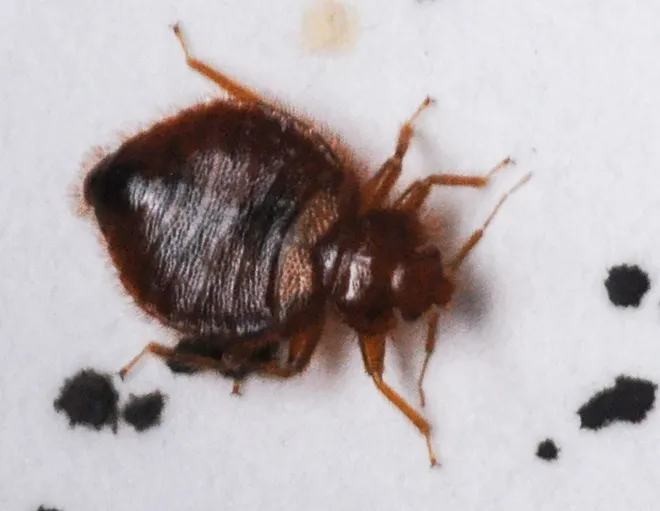
Bed bugs are small parasitic insects that feed on the blood of people and animals.
Their scientific name is Cimex lectularius. They are thought to have originated in Europe, the Middle East or in India, but moved across the world as humans did, the Center for Invasive Species Research says.
While their lifespan is roughly six months to a year, female bedbugs can deposit one to five eggs a day and may lay 200 to 500 eggs in their lifetime, creating widespread infestations.
According to the Environmental Protection Agency, bedbugs give off a musty and slightly sweet odor.
According to the EPA, adult bed bugs, in general, are:
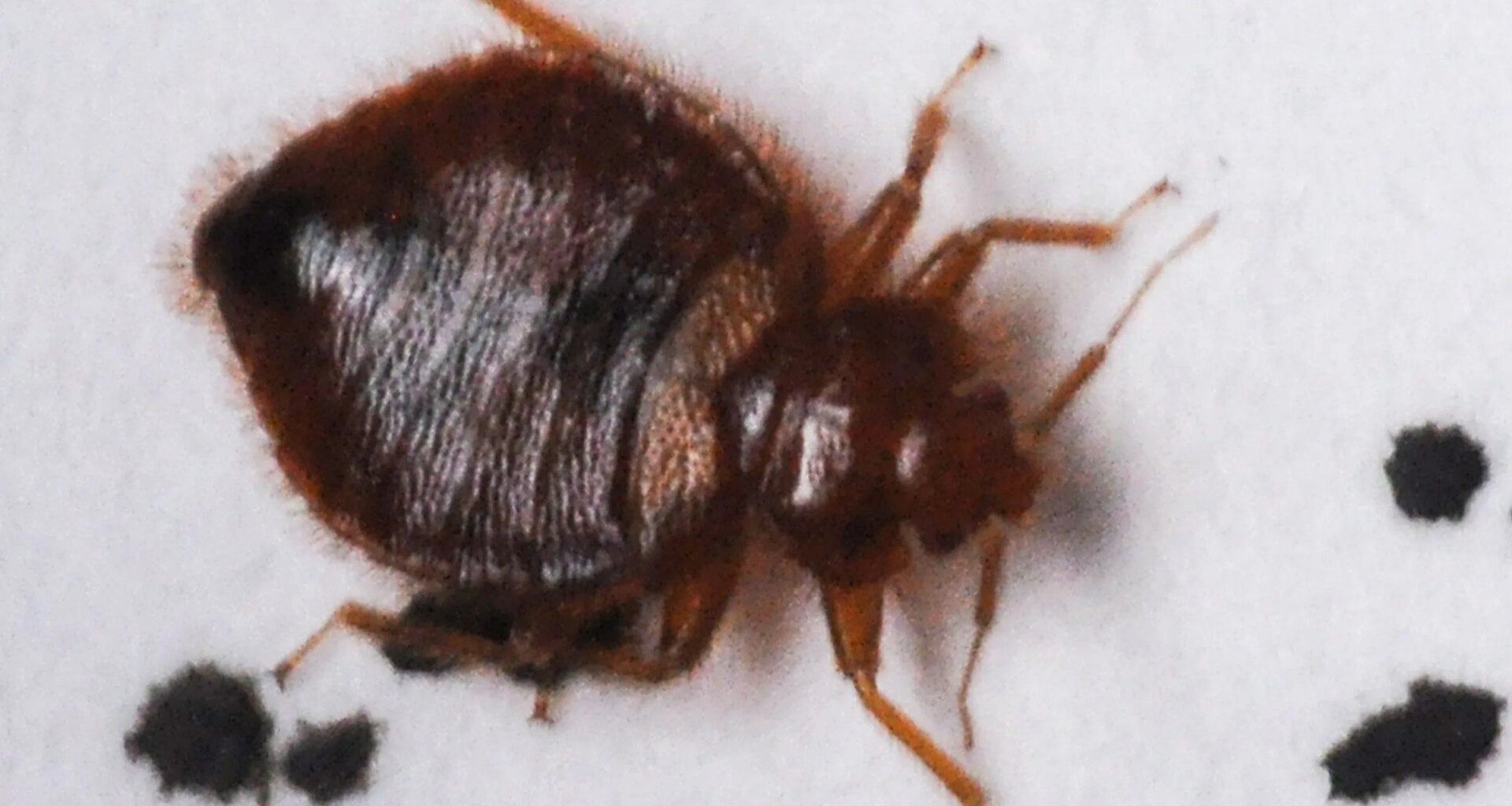
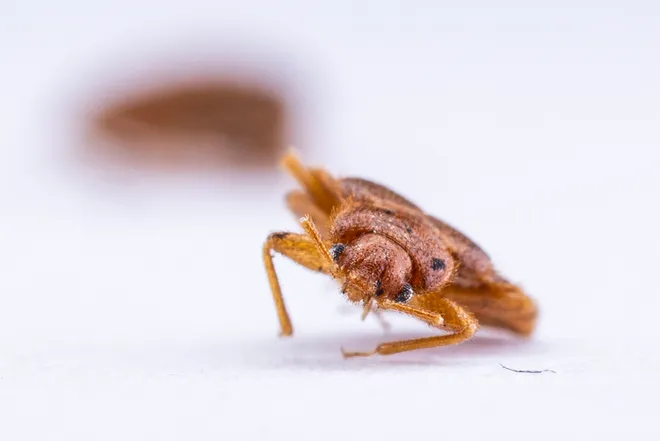
about the size of an apple seed (5-7 mm or 3/16 – 1/4 inch long);long and brown, with a flat, oval-shaped body (if not fed recently);balloon-like, reddish-brown, and more elongated (if fed recently);a “true bug” (characteristics of true bugs include a beak with three segments; antenna that have four parts; wings that are not used for flying; and short, golden-colored hairs); andsmelly, with a “musty-sweetish” odor produced through glands on the lower side of the body.
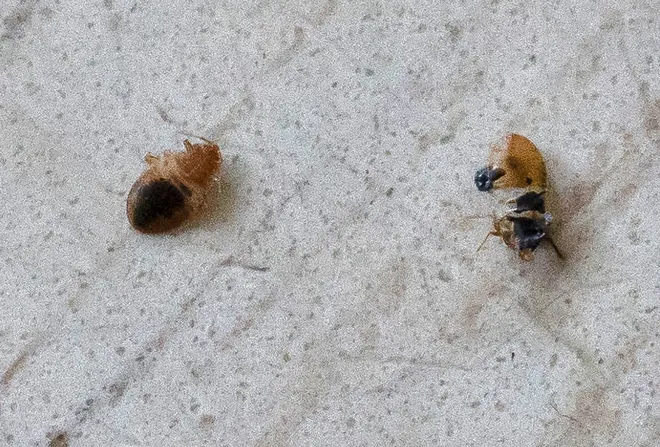
Young bed bugs (also called nymphs), in general, are:
smaller, translucent or whitish-yellow in color; andif not recently fed, can be nearly invisible to the naked eye because of coloring and size.
Bed bug eggs, in general, are:
tiny, the size of a pinhead;pearl-white in color; andmarked by an eye spot if more than five days old.How can I tell if there are bed bugs? Are bed bugs visible?
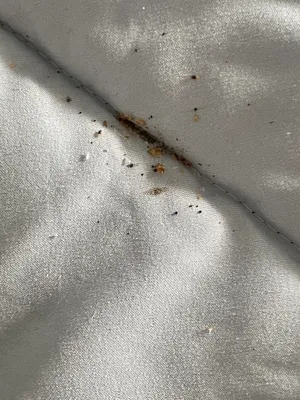
According to Healthline, adult bed bugs are visible to the naked eye. They are reddish-brown, wingless, and about the size of an apple seed with oval-shaped bodies.
But they are masters at hiding. Bed bugs are primarily nocturnal and come out of hiding to grab their next bite, usually whoever is getting their beauty sleep nearby.
Young bed bugs aren’t visible to the naked eye unless they’ve eaten recently. Experts note they are usually very small and translucent to whitish-yellow in color.

Getting bites from bed bugs won’t necessarily make you sick, but the bites will itch and feel uncomfortable. But if you have a long-term bed bug infestation and are continuously bitten, it could cause some health issues.
“Bed bugs do not transmit diseases, but they can cause a lot of discomfort because of the itching that results from the bites,” Roberto Pereira, an urban entomologist at the University of Florida’s Institute of Food and Agricultural Sciences, said in an email.
“If the infestation is extreme, and a person is exposed to bed bug bites for a long period of time, that person may develop anemia and symptoms of low blood volume, known as hypovolemia. This can lead to other complications, including heart problems that can be dangerous. Fortunately, this occurs very rarely.”
What do bed bug bites look like?
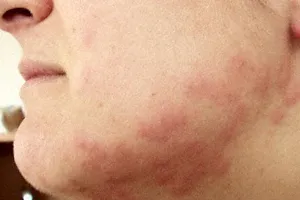
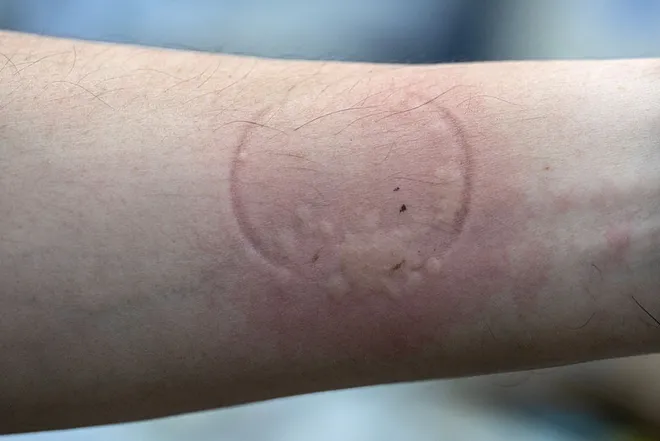
Bed bug bites can appear red and slightly swollen, may be random, appear in a straight line or in a zigzag pattern, according to Harvard Medical School. They can be mistaken for mosquito, flea or spider bites, or even a rash or hives.
And because bed bugs inject an anesthetic and an anticoagulant to prevent the blood from clotting, it can take up to 14 days for a bite mark to appear.

Bed bug infestations usually occur around or near areas where people sleep, the CDC said. Bed bugs can travel over 100 feet in a single night, but tend to live within 8 feet of where you sleep.
During the day, they’re found hidden in places like the seams of mattresses, box springs, bed frames, headboards, dresser tables, inside cracks or crevices, behind wallpaper or any other clutter or objects around a bed.
It’s also critical to note that these tiny pests can cling to items you’re taking home with you, like luggage, purses, clothes and other personal belongings, easily moving from one location to another.
What is the easiest way to check for, prevent bed bugs?
Here’s Terminix’s checklist for checking your rental or hotel room for signs of bed bugs and preventing an infestation:
Before you settle into your room:
Inspect the mattress seams, headboard, and nearby furniture for small, rust-colored stains, shed skins or live bed bugs. Adult bed bugs are around the size of an apple seed, so be sure to examine closely, as they can be easy to miss.Use a flashlight (your phone works) to check deep crevices, folds and corners.Look for evidence around nightstands, the edges of chairs or sofas and in drawer joints.Avoid placing your luggage on the bed or floor while you inspect the room.
During your stay:
Keep your suitcase zipped and consider storing it in a large, sealed plastic bag when not in use.When you return home, unpack on a hard surface (not the carpet or your bed) and away from your bedroom (exterior or garage), so you can easily spot any unwanted hitchhikers and not introduce them into sleeping areas.Place your clothing in the dryer before washing it. Thirty minutes on high heat should help eliminate any live bed bugs or eggs before you wash them. If you cannot place certain items in the dryer, steam cleaning can also help kill bed bugs.Vacuum your suitcase inside and out before storing it, preferably in a space far away from sleeping areas.
“If you’ve found bed bugs in your home, the first step is to contain the infestation. Avoid moving infested items between rooms, as this can spread the problem. Steer clear of DIY sprays,” Terminix says.
“Many bed bug populations are resistant to over-the-counter products, or they can push them into other areas, making them more difficult to remediate. Acting quickly can help reduce the severity of the infestation while you wait for professional treatment.”
How to kill bed bugs, treatment options
If you have bed bugs, the Florida Department of Agriculture and Consumer Services recommends you hire a licensed pest control company.
Here are some treatment options, per FDACS:
One of the best treatment options is the use of heat. Temperatures of 125 degrees Fahrenheit or above will kill all stages of bed bugs. You can use a dryer on high for 30 minutes, a steamer, or a whole-home heat treatment.Vacuuming is a simple but effective way to eliminate bed bugs that you see. Be sure to dispose of them properly so they do not reinfest the home.Insecticidal dusts like silicone dioxide and diatomaceous earth will dry out and kill bed bugs and are effective if placed along baseboards and under beds.Mattress encasements can be placed on the mattress and box spring to keep bed bugs out. If any bed bugs are already inside, they will suffocate and die.Pesticides are effective when used properly. Bed bugs develop resistance quickly. To minimize resistance issues, only products with two or more modes of action should be used. A mode of action is how a pesticide kills a pest.Fumigation will kill all living organisms in your home and can be used in extreme cases of infestation.
Kim Luciani is a journalist for the USA TODAY Network-Florida’s Audience team. You can get all of Florida’s best content directly in your inbox each weekday by signing up for the free newsletter, Florida TODAY, at https://floridatoday.com/newsletters.