
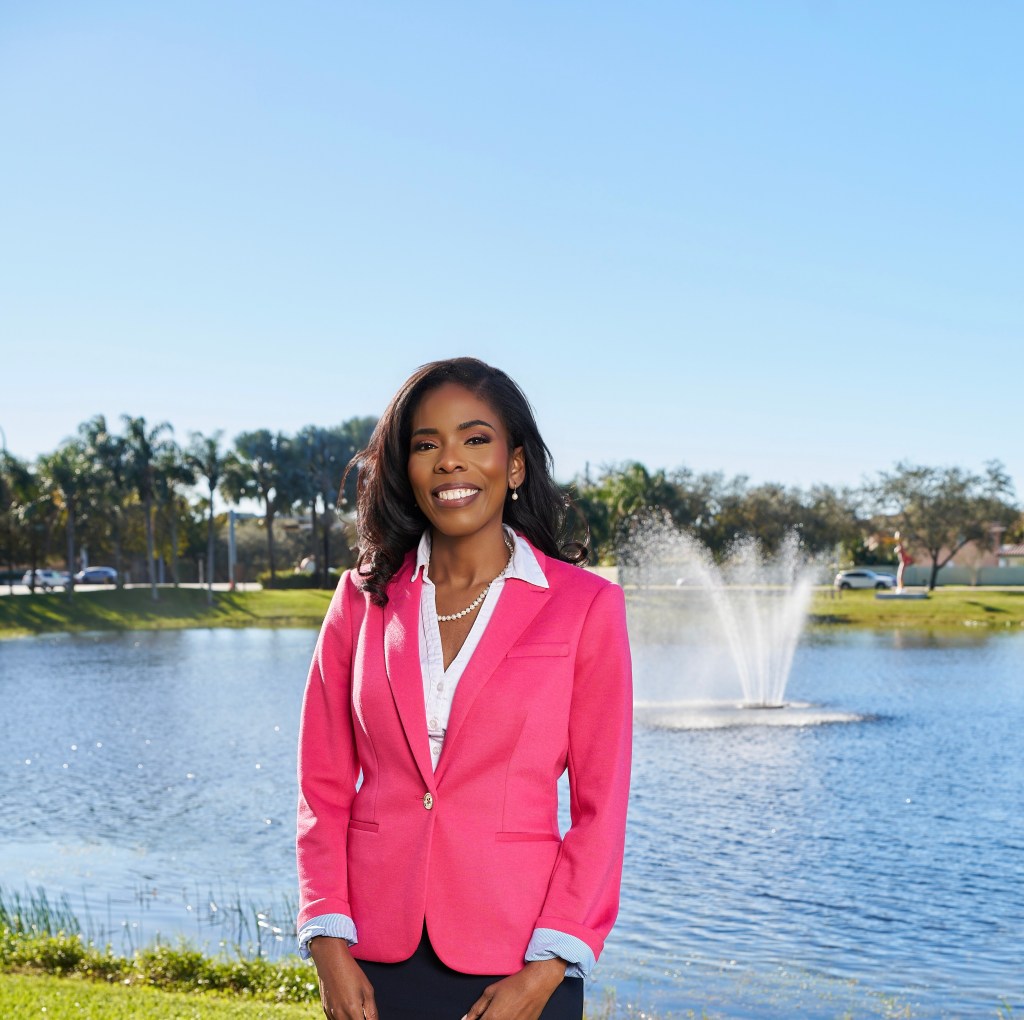
Name: Veronica N. Walker
Date and place of birth: 40, Miami, FL
Campaign website: VeronicaForJudge.com
List in reverse chronological order each college, university and law school and indicate, for each, years of attendance.
Barry University School of Law, 2012-2015
Tennessee State University, Master of Public Administration; Non-Profit Management 2009-2012
Tennessee State University, Bachelors of English, Political Science minor; 2004- 2009
List in reverse chronological order your work history for the past 15 years.
Broward State Attorney’s Office- Assistant State Attorney, 2017- present
FTI- Acuity- Legal Document Review, 2015-2016
Smithson-Craighead Academy- Teacher, 2011
As a lawyer, judge, or both, describe what types of cases you have typically handled?
Throughout my career as an Assistant State Attorney, I have primarily handled criminal cases in Broward County. My practice has included misdemeanor and felony prosecutions, evidentiary hearings, motion practice, plea negotiations, jury trials, and other courtroom proceedings involving a wide range of offenses.
I currently serve as the lead prosecutor in the Hate Crimes Unit, where I review and prosecute cases involving criminal acts motivated by prejudice or bias as defined by Florida law. These cases involve victims who have been targeted because of characteristics such as race, ancestry, national origin, religion, sexual orientation, disability, age, or homeless status. In this role, I work closely with law enforcement agencies, victims, community organizations, and federal partners to ensure that cases are thoroughly investigated and prosecuted.
In addition, I prosecute public corruption cases involving allegations of misconduct by public officials and government employees.
If you are an attorney, how many cases have you tried in the past five years? Of those cases, how many were tried before juries to verdicts and how many were tried before a judge?
Over the course of my prosecutorial career, I have handled thousands of cases and have conducted jury trials ranging from misdemeanors to homicide and have also conducted bench trials. In the past five years, I have tried 5 cases to verdict before juries.
During much of this period, jury trials were significantly impacted by COVID-19-related court closures and backlogs. Additionally, as the lead prosecutor in the Hate Crimes Unit, many of my cases are resolved through negotiated dispositions or are addressed through specialized courts, including Mental Health Court.
If you are a judge, how many jury trials have you presided over that resulted in verdicts and judgments?
N/A
Have you been a party to a lawsuit, including bankruptcy or foreclosure? If so, provide details, including case style, jurisdiction and details of disposition.
No
Have you been charged or convicted of a felony or misdemeanor, including adjudications of guilt withheld? If so, provide charges, dates of conviction and terms of sentence.
No
If a judge: Have you ever been disciplined by the Florida Supreme Court or investigated by the Judicial Qualifications Commission. If an attorney: Have you ever been disciplined, even privately, as a result of a Florida Bar investigation? (If so, provide details.)
No
List three cases in which you were lead or co-counsel and why they are significant.
State v. Purkey (2019) – Burglary Case
As the lead prosecutor, I handled a case involving a man who entered a residential yard and took mangos and limes from the trees. Based on the charge, Burglary of a Dwelling, and his prior criminal history, the case initially exposed him to a significant prison sentence of up to 15 years Florida State Prison.
After reviewing all the facts and circumstances, I believed that the potential punishment was disproportionate to the conduct involved. While accountability was appropriate, I did not believe a lengthy prison sentence would serve the interests of justice. I worked through the supervisory process to reevaluate the case and ultimately obtained approval to reduce the charge and resolve the matter with a misdemeanor conviction and credit for time already served.
This case is significant because it reinforced a principle that has guided me throughout my career: justice requires both accountability and fairness. Prosecutors and judges must look beyond labels and carefully consider the unique facts of each case. The experience taught me the importance of exercising sound judgment, discretion, treating people fairly, and ensuring that outcomes are proportionate to the conduct at issue.
State v. Makarenko (2024) – Attempted Murder, Burglary, and Kidnapping (Hate Crime)
As lead prosecutor, I handled a case involving allegations that a victim was targeted and brutally attacked because of his sexual orientation. The victim suffered catastrophic injuries, including the loss of his eyesight. The case involved allegations of hate-motivated violence and generated significant community interest.
The case is important to me because of the principles of our justice system: decisions must be based on evidence and facts. When first discovered by law enforcement, the victim repeatedly stated that he had fallen and denied that anyone had caused his injuries. Because no allegation of a crime was initially made, a full criminal investigation was not immediately undertaken. Months later, after suffering permanent blindness, the victim reported that he had been attacked and identified those he believed were responsible. By that time, critical evidence had been lost or could no longer be recovered, including surveillance footage, witnesses, and digital evidence.
Although there was evidence suggesting bias motivated the alleged attack, the available evidence was ultimately insufficient to prove the charges beyond a reasonable doubt. After a thorough review of the case, and discussing the issues with the victim, I concluded that the State could not ethically meet its burden of proof.
This case demonstrated the importance of objective decision-making, thorough investigations, and the preservation of evidence. It also demonstrated that the pursuit of justice requires prosecutors and judges alike to follow the evidence wherever it leads, even when the outcome is difficult.
Arson Investigation
As lead prosecutor of the Hate Crimes Unit, I reviewed a case involving a fire that destroyed a house of worship. The incident understandably caused deep concern within the community and received significant media attention. Because the case remains pending, I am limited in what I can appropriately discuss and will confine my comments to my charging decision, which I explained in a written memorandum.
Before prosecutors completed their review, public statements had characterized the incident as a hate crime, and I received numerous communications urging that a hate crime enhancement be filed. After a thorough review of the facts and evidence, I filed serious felony charges, including first-degree arson. However, I concluded that the evidence did not establish beyond a reasonable doubt that the house of worship was targeted because of religious bias, as required under Florida law. The evidence showed that the alleged course of conduct also included an attempt to set fire to a nonreligious business. Because the legal standard for a hate crime enhancement was not met, I declined to file the enhancement.
That decision was unpopular. Nevertheless, my responsibility was to follow the evidence and the law, not public opinion. This case is significant because it reinforced the principle that justice requires independent judgment, particularly when there is public pressure to reach a different result.
The case also reflects a quality I believe is essential for anyone serving on the bench: the discipline to decide matters based on the facts and the law, and the restraint to say no more about a pending case than ethics and professional responsibilities permit.
If you have provided any significant pro bono legal services in the past 10 years, please provide details.
As a government attorney, I am not subject to Florida’s pro bono reporting requirements. Nevertheless, I have dedicated significant time to community service and legal education throughout my career.
I have consistently volunteered at sealing and expungement workshops sponsored by the State Attorney’s Office and community partners. In addition to assisting at these events, I have taken on the responsibility of prescreening applicants to determine eligibility for relief. These workshops help eligible individuals remove barriers to employment, housing, education, and other opportunities that can be affected by a criminal record. They provide eligible members of the community with a second chance and a pathway forward.
In my role as Chair of the Broward Hate Crimes Task Force, I have organized and hosted community town halls throughout Broward County to educate residents about hate crimes, the criminal justice system, and the prosecution process, while also listening to community concerns. These events have been held at locations including the PRIDE Center, the Islamic Foundation of South Florida, the African American Research Library and Cultural Center, the David Posnack Jewish Community Center, and other community institutions. I established United Against Hate Week in Broward County. I have also developed and presented trainings for law enforcement agencies and served as a panelist for the U.S. Department of Justice on hate crimes and community engagement initiatives across the country.
Public trust in the justice system is built through transparency, education, and meaningful community engagement. It has taught me the importance of cultural awareness, listening to diverse perspectives, and ensuring that members of the public understand how the legal system operates and how it affects their lives.
In recognition of these efforts, I was honored to receive the Shine-A-Light Award on Broward County from the Jewish Federation for my work combating antisemitism and fostering stronger relationships between the justice system and the communities it serves.
List current memberships in civic, fraternal, legal or social organizations.
National Black Prosecutors Association; Vice President of Social Justice and Legislation
Stand Woman Stand, Inc
NAACP
Hate Crimes Task Force of Broward County; Chair
Social Justice Task Force of Broward County
National Bar Association
Virgil Hawkins Bar Association
TJ Reddick Bar Association
Bernice Gaines Dorne Black Women Lawyers Association
Broward County Bar Association
The Florida Bar Association
If you are or were an officer or director or engaged in management of any business enterprise other than a law practice, list its name and business activity, your duties and whether you intend to resign upon your election.
N/A
Why are you running for this office?
I am running for County Court Judge because I believe the judiciary plays a critical role in maintaining public trust in our justice system, and I am prepared to serve Broward County with fairness, integrity, and independence.
Throughout my career as a prosecutor, I have seen firsthand how deeply court decisions affect individuals, families, victims, and the broader community. I have also learned that the best judges are not defined only by their legal knowledge, but also their judgment, temperament, and commitment to applying the law fairly and impartially.
My experience has required me to make difficult decisions in complex and emotionally charged cases. Throughout my career, I have worked to protect public safety while ensuring that outcomes are fair and grounded in the law. At times, that has meant advocating for a more proportionate outcome when fairness required it. In other situations, it has meant declining charges or enhancements when the evidence did not support them, even when doing so was unpopular. Those experiences reinforced my belief that justice requires accountability, independence, careful listening, respect for the rule of law, and the courage to make decisions based on facts rather than emotion or public pressure.
My desire to serve as a judge is also rooted in the values instilled in me long before I became an attorney: service, integrity, accountability, and compassion for others. Throughout my career, I have worked not only in the courtroom, but also in the community through public education, outreach, and efforts to strengthen trust between the justice system and the people it serves.
I am running because I believe my courtroom experience, commitment to public service, and demonstrated judgment have prepared me to serve the people of Broward County as a County Court Judge. If elected, I will work every day to uphold the rule of law, protect the integrity of the judicial process, promote public confidence in our courts, and ensure that every person who enters my courtroom is treated with dignity, fairness, and respect.
If you have sought appointment as a judge through a Judicial Nominating Commission, provide details, including year(s) and results.
No. I have not sought appointment to the bench through a Judicial Nominating Commission.
Why should voters elect you instead of your opponent(s)?
Voters should elect me because I have demonstrated the judgment, courtroom experience, and commitment to public service necessary to serve effectively as a County Court Judge from day one through nearly a decade of service as a Broward prosecutor.
For nearly a decade, I have appeared in Broward County courtrooms handling thousands of cases and making consequential decisions that affect people’s lives. My experience has required me to weigh evidence, apply the law, manage complex and emotionally charged cases, and make difficult decisions under public scrutiny.
Throughout my career, I have worked to protect public safety while ensuring that outcomes are fair and grounded in the law. At times, that has meant advocating for a more proportionate outcome when fairness required it. In other situations, it has meant declining charges or enhancements when the evidence did not support them, even when doing so was unpopular. Justice requires accountability, independence, respect for the rule of law, and the courage to make decisions based on facts rather than public pressure.
My work extends beyond the courtroom. As Chair of the Broward Hate Crimes Task Force, I have worked with law enforcement, faith leaders, educators, and community organizations throughout Broward County to build trust, educate the public, and strengthen confidence in our justice system. I have committed my career to public service.
I am asking voters to elect me because my readiness for this role has been demonstrated through years of courtroom experience, public service, and difficult decisions made in pursuit of justice. I am prepared to serve the people of Broward County with fairness, integrity, and respect from day one.
What in your life experience best qualifies you to serve as a judge?
The life experience that best qualifies me to serve as a judge began long before I became an attorney.
My grandfather was a barber for nearly 60 years, a deacon at his church, and an elected councilman in Nashville, TN. As a child, I spent countless hours in his barbershop, every summer, listening. I loved being there with him. People from all walks of life came through those doors to discuss their concerns, debate issues, share perspectives, and seek advice. Sometimes the conversations were spirited, but they always reinforced the importance of listening, understanding different viewpoints, and working toward a fair resolution. Watching my grandfather serve his community taught me that leadership begins with listening.
I am also the daughter of a public-school teacher and a retired law enforcement officer and veteran. From an early age, I learned the values of service, faith, discipline, integrity, and accountability. My parents taught me that public service is not about personal recognition; it is about using your skills and abilities to improve the lives of others.
Those lessons have guided my career as a prosecutor and community leader. Every day, I work with people from different backgrounds, experiences, and perspectives. I have learned that effective decision-making requires patience, preparation, empathy, and a commitment to treating every person with dignity and respect.
More than any single case or professional achievement, it is these lifelong lessons such as listening before responding, seeking understanding before judgment, and viewing public service as a responsibility and a privilege, that have best prepared me to serve as a judge.
What are three major challenges facing the justice system in Florida?
I believe three of the most significant challenges facing Florida’s justice system are access to justice, public trust, and the rapid emergence of new technologies.
First, many Floridians struggle to access the courts and legal services. Whether due to financial barriers, language differences, or a lack of understanding of the legal process, too many people navigate the justice system without the resources they need. Courts must continue to explore ways to make the legal system more understandable and accessible to all.
Second, maintaining public trust in the judiciary is essential. The legitimacy of our courts depends on the public’s confidence that judges will apply the law fairly, impartially, and without bias. Every person who enters a courtroom should feel heard, respected, and assured that their case will be decided based on the facts and the law.
Third, advances in technology are creating new opportunities and new challenges for the justice system. Courts must adapt to issues involving artificial intelligence, digital evidence, cybersecurity, and evolving methods of communication while ensuring that due process, privacy, and fairness remain protected.